

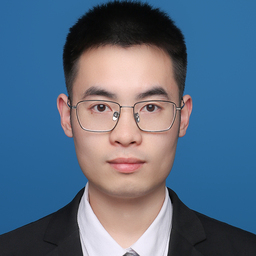
 Hao Wang
· 1 previous affiliation
- Chongqing UniversitySince 2018
- PhD student · Since 2024
- MS student · 2022–2024
- Undergrad student · 2018–2022
54 other authors named Hao Wang: Hao Wang (Leiden University · LIACS · 178 papers), Hao Wang (Stevens Institute of Technology · Scholera · United States Air Force Research Laboratory · 162 papers), Hao Wang (Monash University · 149 papers), Hao Wang (University of Science and Technology of China · 128 papers), Hao Wang (University of Illinois Urbana-Champaign · 117 papers), and 49 more
Research Overview
Hao Wang focuses on trustworthy machine learning, adversarial robustness, and the security of generative models. His research investigates vulnerabilities in deep learning systems, ranging from backdoor attacks in natural language processing and text-to-image diffusion models to physical adversarial patches in autonomous driving. Recently, his work addresses model supply chain poisoning and the security implications of deploying large vision-language models in resource-constrained environments.
Research Trajectory
Hao Wang's research trajectory centers on identifying and mitigating security vulnerabilities across diverse machine learning paradigms. In 2024, he explored defensive mechanisms in natural language processing, introducing a comprehensive framework to counter malicious modifications in NLPSweep: A comprehensive defense scheme for mitigating NLP backdoor attacks. Concurrently, his focus expanded to the security of generative models. He developed EvilEdit: Backdooring Text-to-Image Diffusion Models in One Second, a training-free and data-free backdoor attack that directly edits the projection matrices of text-to-image diffusion models. This work demonstrated how easily unsafe image generation can be triggered via textual prompts without the need for extensive tuning data. His broader interest in the underlying architectures of these generative systems is also reflected in Diffusion Models for Medical Image Computing: A Survey, which synthesizes advancements in applying diffusion models to tasks such as medical image segmentation, denoising, and anomaly detection.
Beyond digital backdoors, Wang has contributed to the study of physical-world vulnerabilities in autonomous systems. With collaborators, he investigated the broader area of Robust Physical Adversarial Attacks via Transformation Invariance through the development of AdvRM, an obstacle-agnostic adversarial patch detailed in Beware of Road Markings: A New Adversarial Patch Attack to Monocular Depth Estimation. By disguising adversarial patches as standard road markings, this research manipulates the perceived depth of vehicles and pedestrians, advancing the research direction of Adversarial Perturbations for Depth and Disparity Manipulation and highlighting critical flaws related to Adversarial Robustness in Vision Transformers.
In 2025, Wang's focus shifted toward the systemic risks inherent in the machine learning supply chain. He introduced the TransTroj attack in Model Supply Chain Poisoning: Backdooring Pre-trained Models via Embedding Indistinguishability. This work addresses the challenge of backdoors being erased during fine-tuning by embedding malicious behaviors into pre-trained models in a way that efficiently transfers to downstream tasks, thereby exposing severe vulnerabilities in widely adopted foundation models.
Continuing this trajectory into the security of large-scale models deployed in resource-constrained environments, Wang participated in 2026 research examining visual token compression. The paper On the Adversarial Robustness of Large Vision-Language Models under Visual Token Compression reveals that compression techniques do not filter out noise but instead act as distortion concentrators that preferentially retain adversarial perturbations. This work introduces the CAGE attack, proving that current robustness assessments for efficient large vision-language models are overly optimistic.
Current Directions
The most recent papers in the evidence indicate a strong focus on the intersection of model efficiency, supply chain security, and adversarial robustness in foundation models. Recent work investigates how vulnerabilities propagate through the machine learning lifecycle, particularly how backdoors embedded in pre-trained models can survive fine-tuning and transfer to downstream tasks. Additionally, Wang is exploring the security implications of deploying Large Vision-Language Models (LVLMs) at the edge. This includes analyzing how techniques designed to improve efficiency—such as visual token compression—can inadvertently amplify adversarial perturbations, necessitating new frameworks for evaluating the robustness of compressed and deployed models.
Profile updated
| Paper | Venue | Year |
|---|---|---|
| EvilEdit: Backdooring Text-to-Image Diffusion Models in One SecondGitHubhaowang02/ | ACM Multimedia | 2024 |
Loading new papers…
Other researchers whose papers cluster into the same research directions — a proxy for overlapping technical interests and shared intellectual neighborhoods.
See something wrong? Report a mistake