

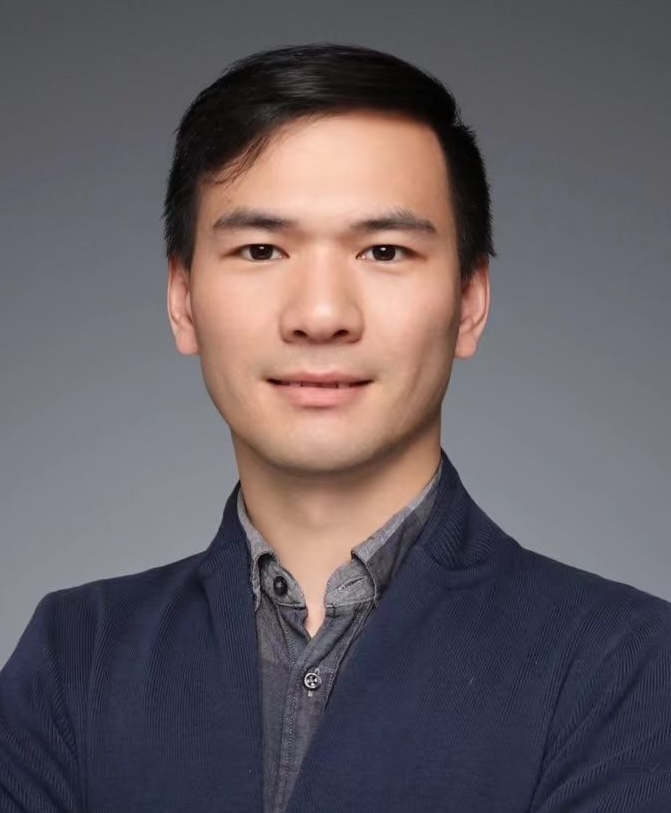
 Hao Wang
· 2 previous affiliations
- Shanghai UniversitySince 2019
- Associate Professor · Since 2024
- Assistant Professor · 2019–2024
- Waseda University2014–2019
- PhD student · 2014–2019
54 other authors named Hao Wang: Hao Wang (Leiden University · LIACS · 178 papers), Hao Wang (Stevens Institute of Technology · Scholera · United States Air Force Research Laboratory · 162 papers), Hao Wang (Monash University · 149 papers), Hao Wang (University of Science and Technology of China · 128 papers), Hao Wang (University of Illinois Urbana-Champaign · 117 papers), and 49 more
Research Overview
Hao Wang focuses on natural language processing, specifically targeting event extraction, causality modeling, and visually-rich document understanding. Early work emphasized distantly supervised frameworks and graph-based models for causal event extraction from text. More recently, this focus has expanded to Document AI, investigating how visual and layout features can enhance semantic entity recognition and machine reading comprehension.
Research Trajectory
Hao Wang’s research trajectory demonstrates a clear evolution from text-based natural language processing tasks—specifically event and causality extraction—toward multi-modal Document AI and visually-rich document understanding.
In 2020, Wang contributed to foundational NLP tasks in event extraction. This included collaborative work on distantly supervised frameworks designed to improve open-domain event trigger recognition by utilizing trigger synonym generators and set scorers (Open Event Trigger Recognition Using Distant Supervision with Hierarchical Self-attentive Neural Network).
By 2021, Wang’s focus narrowed toward the intersection of event extraction and causality modeling. As senior author, Wang led research on predicting future events by modeling sequential and causal relations through conditional event evolutionary graphs, addressing the limitations of context-free graph structures (An uncertain future: Predicting events using conditional event evolutionary graph). During this period, Wang also contributed to joint extraction frameworks that infused prior knowledge of frequent n-grams into convolutional models to better capture cause-and-effect relationships in domain-specific texts (Back to Prior Knowledge: Joint Event Causality Extraction via Convolutional Semantic Infusion). This line of inquiry continued into 2022, where Wang served as senior author on methodologies tailored to Chinese language contexts, utilizing causality-associated graph neural networks to identify and extract cause-effect event pairs from text (Chinese causal event extraction using causality-associated graph neural network).
In 2023, Wang’s research shifted significantly toward Document AI, focusing on the extraction of information from visually-rich form-like documents (VFDs). As first author, Wang introduced a novel dataset utilizing eye-tracking technology to align machine reading models with human cognitive and visual reading patterns (DocTrack: A Visually-Rich Document Dataset Really Aligned with Human Eye Movement for Machine Reading). Concurrently, Wang developed new multi-modal learning approaches to improve semantic entity recognition in document images. This work addressed the limitations of weak cross-modal supervision by proposing visually-asymmetric consistency learning to better capture fine-grained layout and visual features, such as bounding boxes and typography (Vision-Enhanced Semantic Entity Recognition in Document Images via Visually-Asymmetric Consistency Learning).
Current Directions
The most recent papers in the evidence, published in 2023, indicate a primary focus on Document AI and the processing of visually-rich documents. Recent work investigates multi-modal approaches that integrate textual data with visual and layout features—such as font, background, and bounding box coordinates—to improve semantic entity recognition in complex document images. Additionally, this direction explores the cognitive aspects of machine reading by utilizing human eye-tracking data to better align automated document comprehension models with human visual processing and reading patterns.
Profile updated
Loading new papers…
Other researchers whose papers cluster into the same research directions — a proxy for overlapping technical interests and shared intellectual neighborhoods.
See something wrong? Report a mistake