

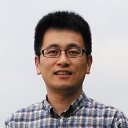
 Hao Wang
· 5 previous affiliations
- Sichuan UniversitySince 2024
- Associate Professor · Since 2024
- Nanyang Technological University2022–2024
- Postdoc · 2022–2024
- Zhejiang University2020–2022
- Postdoc · 2020–2022
- Zhejiang Lab2020–2022
- Postdoc · 2020–2022
- Postdoc · 2020–2022
54 other authors named Hao Wang: Hao Wang (Leiden University · LIACS · 178 papers), Hao Wang (Stevens Institute of Technology · Scholera · United States Air Force Research Laboratory · 162 papers), Hao Wang (Monash University · 149 papers), Hao Wang (University of Science and Technology of China · 128 papers), Hao Wang (University of Illinois Urbana-Champaign · 117 papers), and 49 more
Research Overview
Hao Wang focuses on multi-view learning, continual learning, and robust representation learning. His research addresses the technical challenges of integrating heterogeneous data sources, maintaining model performance across sequential tasks, and ensuring system robustness against missing or noisy data. His work frequently utilizes spectral methods, generative modeling, and graph-based fusion to solve problems in sentiment classification, anomaly detection, and decentralized learning environments.
Research Trajectory
Wang’s early research, beginning around 2019, established a foundation in multi-view clustering and sentiment analysis. During this period, he focused on the theoretical and practical limitations of clustering when data instances are missing across different views. By applying spectral perturbation theory, he developed methods to bound perturbation risk and effectively complete similarity matrices for incomplete data. This work was characterized by a transition from traditional data-level completion to similarity-level completion, providing more robust theoretical guarantees for multi-view integration. Simultaneously, he investigated sentiment classification through the lens of lifelong learning, seeking to develop mechanisms for forward and backward knowledge transfer that allow models to retain information across a sequence of tasks without catastrophic forgetting.
By 2020, Wang’s work in multi-view learning evolved toward more sophisticated graph-based fusion techniques. He proposed frameworks that moved away from fixed graph similarity matrices, instead favoring the generation of a unified graph matrix that could be learned and refined iteratively. This approach allowed for the direct production of final clusters, bypassing the need for additional post-processing steps. During this same period, he integrated Bayesian methods with attention networks to enhance lifelong learning capabilities in natural language processing, specifically addressing the need for models to adapt to new sentiment domains while preserving prior knowledge.
In the mid-2020s, the research program expanded to address more complex data irregularities and real-world deployment challenges. This included a focus on online anomaly detection and the "free fusion myth" in multi-view data. Wang introduced generative models, such as Variational Autoencoders (VAEs) utilizing Product-of-Experts (PoE) layers, to handle disentangled representation learning. This allowed for more effective detection of anomalies in multi-modal settings where data arrives in a stream rather than a batch. During this phase, he also participated in collaborative research applying representation learning to diverse domains, including urban informatics—specifically utilizing OpenStreetMap building footprints for region representation—and the mitigation of label noise in deep learning through collaborative sample selection.
Most recently, from 2024 through 2026, Wang has shifted toward senior leadership in the development of federated and continual learning systems. This recent work addresses "spatial-temporal catastrophic forgetting," a phenomenon where decentralized models forget both previously learned global knowledge and client-specific local information. His research now emphasizes personalized federated learning and dataset distillation, exploring how "capacity matching" can improve the efficiency of synthetic dataset generation. His recent senior-authored work on dual-masked architectures represents a culmination of his interests in robust representation, providing a unified approach to handling both missing views and noisy data in complex multi-view environments.
Representative Work
In Spectral Perturbation Meets Incomplete Multi-view Data, Wang addresses the problem of incomplete multi-view clustering where instances are missing in certain views. The research leverages spectral perturbation theory to establish a link between perturbation risk bounds and clustering performance. By transferring the problem of missing data from the raw input space to the similarity matrix space, the work proposes a tailored matrix completion method that minimizes perturbation risk, providing a more theoretically grounded approach to incomplete data than traditional imputation methods.
The paper Forward and Backward Knowledge Transfer for Sentiment Classification explores the challenges of learning a sequence of sentiment classification tasks. Wang proposes a framework where knowledge learned from each task is retained to assist in future learning (forward transfer) and used to refine previously learned models (backward transfer). This work is significant for its focus on the temporal evolution of model knowledge, ensuring that the acquisition of new sentiment domains does not degrade performance on established ones.
In GMC: Graph-Based Multi-View Clustering, Wang introduces a general framework for multi-view graph-based clustering. The methodology involves taking data graph matrices from all available views and fusing them into a single, unified graph matrix. A key innovation of this work is the mutual reinforcement between the unified matrix and the individual view matrices; the unified graph improves the local graphs, which in turn leads to a more accurate global representation that provides clustering results directly.
The research presented in Bayes-enhanced Lifelong Attention Networks for Sentiment Classification further advances the lifelong learning agenda by integrating Bayesian inference with attention mechanisms. This approach allows the model to maintain a distribution over parameters, providing a principled way to handle uncertainty and knowledge retention as the model encounters a continuous stream of sentiment analysis tasks.
In Debunking Free Fusion Myth: Online Multi-view Anomaly Detection with Disentangled Product-of-Experts Modeling, Wang tackles the problem of anomaly detection in multi-view data streams. The paper identifies the "fusion disentanglement" issue, where models fail to properly separate common and view-specific features. To resolve this, he proposes dPoE, a multi-view variational autoencoder that uses a Product-of-Experts layer to facilitate online detection and robust feature disentanglement, moving beyond static, two-view limitations of previous models.
As senior author, Wang’s work in Learning Robust Multi-view Representation Using Dual-masked VAEs provides a holistic solution for multi-view representation learning under imperfect conditions. The DualVAE model combines dual-masked prediction with a mixture-of-experts learning strategy to simultaneously address the problems of missing views and data noise. This work represents a significant methodological synthesis, integrating representation disentangling and joint loss functions to achieve robustness in real-world applications where data completeness and purity cannot be assumed.
Profile updated
| Paper | Venue | Year |
|---|---|---|
| Disentangling Multi-view Representations via Curriculum Learning with Learnable PriorGitHubXLearning-SCU/ | Proceedings of the Thirty-fourth International Joint Conference on Artificial Intelligence | 2025 |
Loading new papers…
Other researchers whose papers cluster into the same research directions — a proxy for overlapping technical interests and shared intellectual neighborhoods.
See something wrong? Report a mistake