

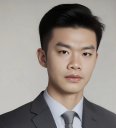
 Hao Tang
· 5 previous affiliations
- Peking UniversitySince 2024
- Assistant Professor · Since 2024
- ETH ZurichCurrent
- Current
- Postdoc · 2021–2023
- Carnegie Mellon University2023–2024
- Postdoc · 2023–2024
- University of Trento2017–2021
- PhD student · 2017–2021
- Intern · 2019
10 other authors named Hao Tang: Hao Tang (University of Edinburgh · 27 papers), Hao Tang (Apple (United States) · 26 papers), Hao Tang (Nanyang Technological University · 21 papers), Hao Tang (18 papers), Hao Tang (Meta (United States) · 7 papers), and 5 more
Research Overview
Hao Tang focuses on computer vision, generative modeling, and embodied artificial intelligence, with an emphasis on synthesizing realistic visual and physical environments. His earlier work developed robust generative adversarial networks for complex image translation and semantic scene generation. More recently, his research investigates multimodal large language models, efficient vision architectures, and 3D spatial intelligence for robotic task planning and medical image analysis.
Research Trajectory
Tang's early research focused heavily on generative adversarial networks (GANs) for complex image-to-image translation tasks. He introduced GestureGAN for Hand Gesture-to-Gesture Translation in the Wild, which utilized explicit skeletal information and novel loss functions to handle arbitrary poses and self-occlusions. Expanding on cross-view generation, he developed Multi-Channel Attention Selection GAN With Cascaded Semantic Guidance for Cross-View Image Translation, a two-stage architecture that leverages semantic maps to synthesize natural scenes across drastically different viewpoints. To address the persistent challenge of generating fine local textures in global image-level models, he proposed Local Class-Specific and Global Image-Level Generative Adversarial Networks for Semantic-Guided Scene Generation, which constructed sub-generators dedicated to specific object classes.
Building on these generative foundations, Tang extended his work into 3D domains and text-to-image synthesis. He presented Intrinsic-Extrinsic Preserved GANs for Unsupervised 3D Pose Transfer, an unsupervised approach that disentangles shape and pose without manual encoding. In the text-to-image space, he designed DF-GAN: A Simple and Effective Baseline for Text-to-Image Synthesis, a streamlined one-stage backbone that achieved high performance with significantly fewer parameters. Concurrently, he participated in research targeting hardware efficiency, such as SPViT: Enabling Faster Vision Transformers via Latency-Aware Soft Token Pruning. This work advanced the research direction of Token Reduction for Efficient Vision Transformers by packaging less important tokens rather than discarding them, enabling real-time inference on edge devices. Returning to semantic synthesis, he introduced Edge Guided GANs with Contrastive Learning for Semantic Image Synthesis to better preserve structural details, and later formalized Local and Global GANs With Semantic-Aware Upsampling for Image Generation, which improved the rendering of small objects and contributed to the area of Class-Specific Partitioning for Generative Data Augmentation.
Tang also applied generative techniques to human dynamics. He developed Interaction Transformer for Human Reaction Generation (InterFormer), framing action-to-reaction as a sequence-to-sequence translation problem. By injecting physical priors via graph-based attention, this work significantly improved realistic 3D reaction synthesis, advancing the field of Multi-Person Coordination in Generative Human Motion. As foundation models became prevalent, Tang adapted these large-scale architectures for specialized domains. He introduced MaskSAM: Towards Auto-prompt SAM with Mask Classification for Medical Image Segmentation, a prompt-free adaptation of the Segment Anything Model that automated 3D medical image segmentation by eliminating the need for manual human input.
In recent years, Tang's research group has focused on scaling generative models, improving multimodal alignment, and exploring novel architectures. His team developed ReMoMask: Retrieval-Augmented Masked Motion Generation, a retrieval-augmented generation framework for text-to-motion synthesis that uses a bidirectional momentum retriever to scale negative samples. Addressing the complexities of multimodal large language models (MLLMs), his lab introduced RobustMerge: Parameter-Efficient Model Merging for MLLMs with Direction Robustness, a training-free method that resolves direction instability in low-rank spaces. Exploring alternatives to Transformer architectures, he proposed MambaIC: State Space Models for High-Performance Learned Image Compression, which integrates linear-time state space models to achieve superior rate-distortion performance. He also continued his medical imaging work with RFMedSAM 2: Automatic Prompt Refinement for Enhanced Volumetric Medical Image Segmentation with SAM 2, utilizing a dual-stage refinement process to enhance 3D medical volume analysis. Finally, pushing toward embodied AI and spatial intelligence, his team developed Code2Worlds: Empowering Coding LLMs for 4D World Generation, a framework that transforms natural language into physically grounded 4D simulations. They also introduced 3D CoCa: Contrastive Learners are 3D Captioners, a unified framework that seamlessly integrates contrastive vision-language learning with 3D scene captioning, which Tang later advanced through 3D CoCa v2: Contrastive Learners with Test-Time Search for Generalizable Spatial Intelligence by incorporating test-time search. In the realm of world models and physical dynamics, Tang co-developed Geometry-Centered 3D Latent World Models for Growing Surfaces (FOLIAGE), focusing state representation on expanding growth fronts and separating observation from hidden physics, while participating in collaborative work on PAM: A Pose-Appearance-Motion Engine for Sim-to-Real HOI Video Generation. For embodied decision-making and agents, Tang's group introduced GeneralVLA: Generalizable Vision-Language-Action Models with Knowledge-Guided Trajectory Planning and MMA: Multimodal Memory Agent. In addition, their lab addressed complex visual processing and radar analysis, presenting All-in-One Transformer for Image Restoration Under Adverse Weather Degradations alongside Causal Intervention-Enhanced Feature Disentanglement Network for SAR ATR in Data-Scarce Environments.
Current Directions
Recent work investigates the intersection of spatial intelligence, embodied artificial intelligence, and the adaptation of large foundation models. A primary focus is on 4D world generation, growing-surface latent world models, and 3D scene understanding, where recent frameworks leverage test-time search and trajectory planning for embodied vision-language-action agents. Additionally, ongoing research addresses the efficiency and scalability of multimodal systems. This includes developing parameter-efficient model merging techniques for multimodal large language models and exploring linear-time state space models as alternatives to Transformers for high-resolution visual tasks. The adaptation of vision foundation models for specialized domains, particularly automated 3D medical image segmentation, also remains a key area of active development.
Profile updated
Loading new papers…
Other researchers whose papers cluster into the same research directions — a proxy for overlapping technical interests and shared intellectual neighborhoods.
See something wrong? Report a mistake