

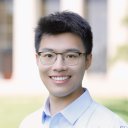
 Hanrui Wang
· 3 previous affiliations
- Stealth mode companySince 2024
- Researcher · 2024–2027
- PhD student · 2018–2024
- Fudan University2014–2018
- Undergrad student · 2014–2018
1 other author named Hanrui Wang: Hanrui Wang (National Institute of Informatics · 4 papers)
Research Overview
Hanrui Wang focuses on the intersection of machine learning and computer architecture, with specific emphasis on efficient deep learning systems and robust quantum computing. His trajectory spans from hardware-aware model compression and automated circuit design to noise-resilient quantum compilation and error correction. Recently, his work addresses scalable inference and heterogeneous acceleration for large language models.
Research Trajectory
Wang’s early research concentrated on optimizing classical machine learning models for constrained hardware environments. In 2018, he participated in the development of AMC: AutoML for Model Compression and Acceleration on Mobile Devices, which leveraged reinforcement learning to automate the design space exploration for neural network compression. He subsequently expanded this focus on hardware-aware machine learning to natural language processing, introducing HAT: Hardware-Aware Transformers for Efficient Natural Language Processing (2020). Concurrently, he applied machine learning back to hardware design itself, presenting GCN-RL Circuit Designer: Transferable Transistor Sizing with Graph Neural Networks and Reinforcement Learning (2020). This work utilized graph convolutional networks to represent circuit topologies, enabling the transfer of sizing knowledge across different technology nodes.
Beginning in 2021, Wang’s focus shifted significantly toward quantum computing, specifically addressing the challenges of executing algorithms on Noisy Intermediate-Scale Quantum (NISQ) hardware. He explored foundational frameworks for quantum execution in TorchQuantum Case Study for Robust Quantum Circuits (2022) and developed techniques to train quantum neural networks under realistic error conditions in QuantumNAT: quantum noise-aware training with noise injection, quantization and normalization (2022). To automate the discovery of noise-robust quantum circuits, he and his collaborators introduced QuantumNAS: Noise-Adaptive Search for Robust Quantum Circuits (2022), a framework that decoupled circuit training from searching while incorporating hardware-aware noise feedback. This work contributed to the broader research direction of Quantum Circuit Sparsification for Noise Mitigation.
To further manage hardware errors, Wang investigated machine learning approaches for predicting circuit fidelity. In QuEst: Graph Transformer for Quantum Circuit Reliability Estimation (2022), he utilized graph transformers to estimate reliability significantly faster than classical simulations, advancing the area of Graph Theoretic Representations for Quantum Circuit Optimization. Together, his work on noise-adaptive search and reliability estimation provided new methodologies for the research direction of Mitigating Temporal Drift in Noisy Quantum Processors.
In 2023, Wang expanded his quantum research to encompass novel hardware architectures, compilation strategies, and error correction. Addressing the physical properties of quantum systems, he proposed SnCQA: A hardware-efficient equivariant quantum convolutional circuit architecture (2023), which incorporated permutation and lattice symmetries to improve scalability and noise resilience, aligning with the area of Symmetry Aware Quantum Circuit Architectures. He also developed RobustState: Boosting Fidelity of Quantum State Preparation via Noise-Aware Variational Training (2023), a methodology combining classical back-propagation with real-machine measurement outcomes to reduce coherent errors, contributing to the broader field of Pulse Level Control for Noise Resilient Quantum Computing.
A major theme of Wang’s 2023 and 2024 work involved compiling for reconfigurable neutral atom arrays (RAAs). He introduced FPQA-C: A Compilation Framework for Field Programmable Qubit Array (2023), which replaced costly SWAP gates with strategic physical atom movements. This concept was further refined in Q-Pilot: Field Programmable Quantum Array Compilation with Flying Ancillas (2023), which utilized mobile atoms as dynamic routing resources to reduce circuit depth. These efforts culminated in the comprehensive compiler presented in Atomique: A Quantum Compiler for Reconfigurable Neutral Atom Arrays (2024).
Simultaneously, Wang addressed the critical challenge of quantum error correction (QEC). He developed DGR: Tackling Drifted and Correlated Noise in Quantum Error Correction via Decoding Graph Re-weighting (2023), a classical strategy that dynamically updates decoders using statistics from previous rounds to handle noise drift. He also explored neural decoding architectures in Transformer-QEC: Quantum Error Correction Code Decoding with Transferable Transformers (2023), leveraging self-attention for rotated surface codes. Both projects represent significant contributions to the research direction of Real-Time Decoding for Fault-Tolerant Quantum Computing.
Most recently, Wang has returned to classical machine learning systems, focusing on the computational bottlenecks of Large Language Models (LLMs). In HEXA-MoE: Efficient and Heterogeneous-aware MoE Acceleration with ZERO Computation Redundancy (2024), he addressed the communication overhead and computation redundancy inherent in deploying Mixture-of-Experts models across distributed devices. Continuing this focus on LLM efficiency, he contributed to AsyncSpade: Efficient Test-Time Scaling with Asynchronous Sparse Decoding (2026), a framework designed to accelerate long-chain-of-thought reasoning by decoupling KV-cache selection from the main inference loop.
Current Directions
The most recent papers in the evidence indicate a strong focus on systems-level optimization for Large Language Models and sparse architectures. Wang is currently investigating methods to accelerate Mixture-of-Experts (MoE) models by mitigating communication overhead and computation redundancy in heterogeneous environments. Additionally, his recent work addresses the latency bottlenecks of long-context reasoning in LLMs, exploring asynchronous sparse decoding techniques and predictive cache management to improve test-time scaling without sacrificing reasoning accuracy.
Profile updated
Loading new papers…
Other researchers whose papers cluster into the same research directions — a proxy for overlapping technical interests and shared intellectual neighborhoods.
See something wrong? Report a mistake