

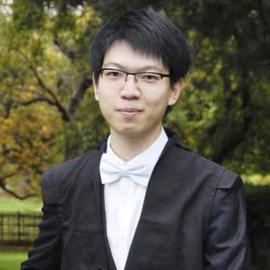
 Han Zhou
6 previous affiliations
- University of Cambridge2022–2026
- PhD student · 2022–2026
- Research Intern · 2022
- AI Scientist Intern · 2026
- Google DeepMind (United Kingdom)2024–2025
- Student Researcher · 2024–2025
- Student Researcher · 2023
- University College London2020–2021
- Master of Science - MS · 2020–2021
- University of Oxford2015–2019
- Undergrad student · 2015–2019
7 other authors named Han Zhou: Han Zhou (McMaster University · 39 papers), Han Zhou (KU Leuven · 23 papers), Han Zhou (2 papers), Han Zhou (Baidu (China) · 1 paper), Han Zhou (National University of Defense Technology · 1 paper), and 2 more
Research Overview
Han Zhou focuses on the optimization, calibration, and reasoning capabilities of large language and vision-language models. His trajectory spans from parameter-efficient fine-tuning and prompt search to the design of autonomous, self-improving multi-agent systems. Currently, he investigates reward-driven intelligence, emphasizing instruction-policy co-evolution and spatial reasoning through purely visual representations.
Research Trajectory
Han Zhou’s early research addressed the efficiency and evaluation of language models. In 2023, he explored gradient-free optimization techniques in Survival of the Most Influential Prompts: Efficient Black-Box Prompt Search via Clustering and Pruning, analyzing search space design for model-as-a-service applications. Concurrently, he contributed to multilingual evaluation through the development of Multi 3 WOZ: A Multilingual, Multi-Domain, Multi-Parallel Dataset for Training and Evaluating Culturally Adapted Task-Oriented Dialog Systems.
Moving into 2024, his focus expanded to model adaptation and the robustness of in-context learning. To address the computational overhead of model tuning, he introduced AutoPEFT: Automatic Configuration Search for Parameter-Efficient Fine-Tuning, advancing the research direction of Adaptive Rank Allocation for Low Rank Adaptation. A major theme of his work during this period involved mitigating the brittleness of large language models (LLMs) to prompt variations. In Batch Calibration: Rethinking Calibration for In-Context Learning and Prompt Engineering, he developed a zero-shot, inference-only method to estimate and correct contextual bias, contributing to the broader area of Contextual Calibration for Robust In-Context Learning. He further tackled evaluation biases in Fairer Preferences Elicit Improved Human-Aligned Large Language Model Judgments, proposing a framework that optimizes prompts on unlabeled data to align LLM judgments more closely with human preferences. Additionally, he began investigating multimodal capabilities, benchmarking vision-language models on spatial relationship comprehension in TopViewRS: Vision-Language Models as Top-View Spatial Reasoners.
In 2025, Zhou continued to refine model reliability while pivoting heavily toward autonomous agent architectures. He deepened his work in the area of Balancing Predictive Accuracy and Confidence Calibration with Large Language Models are Miscalibrated In-Context Learners, demonstrating that standard adaptation methods fail to resolve overconfidence in low-resource settings and proposing a self-ensembling technique to reduce calibration error. Simultaneously, his research embraced multi-agent systems and self-improvement mechanisms. He developed Maestro: Self-Improving Text-to-Image Generation via Agent Orchestration, a framework that uses specialized agents to iteratively refine prompts, engaging with the research direction of Pairwise Evaluation Arenas for Generative Models. Addressing the static nature of agent instructions, he introduced Agentic Policy Optimization via Instruction-Policy Co-Evolution, which co-evolves instructions alongside the agent's policy using on-policy reflection. Synthesizing this growing field, he oversaw the publication of A Comprehensive Survey of Self-Evolving AI Agents: A New Paradigm Bridging Foundation Models and Lifelong Agentic Systems, establishing a conceptual framework for agents that autonomously refine their tools and workflows.
By 2026, this agentic focus culminated in structural optimizations for complex workflows. In Multi-Agent Design: Optimizing Agents with Better Prompts and Topologies, he tackled the combinatorial challenge of multi-agent architectures, introducing a framework to interleave prompt and topology optimization. This work significantly advanced the research direction of Sparse Communication Topologies for Multi-Agent Systems. Concurrently, he collaborated on novel multimodal reasoning paradigms, participating in the development of Visual Planning: Let's Think Only with Images, which demonstrated that training models to generate sequences of images can outperform text-based reasoning in spatial planning tasks.
Current Directions
The most recent papers in the evidence indicate a strong focus on the architecture and optimization of autonomous multi-agent systems, alongside novel approaches to multimodal reasoning. Recent work investigates how to efficiently scale multi-agent workflows by jointly optimizing individual agent prompts and global communication topologies. Additionally, there is an emerging emphasis on "self-evolving" paradigms, where agents continuously refine their own instructions and policies through reinforcement learning and reflection. Parallel to this text-based agentic research, recent collaborative efforts explore visual planning, training large vision models to reason through complex spatial environments by generating image sequences rather than relying on intermediate text.
Profile updated
Loading new papers…
Other researchers whose papers cluster into the same research directions — a proxy for overlapping technical interests and shared intellectual neighborhoods.
See something wrong? Report a mistake