

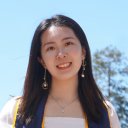
 Han Zhang
· 6 previous affiliations
- Nvidia (United States)Since 2024
- Applied Research Scientist · Since 2025
- Applied Research Engineer Intern · 2025
- Applied Research Engineer Intern · 2024
- Stanford University2023–2025
- Research Assistant · 2024–2025
- MS student · 2023–2025
- Tencent (China)2023–2024
- Research Intern · 2023–2024
- Undergraduate Research Assistant · 2021–2023
- University of California, Berkeley2019–2023
- Bachelor of Arts - BA, Computer Science and Economics · 2019–2023
- Undergrad student · 2019–2023
23 other authors named Han Zhang: Han Zhang (ShanghaiTech University · 74 papers), Han Zhang (58 papers), Han Zhang (Harbin Institute of Technology · 35 papers), Han Zhang (Reve AI · Google DeepMind (United Kingdom) · 21 papers), Han Zhang (Symbotic · University of Southern California · 18 papers), and 18 more
Research Overview
Han Zhang focuses on computer vision, vision-and-language multimodalities, and the robustness of artificial intelligence systems. His early work explored how generative models and natural language can address visual domain shifts and augment training data. More recently, his research investigates specialized vision-language models for complex document understanding and historical text recognition.
Research Trajectory
In 2023, he introduced a dynamic simulation framework to analyze the structural consequences of algorithmic suggestions in social networks. This work, detailed in Delayed and Indirect Impacts of Link Recommendations, demonstrated how recommendation systems can subtly alter network evolution, leading to long-term structural changes even after the recommendations are removed.
Concurrently, his research expanded into computer vision and multimodal robustness, specifically addressing the challenge of generalizing models to unseen environments. He collaborated on Using Language to Extend to Unseen Domains, which contributed to the research direction of Language as a Proxy for Visual Domain Shifts. This project developed a method called LADS, which leverages a joint image-language embedding space to learn transformations from source to target domains by simply verbalizing the domains. This approach improves model robustness without requiring target-domain image data during training.
Continuing in the area of model generalization, he participated in developing automated techniques to re-contextualize training data. In Diversify Your Vision Datasets with Automatic Diffusion-based Augmentation, he and his collaborators utilized large language models and diffusion models to generate visually consistent training examples. This approach advanced the broader area of Semantic Data Augmentation with Generative Diffusion Models and touched upon the challenge of Preserving High-Frequency Fidelity in Generative Image Synthesis by creating diverse synthetic data that outperforms traditional augmentation methods.
Most recently, his focus has shifted toward applying large vision-language models to specialized, real-world domains. In 2025, he co-developed CHURRO: Making History Readable with an Open-Weight Large Vision-Language Model for High-Accuracy, Low-Cost Historical Text Recognition. This work addresses the limitations of standard models when faced with irregular layouts, diverse scripts, and physical degradation. By training a specialized 3-billion-parameter model on a comprehensive dataset of historical corpora spanning numerous languages and centuries, this research contributes directly to the fields of End-to-End Scene Text Spotting and Mitigating Optical Character Recognition Noise in Document Analysis.
Current Directions
Recent work investigates the adaptation of multimodal architectures for specialized, high-complexity tasks. The most recent papers in the evidence address the challenge of processing non-standard visual inputs, such as historical texts that suffer from physical degradation and irregular formatting. This involves developing open-weight vision-language models capable of handling diverse linguistic scripts and complex document layouts, moving beyond the capabilities of models trained primarily on modern, standardized data. Additionally, his ongoing research interests encompass the broader integration of generative models to improve the interpretability and robustness of artificial intelligence systems across varied and unseen domains.
Profile updated
| Paper | Venue | Year |
|---|---|---|
| Diversify Your Vision Datasets with Automatic Diffusion-based AugmentationGitHublisadunlap/ | NeurIPS | 2023 |
Loading new papers…
Other researchers whose papers cluster into the same research directions — a proxy for overlapping technical interests and shared intellectual neighborhoods.
See something wrong? Report a mistake