

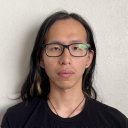
 Han Zhang
· 2 previous affiliations
- SymboticSince 2026
- Principal robotics engineer · Since 2026
- Current
- PhD student · 2019–2024
23 other authors named Han Zhang: Han Zhang (ShanghaiTech University · 74 papers), Han Zhang (58 papers), Han Zhang (Harbin Institute of Technology · 35 papers), Han Zhang (Reve AI · Google DeepMind (United Kingdom) · 21 papers), Han Zhang (10 papers), and 18 more
Research Overview
Han Zhang focuses on multi-agent path finding, heuristic search algorithms, and multi-objective optimization. Early work concentrated on improving the scalability of optimal pathfinding through constraint propagation and symmetry breaking. More recently, this trajectory has expanded to address multi-objective search problems, developing approximate algorithms that balance competing cost metrics for complex robotic and automated systems.
Research Trajectory
The core challenge in Multi-Agent Path Finding (MAPF) is the exponential growth of the search space required to route multiple agents without collisions. Zhang’s early work addressed this bottleneck by integrating constraint propagation techniques from classical AI planning into optimal MAPF solvers. In Multi-Agent Path Finding with Mutex Propagation (2020), Zhang (as first author) adapted mutex propagation to Conflict-Based Search (CBS). By identifying constraints that forbid pairs of agents from occupying specific locations simultaneously, this approach provided a generalized, automated method for symmetry breaking, bypassing the need for manually designed constraints. This work contributed significantly to the broader research direction of Efficient Multi Agent Path Finding through Conflict Prioritization.
During this period, Zhang also explored the representational limits of temporal reasoning frameworks. While traditional Simple Temporal Networks (STNs) can encode basic minimum and maximum velocity constraints, they struggle with the complex differential equations governing actual robot movement. As first author of Temporal Reasoning with Kinodynamic Networks (2021), Zhang introduced a novel framework that combined existing temporal reasoning with Bernstein polynomials to handle higher-order kinodynamic constraints.
By 2022, Zhang’s research evolved to handle more complex agent morphologies and sophisticated search objectives. Moving beyond the simplification of point agents, Zhang extended earlier symmetry-breaking techniques to environments where agents occupy multiple spatial points simultaneously according to fixed shapes and sizes. This was detailed in Mutex Propagation in Multi-Agent Path Finding for Large Agents, which demonstrated that while rule-based symmetry breaking is difficult to generalize to large agents, mutex-based approaches adapt readily.
Concurrently, Zhang began investigating multi-objective search on graphs, where paths are evaluated against multiple competing cost metrics (such as time, energy, or risk). Because computing an exact Pareto-optimal frontier can be exponential in the size of the graph, Zhang focused on bounded approximations. Leading the development of A*pex: Efficient Approximate Multi-Objective Search on Graphs, Zhang proposed an algorithm that computes an approximate Pareto-optimal solution set for a user-provided vector, significantly reducing computational overhead.
In 2023 and 2024, these dual interests in multi-agent coordination and multi-objective optimization merged. Zhang participated in collaborative efforts to scale Multi-Objective Conflict-Based Search (MO-CBS), which traditionally suffers from large branching factors. This culminated in Efficient Approximate Search for Multi-Objective Multi-Agent Path Finding (2024), where Zhang, as second author, helped integrate the single-agent A*pex algorithm into the MO-CBS framework. This synthesis yielded substantial speed-ups for computing approximate frontiers in multi-agent routing problems.
Current Directions
The most recent papers in the evidence address the intersection of multi-agent coordination and multi-objective optimization. Recent work investigates how to efficiently compute approximate Pareto frontiers for teams of agents navigating shared environments, balancing competing metrics such as travel time and resource consumption. Additionally, Zhang is involved in standardizing and benchmarking the MAPF field, participating as a co-author in the design and implementation of the League of Robot Runners competition. This initiative aims to track state-of-the-art algorithmic performance, develop standardized benchmark instances, and lower barriers to entry for researchers developing new routing and planning techniques.
Profile updated
Loading new papers…
Other researchers whose papers cluster into the same research directions — a proxy for overlapping technical interests and shared intellectual neighborhoods.
See something wrong? Report a mistake