

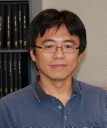
 Han Wei Shen
· 1 previous affiliation
- The Ohio State UniversitySince 2012
- Full Professor · 2012–2040
Research Overview
Han Wei Shen focuses on scientific visualization, data reduction, and the integration of deep learning with high-fidelity physics simulations. His early work established foundational algorithms for rendering time-varying fields and unsteady flows. Recently, his research has shifted toward developing neural surrogate models, uncertainty quantification, and AI-driven workflows to accelerate complex scientific discovery.
Research Trajectory
His early research established efficient algorithms for rendering and analyzing complex spatial data. In 1996, he introduced Isosurfacing in Span Space with Utmost Efficiency (ISSUE), optimizing the extraction of isosurfaces for scientific datasets. He subsequently developed UFLIC: a line integral convolution algorithm for visualizing unsteady flows (1997) and A Fast Volume Rendering Algorithm for Time-Varying Fields Using a Time-Space Partitioning (TSP) Tree (1999), which provided foundational data structures for navigating time-varying fields. Expanding into network visualization, he later explored the area of Managing Visual Complexity in Large Scale Network Diagrams with Coherent Time-Varying Graph Drawing with Multifocus+Context Interaction (2012).
As scientific datasets grew significantly in scale, his focus shifted toward machine learning techniques for data reduction and exploration. With InSituNet: Deep Image Synthesis for Parameter Space Exploration of Ensemble Simulations (2020), he advanced the research direction of Amortizing Computational Cost with Neural Surrogates by synthesizing visualizations directly from simulation parameters. He further addressed the broader area of Error-Bounded Lossy Compression for High-Entropy Floating-Point Scientific Data by developing Deep Hierarchical Super-Resolution for Scientific Data Reduction and Visualization (2021), an octree-based neural upscaling method that eliminates seam artifacts while massively reducing storage requirements.
A major theme in his recent trajectory is quantifying uncertainty and interpreting high-dimensional models. His group developed Efficient Level-Crossing Probability Calculation for Gaussian Process Modeled Data (2024), utilizing hierarchical structures to accelerate uncertainty visualization by up to 15x compared to dense reconstruction methods. To make black-box models more transparent, his team introduced Regularized Multi-Decoder Ensemble for an Error-Aware Scene Representation Network (2024), a parameter-efficient architecture that provides reliable variance scores at inference time. He also applied latent space regularization to natural language processing in Compressing and Interpreting Word Embeddings with Latent Space Regularization and Interactive Semantics Probing (2024), enabling researchers to interactively probe compressed semantic dimensions. Alongside his technical contributions, he has shaped the field's publication standards, as reflected in his editorial work on Message from the Editor-in-Chief and from the Associate Editor-in-Chief (2024), contributing to the direction of Integrated Journal and Conference Publication Frameworks.
Most recently, his lab has pushed the boundaries of implicit neural representations (INRs) and AI-driven scientific workflows. He guided the creation of High-Fidelity Scientific Simulation Surrogates via Adaptive Implicit Neural Representations (2025), which uses a coordinate-guided Mixture of Experts to replace rigid grid structures. In the area of Data-Driven Surrogate Models for High-Fidelity Physics, his team developed ConfEviSurrogate: A Conformalized Evidential Surrogate Model for Uncertainty Quantification (2025), combining evidential deep regression with conformal prediction to distinguish data noise from model error in a single pass. He also introduced probabilistic bounds to accelerate rendering in Improving Efficiency of Iso-Surface Extraction on Implicit Neural Representations Using Uncertainty Propagation (2025).
Broadening the impact of computer graphics, he spearheaded Graphics4Science: Computer Graphics for Scientific Impacts (2025), an initiative to bridge the vocabulary gap between graphics researchers and domain scientists. He also participated in the development of VizGenie: Toward Self-Refining, Domain-Aware Workflows for Next-Generation Scientific Visualization (2025), an LLM-orchestrated framework that translates natural language into validated visualization scripts. Finally, his lab designed Completing A Systematic Review in Hours instead of Months with Interactive AI Agents (2025), a multi-agent system that drastically accelerates literature synthesis while maintaining human-in-the-loop traceability.
Current Directions
The most recent work in the evidence points toward a unified approach to AI-accelerated scientific discovery, focusing heavily on uncertainty quantification and autonomous workflows. A primary current direction involves refining implicit neural representations and surrogate models so that they not only compress massive simulation data but also provide mathematically guaranteed confidence intervals. By integrating conformal prediction and evidential deep learning, this research ensures that neural surrogates remain reliable for high-stakes physics and engineering applications. Additionally, current efforts explore the use of large language models and multi-agent systems to automate complex, domain-specific tasks—ranging from generating scientific visualization code to synthesizing large corpora of medical literature—while keeping human experts firmly in the loop to verify outputs and steer the analysis.
Profile updated
Loading new papers…
Other researchers whose papers cluster into the same research directions — a proxy for overlapping technical interests and shared intellectual neighborhoods.
See something wrong? Report a mistake