

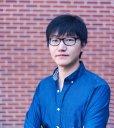
 Wenbin He
· 2 previous affiliations
- Robert Bosch (Germany)Since 2020
- Researcher · Since 2020
- The Ohio State University2014–2019
- PhD student · 2014–2019
Research Overview
Wenbin He focuses on visual analytics, large-scale scientific data visualization, and the intersection of computer vision with machine learning. His early work addressed uncertainty quantification in complex fluid dynamics and ensemble simulations. More recently, his research investigates interpretable deep learning, self-supervised semantic segmentation, and the robustness of vision-language foundation models.
Research Trajectory
Wenbin He began his research trajectory by addressing uncertainty quantification and visualization in complex fluid dynamics. To tackle the challenge of global uncertainty transportation in steady vector fields, he developed A Bayesian approach for probabilistic streamline computation in uncertain flows, modeling streamlines as state space models to capture spatial coherence and local distributions. During this period, he also collaborated on analyzing unsteady flows, contributing to Finite-Time Lyapunov Exponents and Lagrangian Coherent Structures in Uncertain Unsteady Flows.
Expanding into large-scale scientific data, he developed techniques for ensemble simulation visualization. He introduced eFESTA: Ensemble Feature Exploration with Surface Density Estimates to help researchers navigate complex ensemble datasets. Recognizing the potential of deep learning to accelerate these processes, he developed InSituNet: Deep Image Synthesis for Parameter Space Exploration of Ensemble Simulations. This work demonstrated how deep image synthesis could facilitate parameter space exploration, touching on the broader research areas of High-Resolution Generative Scaling and Error-Bounded Lossy Compression for High-Entropy Floating-Point Scientific Data.
As deep learning models became more prevalent, his focus shifted toward visual analytics systems designed to interpret and diagnose these complex, often opaque architectures. He introduced DynamicsExplorer: Visual Analytics for Robot Control Tasks involving Dynamics and LSTM-based Control Policies to help researchers understand the behavior of reinforcement learning models in simulated physical environments. Applying similar diagnostic principles to autonomous driving, he developed Where Can We Help? A Visual Analytics Approach to Diagnosing and Improving Semantic Segmentation of Movable Objects, creating a system to evaluate neural network performance on crucial, safety-critical objects.
This diagnostic work naturally led to developing novel segmentation methods that rely less on exhaustive human annotation. He proposed Self-supervised Semantic Segmentation Grounded in Visual Concepts, leveraging the relationships between pixels and semantic groups to guide unsupervised learning. This work contributed significantly to the research direction of The Bag of Visual Words Representation. He further advanced this paradigm with CLIP-S4: Language-Guided Self-Supervised Semantic Segmentation, utilizing vision-language models to enable segmentation tasks without predefined classes. To bridge the gap between model understanding and improvement, he introduced InterVLS: Interactive Model Understanding and Improvement with Vision-Language Surrogates, a system that extracts interpretable visual concepts to build surrogate models for interactive, no-code refinement.
A parallel thread in his work addresses model robustness, out-of-distribution (OOD) detection, and open-world learning. With collaborators, he developed GradOrth: A Simple yet Efficient Out-of-Distribution Detection with Orthogonal Projection of Gradients, identifying OOD data by analyzing the lower-rank subspace of in-distribution gradients. He also contributed to UP-DP: Unsupervised Prompt Learning for Data Pre-Selection with Vision-Language Models, a method for clustering and selecting highly diverse data points for unknown downstream tasks. To tackle the challenge of detecting both known and unknown objects, he participated in Hyp-OW: Exploiting Hierarchical Structure Learning with Hyperbolic Distance Enhances Open World Object Detection. This research embedded contextual information into known classes, advancing the areas of Hyperbolic Embeddings for Hierarchical Representation Learning and Overcoming Euclidean Distortion with Hyperbolic Embeddings. Continuing his work on flexible categorization, he co-developed USE: Universal Segment Embeddings for Open-Vocabulary Image Segmentation.
Most recently, as a research scientist at Bosch, his collaborations have explored the capabilities and robustness of large foundation models and agentic workflows. He contributed to DINO-R1: Incentivizing Reasoning Capability in Vision Foundation Models, investigating reinforcement learning frameworks that encourage reasoning over simple pattern matching in visual domains. He also co-authored ProSAM: Enhancing the Robustness of SAM-based Visual Reference Segmentation with Probabilistic Prompts, which employs a variational prompt encoder to generate more stable segmentation masks, contributing to the broader area of Heavy Tailed Distributions for Robust Machine Learning. Expanding into language models, he participated in Rethinking Agentic Workflows: Evaluating Inference-Based Test-Time Scaling Strategies in Text2SQL Tasks, benchmarking how structured multi-step reasoning processes impact performance. Returning to his roots in visual analytics, his ongoing work includes VCR: Interpretable and interactive debugging of object detection models with visual concepts, continuing his long-standing effort to make deep learning systems transparent and reliable.
He has also expanded his focus to autonomous driving and robotic control agents. In autonomous systems, He participated in introducing TopoEnhance: A Reliable Enhancement Framework for Driving Scene Topology, which uses a denoising reconstruction process to rectify connectivity graphs between lanes and traffic elements, and contributed to ReactDrive: Self-Reactive Driving World Model, a model that jointly learns agent dynamics and visual generation to capture self-reactive traffic behaviors. Furthermore, He collaborated on AgentRoboCritic: Understanding the Capability of Frontier Agents on Direct Robot Control, presenting an intent-grounded critique framework to analyze direct low-level numerical robot control by multimodal foundation agents across manipulation benchmarks. Moving further into autonomous driving planning and world models, He contributed to VLG-Drive: Unifying Vision-Language and Geometric Priors for Autonomous Driving, which fuses frozen vision-language and geometric foundation representations for trajectory planning, and participated in ReJEPA: Bounded Predictive Regulation for Latent World Models, showing that bounded element-wise losses stabilize representation learning across complex physical environments including driving and manipulation. Turning to language model safety and alignment, He also co-authored Contrastive On-Policy Self-Distillation for LLM Unlearning, which introduces an on-policy distillation objective that reverses privileged forget shifts to unlearn designated data while preserving utility.
Current Directions
Recent work investigates the robustness, reasoning capabilities, and interpretability of large-scale foundation models. The most recent papers in the evidence address the challenge of incentivizing reasoning in vision foundation models rather than relying solely on supervised fine-tuning. Parallel efforts focus on enhancing the stability of visual reference segmentation using probabilistic prompts, as well as evaluating the efficacy of structured, agentic workflows in complex reasoning tasks like Text-to-SQL. Additionally, ongoing research tackles embodied AI and autonomous driving—including geometric and vision-language integration for planners and bounded regulation in latent world models—alongside techniques for model unlearning in large language models.
Profile updated
Loading new papers…
Other researchers whose papers cluster into the same research directions — a proxy for overlapping technical interests and shared intellectual neighborhoods.
See something wrong? Report a mistake