

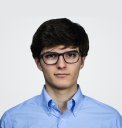
 Hadrien Reynaud
· 8 previous affiliations
- Postdoc · Since 2025
- Stark Future SLSince 2025
- Head of Artificial Intelligence · Since 2025
- Imperial College London2019–2025
- PhD student · 2020–2025
- Graduate Teaching Assistant · 2020–2023
- MS student · 2019–2020
- AI Research Scientist · 2022
- Renault (France)2018–2019
- Machine Learning Engineer · 2018–2019
- Nissan (Japan)2018–2019
- Machine Learning Engineer · 2018–2019
- Mitsubishi Group (Japan)2018–2019
- Machine Learning Engineer · 2018–2019
- TBWA\Worldwide2018
- Web Developer · 2018
Research Overview
Hadrien Reynaud focuses on generative modeling for medical imaging, video synthesis, and the evaluation of clinical AI systems. His trajectory spans early work in reinforcement learning for 3D navigation to the development of high-fidelity, privacy-preserving diffusion models for echocardiograms and CT scans. Currently, he investigates efficient architectures for video generation and distribution coverage in generative models.
Research Trajectory
Reynaud's early work addressed the challenge of navigating complex 3D medical images without extensive manual annotations, introducing a reinforcement learning and neural style transfer approach in Cross Modality 3D Navigation Using Reinforcement Learning and Neural Style Transfer (2021). He then shifted toward generative modeling for clinical applications. In 2022, he developed causal generative models to create counterfactual echocardiogram videos, allowing clinicians to visualize changes in left ventricular ejection fraction in D'ARTAGNAN: Counterfactual Video Generation. Expanding on ultrasound synthesis, he addressed the scarcity of clinical video documentation by building Feature-Conditioned Cascaded Video Diffusion Models for Precise Echocardiogram Synthesis. Concurrently, he explored the broader area of Object Localization with Internal Diffusion Attention Maps, demonstrating how to extract high-quality foreground-background segmentation masks from pre-trained latent diffusion models without manual labels in Foreground-Background Separation through Concept Distillation from Generative Image Foundation Models.
In 2024, Reynaud advanced the use of synthetic data for safe medical data sharing. He introduced EchoNet-Synthetic: Privacy-Preserving Video Generation for Safe Medical Data Sharing, an end-to-end approach for the generative de-identification of dynamic medical imaging. Investigating the underlying mechanics of these models, he revealed that video diffusion models often memorize only a fraction of their training data. This finding, detailed in Uncovering Hidden Subspaces in Video Diffusion Models Using Re-Identification, contributes to the research direction of Measuring and Improving Distribution Coverage in Generative Models. He also examined the tension between image quality and model interpretability in Trade-Offs in Fine-Tuned Diffusion Models between Accuracy and Interpretability, showing that freezing the text encoder during fine-tuning preserves a model's ability to localize diseases. Further applying diffusion models to pathology, he developed methods to generate "pseudo-healthy" scans for localizing anomalies in brain and retinal imaging in Image-Conditioned Diffusion Models for Medical Anomaly Detection.
Parallel to his clinical work, Reynaud contributed to the field of Efficient Architectures for Democratizing Video Generation. He proposed a zero-shot framework for temporally consistent animations using standard image diffusion models via latent noise manipulation in Noise Crystallization and Liquid Noise: Zero-shot Video Generation using Image Diffusion Models. He also collaborated on JVID: Joint Video-Image Diffusion for Visual-Quality and Temporal-Consistency in Video Generation, a framework that alternates between latent image and video diffusion models during sampling to achieve high-fidelity results without computationally expensive joint training.
In 2025, his research expanded into foundation models and advanced evaluation metrics. He introduced EchoFlow: A Foundation Model for Cardiac Ultrasound Image and Video Generation, which leverages latent flow matching to produce synthetic echocardiograms that achieve performance parity with real patient data. Extending this flow matching approach to 3D modalities, he modeled 3D CT volumes as video sequences to synthesize high-resolution scans from radiology reports in CTFlow: Video-Inspired Latent Flow Matching for 3D CT Synthesis. To optimize the training of such models, he developed a "generate-then-select" framework for video dataset distillation in Video Dataset Condensation with Diffusion Models. Addressing fundamental limitations in generative outputs, Reynaud co-authored Image Generation Diversity Issues and How to Tame Them, introducing the Image Retrieval Score to quantify and mitigate "diversity amnesia." Finally, contributing to the areas of Asymmetric Risk Optimization for Clinical Diagnostic Models and Evaluating Medical Language Models Beyond Lexical Overlap, he participated in the development of a distribution-aware evaluation metric for AI-generated radiology reports in CRG Score: A Distribution-Aware Clinical Metric for Radiology Report Generation.
In 2026, Reynaud collaborated on Reliable and grounded reporting of any computed tomography scan with FORA, a general-purpose CT model that pairs multiple-instance learning with an interpretable concept bottleneck to recognize and spatially localize over a thousand radiological concepts and generate grounded clinical reports without lesion-level supervision.
Current Directions
Recent work investigates the application of latent flow matching to high-dimensional medical data, treating both cardiac ultrasound videos and 3D CT volumes as continuous sequences to achieve high-fidelity synthesis without prohibitive memory costs. Alongside architectural improvements for generative models, current research addresses the optimization of training data through video dataset condensation, replacing computationally expensive matching methods with efficient generation and selection strategies. Additionally, recent efforts focus on the rigorous evaluation of clinical AI, developing distribution-aware metrics for radiology reports and quantifying diversity gaps in generative image outputs to ensure synthetic data remains both clinically accurate and representative of real-world patient populations.
Profile updated
Loading new papers…
Other researchers whose papers cluster into the same research directions — a proxy for overlapping technical interests and shared intellectual neighborhoods.
See something wrong? Report a mistake