

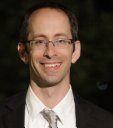
 Guy Rosman
· 5 previous affiliations
- Massachusetts General HospitalSince 2017
- Researcher · Since 2017
- Toyota Research InstituteSince 2017
- Researcher · Since 2017
- Duke UniversitySince 2023
- Associate Professor · Since 2023
- Postdoc · 2013–2017
- PhD student · 2009–2013
- MS student · 2005–2008
- Undergrad student · 2000–2004
Research Overview
Guy Rosman focuses on probabilistic modeling for robotic perception, multi-agent trajectory prediction, and shared autonomy. His early work addressed nonlinear dimensionality reduction and 3D sensor planning for computer vision applications. More recently, his research investigates intent recognition, task-informed motion forecasting, and human-AI alignment to improve decision-making in autonomous driving and surgical video analysis.
Research Trajectory
Guy Rosman’s early research addressed fundamental challenges in manifold learning and scene representation. He introduced Nonlinear Dimensionality Reduction by Topologically Constrained Isometric Embedding (2010), presenting a framework that utilizes both local and global topological constraints to map non-convex manifolds more reliably than standard Isomap algorithms. Expanding into structural scene understanding, he collaborated on A Mixture of Manhattan Frames: Beyond the Manhattan World (2014). This work proposed a probabilistic model that relaxes traditional orthogonal assumptions by describing complex real-world environments as mixtures of multiple coordinate systems.
Moving into 3D perception and active sensing, his research explored methods for enhancing depth recovery and optimizing sensor data acquisition. With collaborators, he developed RGBD-fusion: Real-time high precision depth recovery (2015), a technique that fuses intensity and depth information to reconstruct fine geometric details without explicitly integrating surface normals. This work contributed to the research direction of Direct Depth Optimization for Mathematically Consistent Surfaces. Building on adaptive sensing principles, he designed Information-Driven Adaptive Structured-Light Scanners (2016), which applies generative models to structured-light 3D scanning to maximize information gain through adaptive pattern selection.
Transitioning toward autonomous systems as a senior research scientist at the Toyota Research Institute, his focus shifted significantly toward multi-agent trajectory prediction and planning. His group introduced Diversity-Aware Vehicle Motion Prediction via Latent Semantic Sampling (2019), detailing a generative adversarial network that leverages a latent semantic space to produce diverse, realistic future trajectories for safety-critical driving scenarios. This marked a sustained engagement in advancing the broader area of Probabilistic Trajectory Forecasting for Autonomous Systems. To enforce physical and logical constraints in these models, he proposed Differentiable Logic Layer for Rule Guided Trajectory Prediction (2020), integrating temporal logic formulas directly into neural networks via a novel optimization layer.
His subsequent work emphasized the downstream utility of motion forecasting in parallel autonomy. His lab developed CARPAL: Confidence-Aware Intent Recognition for Parallel Autonomy (2021), a multi-task network that predicts both probabilistic driver trajectories and task-specific utility statistics to inform real-time decision-making. He further refined this approach by presenting TIP: Task-Informed Motion Prediction for Intelligent Systems (2021), a framework that jointly optimizes for statistical prediction accuracy and the practical utility of downstream tasks like collision warning.
Expanding the scope of trajectory forecasting, his team explored higher-level semantic representations. They published Trajectory Prediction with Linguistic Representations (2022), demonstrating a model trained on partially-annotated captions that generates linguistic descriptions of maneuvers to refine long-term multi-agent predictions. Concurrently, drawing on his role at the MGH Surgical Artificial Intelligence and Innovation Lab, he led work on Concept Graph Neural Networks for Surgical Video Understanding (2022). This research integrated global knowledge graphs into the temporal analysis of surgical procedures to verify critical safety views and reason about complex medical concepts.
In recent years, his focus has expanded to human-robot shared control and sample-efficient learning architectures. His group introduced Dreaming to Assist: Learning to Align with Human Objectives for Shared Control in High-Speed Racing (2024), a framework utilizing recurrent state-space models to infer human intent and provide tailored assistance in high-stakes environments. He also participated in developing Learning to Plan, Planning to Learn: Adaptive Hierarchical RL-MPC for Sample-Efficient Decision Making (2025), which fuses reinforcement learning with model predictive control to create a bi-directional, sample-efficient learning pipeline. Building on shared autonomy, his lab designed Proximal State Nudging: Reducing Skill Atrophy from AI Assistance (2026), an algorithm grounded in psychological principles that prevents human skill degradation by guiding users toward states conducive to learning. Most recently, his team investigated open-set corrective assistance in embodied AI, presenting On the Strengths and Weaknesses of Data for Open-Set Embodied Assistance (2026) to demonstrate how specialized datasets and vision-language-action models can generalize to unseen user errors.
Current Directions
The most recent papers in the evidence address the intersection of shared autonomy, human-AI alignment, and open-set embodied assistance. A major ongoing theme is the design of assistive systems that not only ensure safety in dynamic environments but also actively preserve and enhance human skill, counteracting the atrophy often caused by automated interventions. To achieve this, recent work explores sample-efficient decision-making architectures that bridge reinforcement learning and model predictive control. Additionally, there is a growing focus on leveraging large language models and specialized synthetic datasets to enable embodied agents to provide corrective assistance in open-set scenarios without relying on predefined error categories.
Profile updated
Loading new papers…
Other researchers whose papers cluster into the same research directions — a proxy for overlapping technical interests and shared intellectual neighborhoods.
See something wrong? Report a mistake