

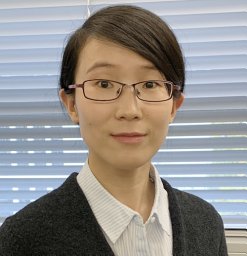
 Grace Li Zhang
· 2 previous affiliations
- Technische Universität DarmstadtSince 2022
- W3 Ful l Professor on Hardware for AI · Since 2026
- Current
- Assistant Professor on Hardware for AI · 2022–2026
- Technical University of Munich2014–2022
- Team leader · 2018–2022
- Doctor's Degree, Electrical and Electronics Engineering · 2014–2018
Research Overview
Grace Li Zhang focuses on efficient hardware-software architectures for machine learning, neuromorphic computing, and circuit design methodologies. Her early work addressed nanoscale process variations and hardware metric prediction in integrated circuits. Recently, her research has expanded to include large language model compression, automated hardware synthesis, and hardware-aware neural architecture search.
Research Trajectory
Zhang’s early research concentrated on the reliability and performance of integrated circuits, particularly within the research direction of Mitigating Nanoscale Process Variation in Integrated Circuits. In 2016, she explored statistical methods for post-silicon validation and yield improvement. This included EffiTest: efficient delay test and statistical prediction for configuring post-silicon tunable buffers, which contributed to the broader area of Machine Learning for Early Stage Hardware Metric Prediction. During the same period, she developed PieceTimer: a holistic timing analysis framework considering setup/hold time interdependency using a piecewise model and investigated Sampling-based buffer insertion for post-silicon yield improvement under process variability.
As her focus shifted toward artificial intelligence hardware, Zhang began addressing the physical challenges of emerging computing paradigms. In 2020, she co-authored Statistical Training for Neuromorphic Computing using Memristor-based Crossbars Considering Process Variations and Noise, bridging her background in process variation with neuromorphic architectures. She subsequently introduced CorrectNet: Robustness Enhancement of Analog In-Memory Computing for Neural Networks by Error Suppression and Compensation in 2022. This framework restored the inference accuracy of neural networks running on analog in-memory computing hardware by combining Lipschitz constant regularization with lightweight digital compensation layers, intersecting with work in the area of Accelerating Neural Architecture Search Without Full Model Training.
By 2023, Zhang’s work increasingly emphasized the co-design and optimization of neural networks and hardware. She provided a comprehensive overview of the field in Machine Learning in Advanced IC Design: A Methodological Survey. Concurrently, her group proposed Class-Aware Pruning for Efficient Neural Networks, a compression strategy that evaluates the contribution of specific filters to object class identification, allowing for significant reductions in floating-point operations with minimal accuracy loss.
In 2024 and 2025, Zhang’s trajectory expanded significantly into the optimization of Large Language Models (LLMs) and their application to hardware design automation. To address the latency of LLM interactions, she developed LiveMind: Low-latency Large Language Models with Simultaneous Inference, a framework that processes user input while it is still being generated. Her group also tackled the memory constraints of long-context LLMs with CompressKV: Semantic Retrieval Heads Know What Tokens are Not Important Before Generation, and introduced a training-free compression technique in Basis Sharing: Cross-Layer Parameter Sharing for Large Language Model Compression, which decomposes weight matrices into shared basis vectors and layer-specific coefficients.
Simultaneously, Zhang leveraged LLMs to automate complex hardware engineering tasks. She introduced CorrectBench: Automatic Testbench Generation with Functional Self-Correction using LLMs for HDL Design, which uses an ensemble of LLM-generated designs to cross-check logic, advancing the research direction of Autonomous Code Refinement via Execution Feedback Loops. Building on this agentic approach, she developed CorrectHDL: Agentic HDL Design with LLMs Leveraging High-Level Synthesis as Reference, which combines LLM generation with traditional synthesis tools to produce functionally correct and power-efficient designs, contributing to the field of Automated Hardware Synthesis from High Level Specifications.
Her recent work continues to push the boundaries of hardware-aware AI optimization. In 2025, she published PEL-NAS: Search Space Partitioned Architecture Prompt Co-Evolutionary LLM-driven Hardware-Aware Neural Architecture Search, a training-free framework that uses LLMs to automate the design of hardware-efficient neural networks. She also explored energy-aware compression for systolic array accelerators in Layer-wise Weight Selection for Power-Efficient Neural Network Acceleration, and applied deep learning to specialized aerospace constraints with Deep Joint Source-Channel Coding for Small Satellite Applications, an end-to-end framework merging image compression and error correction for orbital environments.
In 2026, Zhang continued expanding methods for efficient inference across vision and language models. Zhang guided DeclareViT: Decoupling Early Classification from Feature Refinement with Exit Query for Efficient ViTs, which uses dedicated exit queries to decouple early classification branches from the backbone token stream to resolve conflicting optimization objectives. In parallel, Zhang collaborated on KV Packet: Recomputation-Free Context-Independent KV Caching for LLMs, which wraps immutable cached document packets in lightweight soft-token adapters to allow prompt cache reuse without recomputing attention states.
Current Directions
The most recent papers in the evidence highlight a dual focus on the efficiency of Large Language Models and the use of LLMs as agents for hardware design automation. One major current direction investigates techniques to reduce the computational and memory overhead of LLMs, utilizing methods such as KV cache compression, simultaneous inference, and cross-layer parameter sharing. A parallel effort addresses the automation of Hardware Description Language (HDL) generation and verification. In this domain, recent work employs agentic LLM frameworks and execution feedback loops—often using high-level synthesis tools as reference points—to ensure the functional correctness and efficiency of generated circuits. Additionally, ongoing research continues to explore hardware-aware neural architecture search and energy-efficient model compression tailored for specific accelerators and constrained environments.
Profile updated
Loading new papers…
Other researchers whose papers cluster into the same research directions — a proxy for overlapping technical interests and shared intellectual neighborhoods.
See something wrong? Report a mistake