

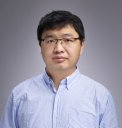
 Cheng Liu
· 5 previous affiliations
- North China Electric Power UniversitySince 2026
- Full Professor · Since 2026
- Chinese Academy of Sciences2018–2026
- Associate Professor · 2018–2026
- National University of Singapore2016–2018
- Postdoc · 2016–2018
- University of Hong Kong2011–2016
- PhD student · 2011–2016
- Harbin Institute of Technology2003–2009
- MS student · 2007–2009
- Undergrad student · 2003–2007
5 other authors named Cheng Liu: Cheng Liu (Huaqiao University · 30 papers), Cheng Liu (National University of Singapore · 5 papers), Cheng Liu (2 papers), Cheng Liu (2 papers), Cheng Liu (1 paper)
Research Overview
Cheng Liu focuses on domain-specific architectures, hardware-software co-design, and electronic design automation. His earlier work explored fault-tolerant computing and specialized accelerators for graph processing and neural networks. More recently, his research investigates the application of large language models to chip design and code generation, alongside mixed-precision neural network optimization for resource-constrained edge devices.
Research Trajectory
Cheng Liu's research trajectory began with investigations into hardware reliability and high-level synthesis (HLS). Early in his career, he addressed on-chip communication reliability by introducing A resilient on-chip router design through data path salvaging. He subsequently developed methodologies to improve design productivity, such as A Soft Coarse-Grained Reconfigurable Array Based High-level Synthesis Methodology: Promoting Design Productivity and Exploring Extreme FPGA Frequency, which sought to optimize FPGA performance through coarse-grained reconfigurable architectures.
By 2020, his focus expanded significantly into the automated design of specialized accelerators, particularly for deep learning and graph processing. To address the complexities of FPGA development for graph neural networks (GNNs), he participated in developing DeepBurning-GL: an Automated Framework for Generating Graph Neural Network Accelerators. This work aligns with his broader contributions to the research direction of Bridging the Software-Hardware Gap for Specialized Accelerators. Concurrently, he advanced the area of Automated Design Space Exploration for Computer Architecture by introducing You Only Search Once: A Fast Automation Framework for Single-Stage DNN/Accelerator Co-design, a framework that jointly optimizes neural network architectures and their hardware configurations. He also contributed to NASA: Accelerating Neural Network Design with a NAS Processor, which proposed specialized hardware to speed up the neural architecture search process itself.
During this period, Liu and his collaborators extensively investigated the area of Overcoming Irregular Memory Access in Graph Neural Networks. This effort yielded several specialized architectures, including EnGN: A High-Throughput and Energy-Efficient Accelerator for Large Graph Neural Networks, which accelerates key stages of GNN propagation, and GLIST: Towards In-Storage Graph Learning, which pushes computation closer to storage to alleviate memory bottlenecks. He also explored alternative memory technologies for these workloads, co-developing TARe: Task-Adaptive in-situ ReRAM Computing for Graph Learning to support multiple in-situ computing modes for large-scale graphs.
Returning to themes of hardware reliability, Liu's subsequent work heavily emphasized fault-tolerant deep learning. He contributed to the research direction of Selective Protection for Hardware Fault Resilience by proposing HyCA: A Hybrid Computing Architecture for Fault-Tolerant Deep Learning, which uses dedicated recomputing units to dynamically compensate for faulty processing elements without requiring model retraining. He formalized many of these concepts in the co-authored book Built-in Fault-Tolerant Computing Paradigm for Resilient Large-Scale Chip Design - A Self-Test, Self-Diagnosis, and Self-Repair-Based Approach. He further advanced the area of Range Restriction for Hardware Fault Tolerance in Neural Networks with Adaptive Soft Error Protection for Deep Learning, a framework that uses a lightweight GNN to predict runtime vulnerability and dynamically apply protection. This work also intersects with the broader field of Scaling Analog In-Memory Computing to Physical Silicon.
In recent years, Liu has continued to optimize neural network inference on edge devices, introducing MCU-MixQ: A HW/SW Co-optimized Mixed-precision Neural Network Design Framework for MCUs to enable high-performance inference on resource-constrained microcontrollers. His ongoing work in graph processing includes Graphitron: A Domain Specific Language for FPGA-Based Graph Processing Accelerator Generation, which decouples algorithms from underlying hardware templates, and HisOrder: A Historical Frontier-Aware Graph Reordering for Efficient BFS, which improves data locality and load balancing for breadth-first search operations.
Liu has also expanded his research to address the intersection of large language models (LLMs) and electronic design automation (EDA). In Understanding and Mitigating Errors of LLM-Generated RTL Code, he analyzed the failure modes of LLM-based register-transfer-level code generation, proposing targeted in-context learning techniques for error correction. He further explored the use of language models for code optimization in From Large to Small: Transferring CUDA Optimization Expertise via Reasoning Graph, a framework that enables small language models to optimize parallel code by navigating an externalized reasoning graph. Finally, his work touches on emerging computational paradigms, as seen in his investigation of adiabatic quantum computing for neural network compression in Is quantum optimization ready? An effort towards neural network compression using adiabatic quantum computing.
Current Directions
Recent work investigates the integration of artificial intelligence into hardware design and code generation workflows. Specifically, the most recent papers in the evidence address the use of large language models for automated register-transfer-level (RTL) code generation and the distillation of expert reasoning into small language models for CUDA kernel optimization. Alongside these AI-assisted programming efforts, ongoing research continues to refine domain-specific languages for FPGA-based graph processing accelerators and explores the viability of quantum optimization techniques for neural network compression.
Profile updated
Loading new papers…
Other researchers whose papers cluster into the same research directions — a proxy for overlapping technical interests and shared intellectual neighborhoods.
See something wrong? Report a mistake