

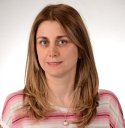
 Gozde Unal
· 4 previous affiliations
- Istanbul Technical UniversitySince 2015
- Full Professor · Since 2015
- NYU Langone Health2024–2025
- Principal Researcher · 2024–2025
- Sabanci University2007–2015
- Associate Professor · 2011–2015
- Assistant Professor · 2007–2011
- Siemens Healthcare (United States)2003–2007
- Research Scientist · 2003–2007
Research Overview
Gozde Unal focuses on the development of reliable and adaptive machine learning systems, with a primary emphasis on uncertainty quantification, continual learning, and generative modeling. Her work addresses the fundamental limitations of deterministic neural networks—specifically their tendency toward overconfidence and their inability to adapt to non-stationary environments—by integrating probabilistic frameworks such as Evidential Deep Learning for Predictive Uncertainty Quantification and Bayesian inference into deep learning architectures. Her research trajectory demonstrates a consistent move from foundational uncertainty quantification toward complex applications in climate forecasting, decentralized learning, and 3D vision.
Research Trajectory
The early stages of Unal’s observed research (circa 2022) were characterized by a focus on Fairness and Reliability in Selective Classification. During this period, she investigated how models can accurately identify and reject out-of-distribution (OOD) samples, a critical requirement for safety-critical AI. This work often utilized Evidential Deep Learning (EDL) to provide a more nuanced measure of uncertainty than standard softmax-based classifiers. By 2023, her focus expanded to include the intersection of meta-learning and continual learning, particularly for structured data such as graphs. This period saw the development of methods that combine experience replay with meta-objective functions to prevent catastrophic forgetting as models encounter new tasks.
In 2024 and 2025, Unal’s work has increasingly addressed Calibrating Neural Network Confidence for Reliable Predictions in regression and generative contexts. This includes applying calibration techniques to Probabilistic Forecasting for Chaotic Physical Dynamics, where she has explored the trade-offs between predictive accuracy and the reliability of confidence intervals in climate modeling. Additionally, her recent research has tackled structural issues in generative models, such as codebook collapse in variational autoencoders, by leveraging hierarchical Bayesian modeling and evidential frameworks.
Uncertainty and Reliability in Deep Learning
A central theme in Unal's work is the quantification of total uncertainty to ensure that deep learning models are "aware" of their own limitations. In Evidential Turing Processes, she served as senior author on a project that synthesized EDL with Neural Processes and Neural Turing Machines. This architecture was designed to provide calibrated class probabilities in regions of high overlap and to accurately identify queries that fall outside the target domain. This line of inquiry is motivated by the observation that traditional classifiers often assign high confidence to incorrect predictions when faced with OOD data.
Unal has also extended these reliability concerns to decentralized environments. In How to Combine Variational Bayesian Networks in Federated Learning, she acted as the senior researcher investigating the aggregation of probabilistic models across multiple data centers. While deterministic federated learning models often suffer from poor calibration, her work demonstrated that Bayesian neural networks could maintain competitive accuracy while providing the uncertainty metrics necessary for safety-critical applications. This research highlights the challenge of applying standard aggregation schemes to the weight distributions of Bayesian models and proposes more robust alternatives for collaborative training.
Continual Learning and Memory Systems
Unal has made significant contributions to the field of continual learning, specifically regarding how models manage Adaptive Complexity through Dirichlet Process Mixture Models. In her participation in the study of Continual learning of multi-modal dynamics with external memory, she explored environments where new modes of behavior emerge sequentially without explicit labels. The proposed method utilizes a Dirichlet Process prior on the attention weights of a neural episodic memory, allowing the model to efficiently store and retrieve descriptors of past modes. This approach facilitates knowledge transfer across tasks by retrieving similar descriptors from previous experiences, thereby mitigating the interference that typically occurs when a model is updated with new data.
Furthering this line of research, Unal led the development of Meta Continual Learning on Graphs with Experience Replay. This work addresses the unique challenges of maintaining performance on graph-structured data as new nodes and edges are introduced. By combining replay buffers—which store a subset of past samples—with meta-learning, the method ensures that model weights do not converge too rapidly to the current task, preserving the structural knowledge acquired from earlier graph states.
Generative Modeling and Representation Learning
In the domain of generative modeling, Unal has focused on improving training stability and the quality of learned representations. Her work on Protodiffusion: Classifier-free diffusion guidance with prototype learning introduced a method to accelerate the training of diffusion models. By using separately learned class prototypes as conditioning information rather than randomly initialized embeddings, the model achieves high-quality generation more rapidly. This research addresses the high computational cost associated with standard diffusion processes while maintaining the stability and quality for which these models are known.
Unal's recent work also addresses the problem of Disentangled Representation Learning with Correlated Latent Factors in discrete latent spaces. In EdVAE: Mitigating Codebook Collapse with Evidential Discrete Variational Autoencoders, she identified that the use of the softmax function in discrete VAEs often leads to "codebook collapse," where only a small fraction of the available latent embeddings are utilized. She proposed incorporating EDL through a hierarchical Bayesian modeling approach to replace the softmax function. This prevents the encoder from assigning overconfident probabilities to a narrow set of codebook elements, thereby encouraging the model to utilize the full capacity of the discrete representation space.
Applied Probabilistic Forecasting and Vision
Unal’s research increasingly applies these theoretical frameworks to complex real-world problems. As the lead author of Calibrating Bayesian UNet++ for Sub-Seasonal Forecasting, she addressed the critical task of predicting extreme temperature anomalies. Recognizing that a small error in seasonal forecasting can have significant global impacts, she focused on the calibration of regression models—a topic less explored than classification calibration. Her work demonstrated that by accepting a slight trade-off in prediction error, it is possible to achieve significantly more reliable confidence intervals, making the model’s outputs more actionable for climate scientists.
In the field of computer vision, she has applied selective learning strategies to 3D data. In ALReg: Registration of 3D Point Clouds Using Active Learning, she oversaw the development of a method that treats point cloud registration as a selective regression task. By identifying and using only the most informative subsets of points from each cloud, the network reduces training time and improves the precision of the calculated rotation and translation. This work reflects her broader interest in moving away from "black-box" deep learning toward more efficient, selective, and interpretable approaches.
Representative Work
- Evidential Turing Processes (ICLR 2022): Introduces a probabilistic classifier combining EDL and Neural Turing Machines for improved uncertainty quantification and OOD detection.
- How to Combine Variational Bayesian Networks in Federated Learning (NeurIPS 2022): Proposes an aggregation scheme for Bayesian neural networks in decentralized settings to maintain model calibration.
- Meta Continual Learning on Graphs with Experience Replay (TMLR 2023): Combines replay buffers and meta-learning to address catastrophic forgetting in graph-based continual learning tasks.
- Protodiffusion: Classifier-free diffusion guidance with prototype learning (ACML 2023): Utilizes prototype learning to accelerate the training and improve the guidance of diffusion-based generative models.
- Calibrating Bayesian UNet++ for Sub-Seasonal Forecasting (ICLR 2024): Investigates the calibration of regression models for climate forecasting, balancing predictive error with reliability.
- EdVAE: Mitigating Codebook Collapse with Evidential Discrete Variational Autoencoders (ICLR 2024): Employs evidential deep learning to prevent the collapse of discrete latent spaces in variational autoencoders.
Profile updated
| Title | Venue | Year |
|---|---|---|
| Disentanglement with factor quantized variational autoencoders | Neurocomputing | 2024 |
| Calibrating Bayesian UNet++ for Sub-Seasonal Forecasting | Workshops @ ICLR | 2024 |
| Continual learning of multi-modal dynamics with external memory | L4dc | 2024 |
| ALReg: Registration of 3D Point Clouds Using Active Learning | Applied Sciences | 2023 |
| Edvae: Mitigating codebook collapse with evidential discrete variational autoencoders | Pattern Recognition | 2023 |
| Meta Continual Learning on Graphs with Experience Replay | TMLR | 2023 |
| Protodiffusion: Classifier-free diffusion guidance with prototype learning | Asian Conference on Machine Learning - Acml | 2023 |
| Textile Pattern Generation Using Diffusion Models | arXiv | 2023 |
| How to Combine Variational Bayesian Networks in Federated LearningGitHub resource | Federated Learning @ NeurIPS | 2022 |
| Evidential Turing Processes | ICLR | 2022 |
| Paper | Venue | Year |
|---|---|---|
| How to Combine Variational Bayesian Networks in Federated LearningGitHubituvisionlab/ | NeurIPS | 2022 |
Loading new papers…
Other researchers whose papers cluster into the same research directions — a proxy for overlapping technical interests and shared intellectual neighborhoods.
See something wrong? Report a mistake