

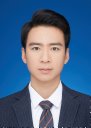
 Gongbo Tang
· 2 previous affiliations
- Beijing Language and Culture UniversitySince 2022
- Lecturer · Since 2022
- Current
- Uppsala University2016–2022
- Researcher · 2021–2022
- PhD student · 2016–2020
Research Overview
Gongbo Tang focuses on neural machine translation, linguistic probing, and the interpretability of deep learning architectures. His trajectory spans from evaluating spelling normalization and word sense disambiguation to analyzing the internal mechanisms of encoder-decoder models. The most recent work in his profile investigates the translation of negation and character-based modeling in neural translation systems.
Research Trajectory
Gongbo Tang's research trajectory is characterized by a systematic investigation into the internal workings and linguistic capabilities of neural machine translation (NMT) systems. Beginning in 2018, Tang led efforts as a first author to evaluate how well NMT architectures handle specific linguistic phenomena and noisy inputs. Early work included An Evaluation of Neural Machine Translation Models on Historical Spelling Normalization, which tested the robustness of sequence-to-sequence models on non-standard historical text. Concurrently, Tang began a sustained inquiry into how translation models resolve lexical ambiguity, publishing An Analysis of Attention Mechanisms: The Case of Word Sense Disambiguation in Neural Machine Translation. This work contributed to the broader area of The Discrepancy Between Attention and Token Alignment, examining whether attention weights genuinely reflect the alignment necessary for word sense disambiguation (WSD) or if they rely on more diffuse statistical patterns.
In 2019, Tang deepened this analysis by isolating the specific components of NMT architectures responsible for linguistic reasoning. In Encoders Help You Disambiguate Word Senses in Neural Machine Translation, Tang demonstrated the critical role of the encoder in capturing context for WSD, aligning with themes such as Layer-wise Probing of Internal Representations. To further isolate architectural variables, Tang also led Understanding Neural Machine Translation by Simplification: The Case of Encoder-free Models. By stripping away the encoder, this research provided a controlled environment to study decoder dynamics, reflecting an interest in the research direction of Modular Deconstruction of Deep Learning Architectures.
Moving into 2020, Tang's focus expanded to sub-word and character-level modeling. As the first author of Understanding Pure Character-Based Neural Machine Translation: The Case of Translating Finnish into English, Tang investigated the viability and internal representations of models operating entirely at the character level. This work explored how well character-based systems could handle morphologically rich languages like Finnish without relying on traditional word or sub-word tokenization.
In 2021, Tang shifted toward evaluating complex semantic phenomena, specifically negation. In Revisiting Negation in Neural Machine Translation, Tang conducted extensive automatic and manual evaluations across English-German and English-Chinese translation pairs. The study demonstrated that while deeper and more advanced networks have generally improved the translation of negation, performance remains highly dependent on the language pair and translation direction. Notably, the research identified under-translation as the most significant error type in modern NMT, contrasting with the more diverse error profiles seen in older statistical machine translation systems. This diagnostic approach to specific linguistic constructs ties closely to work in the area of Minimal Pair Evaluation of Language Models.
Current Directions
The most recent papers in the evidence, dating to 2020 and 2021, indicate a focus on diagnosing specific failure modes and representational limits in neural machine translation. Recent work investigates how NMT systems process complex semantic modifiers, such as negation, and identifies under-translation as a primary bottleneck in cross-lingual accuracy. Additionally, Tang's recent research explores the boundaries of granular input representations, analyzing how pure character-based models perform on morphologically complex languages. Together, these directions emphasize a rigorous, evaluation-driven approach to understanding what modern translation architectures actually learn, moving beyond standard benchmark scores to isolate specific linguistic competencies and structural vulnerabilities.
Profile updated
Loading new papers…
Other researchers whose papers cluster into the same research directions — a proxy for overlapping technical interests and shared intellectual neighborhoods.
See something wrong? Report a mistake