

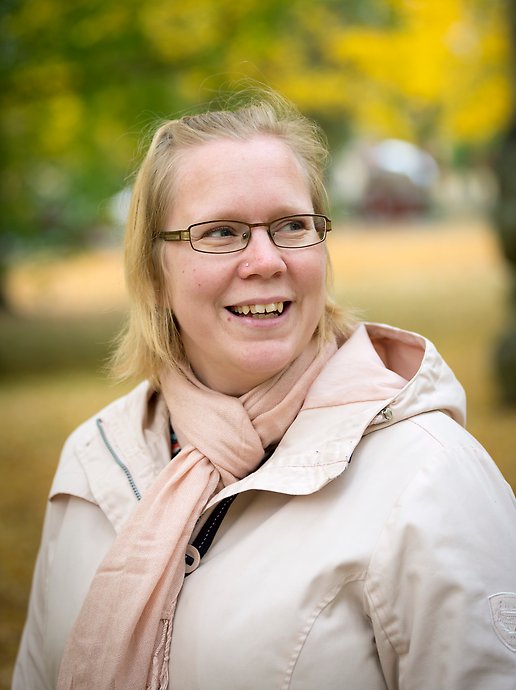
 Eva Pettersson
· 2 previous affiliations
- Uppsala UniversitySince 2018
- Researcher · Since 2018
- PhD student · 2016
- Master, Computational Linguistics · 1998–2002
- Convertus AB2007–2016
- co-funder · 2007–2016
Research Overview
Eva Pettersson focuses on natural language processing for historical texts, orthographic normalization, and the extraction of syntactic structures from diachronic corpora. Her early work involved machine translation and parallel treebanks before shifting to the computational analysis of historical Swedish. Her most recent research investigates neural machine translation models for historical spelling normalization.
Research Trajectory
Pettersson’s early research involved foundational natural language processing tasks, including machine translation and corpus linguistics. As a co-author, she contributed to the development of cross-lingual resources, such as the Swedish-Turkish Parallel Treebank (2008), which provided syntactically annotated corpora for a typologically dissimilar language pair.
By 2011, her focus shifted significantly toward the computational analysis of historical texts, a domain characterized by sparse data and non-standardized grammar. As a lead author, she began investigating methods to parse and extract syntactic structures from older documents. In Automatic Verb Extraction from Historical Swedish Texts (2011), Pettersson explored techniques for identifying verb constructions in diachronic corpora, addressing the challenges posed by evolving linguistic norms. This work aligned with the broader research direction of Modeling Language Evolution in Historical NLP, which seeks to adapt chronocentric language models to historical contexts.
A major hurdle in historical NLP is the lack of standardized spelling. In older texts, a single word might appear in numerous variations depending on the author, region, or time period. This orthographic instability prevents modern NLP models from accurately processing historical documents. To address this, Pettersson led extensive research into the area of Robust NLP for Orthographically Unstable Historical Corpora. Her work aimed to map historical spelling variations to their modern equivalents, thereby allowing contemporary NLP tools to function on archival texts. In Normalisation of Historical Text Using Context-Sensitive Weighted Levenshtein Distance and Compound Splitting (2013), she proposed a method to improve normalization accuracy by adapting edit-distance algorithms to account for historical context and compound words.
Expanding on this methodology, Pettersson conducted comparative analyses across different languages and techniques. In A Multilingual Evaluation of Three Spelling Normalisation Methods for Historical Text (2014), she evaluated rule-based, dictionary-based, and character-based statistical machine translation approaches to normalization, demonstrating how different methods perform across diverse historical datasets. This research contributed to the broader theme of Orthographic Normalization for Dialectal and Informal Text, providing empirical baselines for handling spontaneous and unstandardized orthography.
Alongside normalization, Pettersson continued to refine information extraction from historical documents. In Ranking Relevant Verb Phrases Extracted from Historical Text (2015), she developed methods to prioritize and filter extracted verb phrases, improving the precision of syntactic parsing in diachronic corpora.
Current Directions
The most recent work in the evidence, dating to 2018, investigates the application of deep learning architectures to historical NLP tasks. Specifically, this research evaluates how neural machine translation models perform when adapted for historical spelling normalization. By treating normalization as a translation task from historical to modern spelling, this work explores whether neural approaches can outperform the statistical and rule-based methods developed in earlier years. This aligns with ongoing efforts in the research theme of Diachronic Transfer Learning for Historical Languages, focusing on overcoming the data bottlenecks inherent in training neural models on low-resource historical texts.
Profile updated
Loading new papers…
Other researchers whose papers cluster into the same research directions — a proxy for overlapping technical interests and shared intellectual neighborhoods.
See something wrong? Report a mistake