

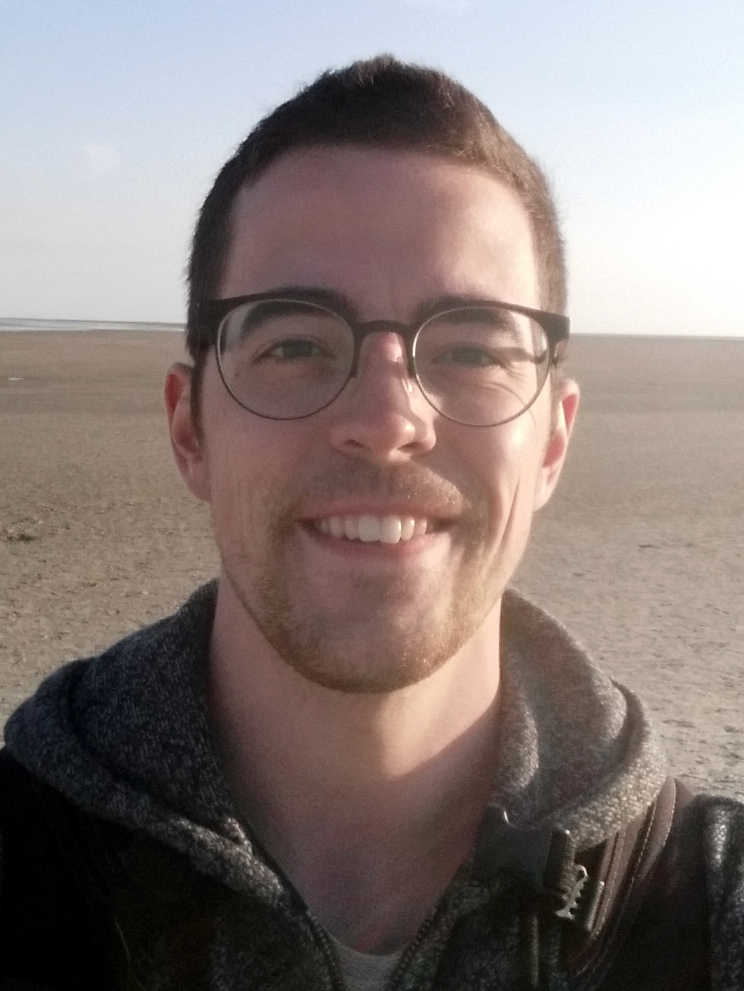
 Gereon Fox
· 3 previous affiliations
- Max Planck Institute for InformaticsSince 2019
- Research Engineer · Since 2025
- Department IT Administrator · Since 2019
- Doctoral Student · 2019–2025
- Nanyang Technological University2023–2024
- Intern · 2023–2024
- Saarland University2011–2020
- PhD, Computer Science · 2015–2020
- Scientific Employee · 2017–2019
- Bachelor of Science, Computer Science · 2011–2014
Research Overview
Gereon Fox focuses on computer vision, generative modeling, and digital forensics, with particular emphasis on video synthesis and the detection of manipulated media. His trajectory spans from early work in 3D scene reconstruction to leading research on high-quality face video forgery detection and temporal generative adversarial networks. The most recent evidence indicates an interest in implicit parametric modeling and volumetric representations for human facial features.
Research Trajectory
Fox’s early research in the provided evidence centered on 3D scene reconstruction and intrinsic decomposition. In 2017, he contributed as a second author to Live User-Guided Intrinsic Video for Static Scenes. This work introduced a real-time approach for the intrinsic decomposition of static scenes captured by RGB-D sensors. By utilizing a dense volumetric reconstruction framework, the method allowed user-provided constraints and reflectance estimates to be fused directly in three-dimensional space, facilitating interactive editing of real-world geometry.
By 2020 and 2021, Fox’s primary research focus shifted toward digital forensics and the security implications of advanced generative models. As the first author of Videoforensicshq: Detecting High-Quality Manipulated Face Videos, he addressed the growing threat of malicious deepfakes. This research highlighted that existing forgery detectors struggled to identify high-quality manipulated footage that could reliably fool the human eye. To advance the field, Fox and his collaborators introduced a benchmark dataset of unprecedented visual quality and proposed a new family of detectors designed to identify subtle artifacts in synthesized face videos.
Parallel to his work in forensics, Fox led research on the generative synthesis of video content. He was the first author of StyleVideoGAN: A Temporal Generative Model using a Pretrained StyleGAN, published in 2021. This work tackled the challenge of combining high spatial visual quality with coherent temporal correlations in generative adversarial networks. By separating the spatial and temporal domains and leveraging a pretrained StyleGAN, the proposed model significantly improved the resolution and visual fidelity of generated videos while drastically reducing the amount of training data and computational resources required.
In 2022, Fox’s collaborative work expanded into advanced 3D morphable models and volumetric representations of human heads. As a middle author, he participated in the development of An Implicit Parametric Morphable Dental Model. This research presented the first parametric 3D morphable dental model that captured both teeth and gums using an implicit scene representation learned from rigidly aligned scans. During the same year, he also contributed to VoRF: Volumetric Relightable Faces, further demonstrating an engagement with high-fidelity 3D facial modeling and rendering techniques.
Current Directions
The most recent papers in the evidence, published in 2022, indicate a shift toward advanced 3D modeling of human facial anatomy and volumetric rendering. Recent work investigates implicit scene representations for morphable models, as seen in the development of parametric dental models that capture both teeth and gum geometry to enable applications like segmentation, interpolation, and tooth replacement. Additionally, this recent phase of research addresses the challenges of volumetric relightable faces, suggesting an ongoing interest in high-fidelity, controllable 3D human digitization for computer graphics and reconstruction applications.
Profile updated
Loading new papers…
Other researchers whose papers cluster into the same research directions — a proxy for overlapping technical interests and shared intellectual neighborhoods.
See something wrong? Report a mistake