

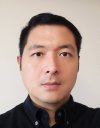
 Gene Cheung
· 8 previous affiliations
- York UniversitySince 2018
- Full Professor · Since 2022
- Associate Professor · 2018–2022
- National Institute of Informatics2009–2018
- Associate Professor · 2009–2018
- Associate Professor · 2011–2018
- Assistant Professor · 2009–2011
- Hewlett-Packard (United States)2000–2009
- senior researcher · 2000–2009
- University of California, Berkeley1995–2000
- MS / PhD, Electrical Engineering · 1995–2000
- PhD student · 1998–2000
- MS student · 1995–1998
- summer intern · 1996
- Cornell University1991–1995
- BS, Electrical Engineering · 1991–1995
- Cornell Tech1991–1995
- Undergrad student · 1991–1995
Research Overview
Gene Cheung focuses on graph signal processing, image and video compression, and the integration of classical optimization with deep learning. His trajectory spans foundational work in scalable video coding to the development of efficient graph sampling techniques and unrolled neural networks. Currently, he investigates lightweight, interpretable transformer architectures for complex data domains like traffic forecasting and clinical diagnostics.
Research Trajectory
Early in his career, Cheung investigated optimization problems in video coding. In Bit allocation for joint source/channel coding of scalable video, he and his collaborators proposed an efficient algorithm to distribute source and channel coding bits among subbands to minimize expected distortion over noisy channels.
Over the following decades, his focus expanded significantly into graph signal processing (GSP), treating images and video not merely as rigid pixel grids but as signals residing on structure-aware graphs. This perspective was comprehensively detailed in Graph Spectral Image Processing, which demonstrated how adaptive transforms could outperform classical methods in compression and restoration. This work contributed to the research direction of Polynomial Filter Approximation for Spectral Graph Neural Networks.
A major theme in Cheung’s trajectory is the integration of classical model-based priors with modern deep learning. He advanced this by embedding a classical graph Laplacian regularizer as a fully differentiable layer within a neural network in Deep Graph Laplacian Regularization for Robust Denoising of Real Images. This hybrid framework achieved high performance on real-world image noise while maintaining robustness to cross-domain shifts.
Concurrently, he made foundational contributions to graph sampling theory, reviewing the field's progress in Sampling Signals on Graphs: From Theory to Applications. To address the computational bottlenecks of selecting nodes for signal reconstruction, he helped introduce a geometric approach in Fast Graph Sampling Set Selection Using Gershgorin Disc Alignment. By avoiding expensive eigenvector calculations, this method drastically accelerated reconstruction speeds, advancing the area of Efficient Graph Sampling via Gershgorin Disc Alignment.
Cheung subsequently extended these sampling and processing techniques to more complex graph structures. He addressed directed graphs in Eigen-Decomposition-Free Directed Graph Sampling via Gershgorin Disc Alignment, tailoring the alignment method to random-walk graph Laplacians. He also tackled signed graphs—networks containing both positive and negative edge weights. In Signed Graph Balancing with Graph Cut, his group proposed a method to balance signed graphs, allowing spectral filters designed for positive graphs to be reused.
Returning to image processing applications, he provided a unified mathematical framework in Mixed Graph Signal Analysis of Joint Image Denoising / Interpolation. This study proved that performing denoising after interpolation requires a non-separable joint optimization to succeed, contributing to the broader area of Graph Smoothness Regularization for Signal Processing and Learning.
His work on signed graphs matured through new optimization strategies. He developed methods to learn these networks directly from raw data, first utilizing iterative linear programming in Efficient Learning of Balanced Signed Graphs via Iterative Linear Programming, and later formulating the problem as a sparse linear program solved via ADMM in Efficient Learning of Balanced Signed Graphs via Sparse Linear Programming. Alongside graph theory, Cheung continued to innovate in multimedia compression and summarization. He applied Gershgorin Disc Alignment to temporal graphs for linear-time video summarization in Graph Unfolding and Sampling for Transitory Video Summarization via Gershgorin Disc Alignment. In the 3D domain, he contributed to Volumetric 3d Point Cloud Attribute Compression: Learned Polynomial Bilateral Filter for Prediction, leveraging deep learning to predict finer details from coarser representations.
Most recently, Cheung has focused heavily on algorithm unrolling to create efficient, interpretable neural networks. In Unrolling Plug-and-Play Gradient Graph Laplacian Regularizer for Image Restoration, he introduced a framework that unrolls a classical optimization algorithm into a network with a fraction of the parameters of generic models. This aligns with his broader work in Deep Learning with Unrolled Optimization and Deep Unfolding of Optimization Algorithms for Efficient Signal Processing. He has since applied this unrolling paradigm to transformer architectures. With collaborators, he developed a "white-box" model for traffic forecasting in Lightweight and Interpretable Transformer via Unrolling of Mixed Graph Algorithms for Traffic Forecast, slashing parameter counts while maintaining high performance. Similarly, he participated in designing a highly efficient model for clinical diagnostics in Lightweight Transformer for EEG Classification via Balanced Signed Graph Algorithm Unrolling, which specifically accounts for complex anti-correlations in brain signals.
Current Directions
The most recent papers in the evidence indicate a strong focus on developing lightweight, interpretable transformer architectures through the unrolling of graph-based optimization algorithms. By translating classical graph smoothness and denoising algorithms into neural network layers, Cheung and his collaborators are creating "white-box" models that require significantly fewer parameters than standard deep learning approaches. This methodology is actively being applied to complex, real-world time-series and spatial data, including traffic forecasting and EEG classification. A key component of this recent work involves modeling anti-correlations in data by integrating balanced signed graph algorithms directly into the unrolled network architectures, ensuring both mathematical interpretability and computational efficiency for edge applications.
Profile updated
| Paper | Venue | Year |
|---|---|---|
| Deep Unrolled Graph Laplacian Regularization for Robust Time-of-Flight Depth DenoisingGitHubBadbeardHe/ | Openreview | 2025 |
Loading new papers…
Other researchers whose papers cluster into the same research directions — a proxy for overlapping technical interests and shared intellectual neighborhoods.
See something wrong? Report a mistake