

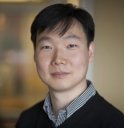
 G. Edward Suh
· 3 previous affiliations
- Cornell TechSince 2007
- Full Professor · Since 2007
- Nvidia (United States)Since 2024
- Senior Director of Research · Since 2024
- Meta (United States)2020–2024
- Researcher · 2020–2024
Research Overview
G. Edward Suh focuses on hardware security, microarchitectural side channels, and privacy-preserving machine learning. His trajectory spans early architectural mechanisms for trusted execution and dynamic information flow tracking to recent advancements in secure inference and differential privacy. Currently, his research addresses the intersection of hardware efficiency, data privacy, and the operational dynamics of large language models.
Research Trajectory
Suh’s early research investigated memory hierarchy performance before shifting toward architectural support for security. He initially explored resource allocation in Analytical cache models with applications to cache partitioning (2001). Shortly thereafter, his focus turned to secure computing environments, leading to the design of AEGIS: architecture for tamper-evident and tamper-resistant processing (2003). Building on this foundation, he developed Secure program execution via dynamic information flow tracking (2004), a hardware mechanism designed to protect programs from malicious software by tracking spurious information flows from untrusted inputs. He also contributed to hardware authentication primitives, exploring how manufacturing variations could be leveraged in Physical Unclonable Functions for Device Authentication and Secret Key Generation (2007).
In the following decade, Suh’s work increasingly addressed the vulnerabilities introduced by shared hardware resources. He guided research into mitigating memory interference, proposing a secure memory controller design in Timing channel protection for a shared memory controller (2014) that utilized per-domain queueing and static time-slot allocation to eliminate timing channels. As heterogeneous computing environments evolved, he participated in demonstrating new remote vulnerabilities, such as those detailed in FPGA-Based Remote Power Side-Channel Attacks (2018), which showed how on-chip ring oscillators could be weaponized to monitor power consumption across security boundaries.
By the early 2020s, Suh’s research expanded to include the automated discovery of hardware vulnerabilities and the formalization of data privacy. To accelerate security analysis, his group introduced AutoCAT: Reinforcement Learning for Automated Exploration of Cache-Timing Attacks (2023), a framework that frames attack generation as a game to discover novel vulnerabilities. This work advanced the broader research direction of Side Channel Vulnerabilities in Trusted Execution Environments. Concurrently, he investigated the theoretical limits of data reconstruction in machine learning, providing mathematical lower bounds on attacker accuracy in Bounding the Invertibility of Privacy-preserving Instance Encoding using Fisher Information (2023). This contributed significantly to the area of The Privacy-Utility Trade-off in Differentially Private Learning.
In 2024, Suh published extensively on privacy-preserving machine learning (PPML) systems and information theory. He oversaw the development of Efficient Privacy-Preserving Machine Learning with Lightweight Trusted Hardware (2024), which proposed offloading non-linear operations to small, dedicated trusted hardware rather than relying on full Trusted Execution Environments. This approach intersected with research directions such as Efficient Private Inference via Non-linear Operator Optimization and Mitigating the Computational Overhead of Encrypted Machine Learning. His theoretical work continued with Strong Asymptotic Composition Theorems for Mutual Information Measures (2024), characterizing the exponential growth limits of information leakage. Bridging his background in hardware security with machine learning architectures, he also explored Information Flow Control in Machine Learning through Modular Model Architecture (2024). To address the memory constraints of on-device inference, his lab proposed GPU-based Private Information Retrieval for On-Device Machine Learning Inference (2024), enabling devices to privately query large embedding tables from remote servers.
Most recently, Suh’s trajectory has focused on the trustworthiness, privacy, and systems efficiency of large generative models. He contributed to Trustworthy Machine Learning through Data-Specific Indistinguishability (2025), a framework that calibrates privacy noise to specific inputs to protect high-dimensional models against memorization and poisoning. In 2026, he participated in several studies addressing the operational realities of large language models (LLMs). This included evaluating the environmental impact of multi-tenant systems in Fair, Practical, and Efficient Carbon Accounting for LLM Serving (2026) and optimizing inference latency through prediction-free scheduling in Beyond Prediction: Tail-Aware Scheduling for LLM Inference (2026). Furthermore, he collaborated on How much can language models memorize? (2026), which quantified the storage limits of transformer parameters, directly advancing the research direction of Erasing Memorized Data from Large Language Models.
Current Directions
The most recent papers in the evidence address the operational efficiency, privacy limits, and trustworthiness of large language models. Recent work investigates the theoretical boundaries of what transformers can memorize, utilizing information theory to provide quantitative limits on information storage per parameter and explaining the relationship between rote memorization and generalization.
Alongside these privacy and memorization limits, current research explores the systems challenges of deploying generative models at scale. This includes developing tail-aware, prediction-free scheduling frameworks to optimize latency during LLM inference, as well as formalizing carbon accounting methods to fairly attribute emissions in multi-tenant serving environments. Additionally, ongoing work seeks to establish provable trust guarantees for high-dimensional models by calibrating privacy noise to specific data inputs, allowing models to remain accurate while maintaining rigorous safety bounds against data extraction and poisoning.
Profile updated
Loading new papers…
Other researchers whose papers cluster into the same research directions — a proxy for overlapping technical interests and shared intellectual neighborhoods.
See something wrong? Report a mistake