

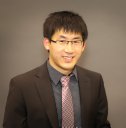
 Feng Liu
· 5 previous affiliations
- Assistant Professor · Since 2026
- Current
- Assistant Professor · 2020–2026
- Massachusetts General Hospital2018–2020
- Researcher · 2018–2020
- The University of Texas at Arlington2014–2018
- PhD student · 2014–2018
- MS student · 2010–2013
19 other authors named Feng Liu: Feng Liu (The University of Melbourne · RIKEN · University of Technology Sydney · 340 papers), Feng Liu (Portland State University · Adobe Systems (United States) · 89 papers), Feng Liu (Shenzhen University · 35 papers), Feng Liu (Drexel University · 10 papers), Feng Liu (Shanghai Jiao Tong University · 6 papers), and 14 more
Research Overview
Feng Liu focuses on artificial intelligence for healthcare, electrophysiological source imaging, and the analysis of complex brain networks. His early work explored chaotic neural networks and sparse dictionary learning for mapping brain activations. More recently, his research investigates multimodal representation learning for electronic health records and the application of large language models to clinical diagnostic reasoning.
Research Trajectory
The trajectory begins with foundational work in nonlinear dynamics. He participated in the development of a novel chaotic system, demonstrating the coexistence of chaotic attractors and limit cycles controlled by parameter switchings in a Hopfield neural network (A new chaotic Hopfield neural network and its synthesis via parameter switchings).
Moving into neuroimaging, his focus shifted to the research direction of Overcoming Ambiguity in Electrophysiological Source Localization. He introduced supervised learning approaches to the EEG inverse problem, incorporating task labels and graph regularization to isolate task-relevant brain activations from background noise (Supervised Discriminative EEG Brain Source Imaging with Graph Regularization). This was expanded through a sparse dictionary learning framework that utilized a modified K-SVD algorithm to discover discriminative source activations with higher accuracy than traditional unsupervised techniques (A Sparse Dictionary Learning Framework to Discover Discriminative Source Activations in EEG Brain Mapping). To better account for temporal continuity and noise in brain activation patterns, he subsequently developed probabilistic structure learning methods utilizing hierarchical graph priors for EEG and MEG source imaging (Probabilistic Structure Learning for EEG/MEG Source Imaging With Hierarchical Graph Priors).
Building on these classical electrophysiological methods, his later work integrates deep learning and advanced graph signal processing. His group proposed an explainable deep learning framework based on unrolled optimization neural networks to learn spatial-temporal regularizations directly from data, validating the approach with simultaneous EEG and intracranial EEG recordings (XDL-ESI: Electrophysiological Sources Imaging via explainable deep learning framework with validation on simultaneous EEG and iEEG). To improve the estimation of extended source activation regions, he leveraged spatial graph Fourier transforms on 3D brain meshes to decompose spatial graph structures (Rejuvenating classical brain electrophysiology source localization methods with spatial graph Fourier filters for source extents estimation). In parallel, he applied switching state space models to automatically detect high-frequency oscillations in intracranial EEG data, providing a tool to instantaneously identify epileptogenic zones without relying on sliding-window feature extraction (Detection of High-Frequency Oscillations from Intracranial EEG Data with Switching State Space Model).
Expanding beyond neuroimaging, he has increasingly contributed to the area of Multimodal Representation Learning for Electronic Health Records and the broader field of Integrating Clinical Narratives with Structured Medical Data. He led the development of a large language multimodal model framework that combines clinical notes and laboratory results to predict new-onset Type 2 diabetes, utilizing techniques from the research direction of Tabular Serialization for Large Language Models (Large language multimodal models for new-onset type 2 diabetes prediction using five-year cohort electronic health records). This multimodal fusion approach extends to medical image classification via cross-graph modal contrastive learning (Enhancing multimodal medical image classification through cross-graph modal contrastive learning) and the design of unified representations for chronic disease prediction (CURENet: combining unified representations for efficient chronic disease prediction).
Most recently, his lab has advanced both clinical reasoning models and complex brain network analysis. To enhance the factual accuracy of medical large language models, his group introduced a ranked preference reinforcement optimization framework for diagnostic reasoning (RPRO: Ranked Preference Reinforcement Optimization for Enhancing Medical QA and Diagnostic Reasoning). In the domain of functional MRI, he developed high-order graph attention neural networks to identify spatial craving patterns and network alterations in marijuana users (Spatial Craving Patterns in Marijuana Users: Insights From fMRI Brain Connectivity Analysis With High-Order Graph Attention Neural Networks). He also introduced a hierarchical decoding framework combining neural ordinary differential equations with graph convolutions to model how functional brain pathways deteriorate with age in mental health disorders (NeuroTree: Hierarchical Functional Brain Pathway Decoding for Mental Health Disorders).
Current Directions
The most recent papers in the evidence address the intersection of advanced graph neural networks for neuroimaging and the deployment of large language models for clinical decision support. Current work investigates hierarchical and high-order graph learning techniques to decode complex functional brain networks, particularly for understanding mental health disorders and addiction. Simultaneously, research in clinical AI focuses on optimizing large language models for medical question answering and diagnostic reasoning, as well as developing unified multimodal representations to integrate structured and unstructured electronic health records for chronic disease prediction.
Profile updated
Loading new papers…
Other researchers whose papers cluster into the same research directions — a proxy for overlapping technical interests and shared intellectual neighborhoods.
See something wrong? Report a mistake