

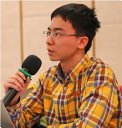
 Liantao Ma
· 1 previous affiliation
- Peking UniversitySince 2016
- Assistant Professor · Since 2023
- Postdoc · 2021–2023
- PhD student · 2016–2021
Research Overview
Liantao Ma focuses on clinical representation learning, multi-agent systems for healthcare, and the alignment of large language models. His early work developed deep learning architectures for longitudinal electronic health records, while his recent trajectory emphasizes leveraging foundation models and multi-agent workflows to automate clinical data analysis and improve reasoning truthfulness.
Research Trajectory
Ma’s early research addressed resource optimization in mobile environments. He led the development of PSAllocator: Multi-Task Allocation for Participatory Sensing with Sensing Capability Constraints, a framework designed to coordinate multi-task allocation while respecting device constraints and participant availability to maximize overall system utility.
By 2020, his focus shifted heavily toward healthcare, specifically addressing the complexities of electronic medical records (EMR) and contributing to the research direction of Multi-faceted Clinical Prediction for Holistic Patient Assessment. He introduced AdaCare: Explainable Clinical Health Status Representation Learning via Scale-Adaptive Feature Extraction and Recalibration, a model that captures historical biomarker variations across diverse time scales to provide explainable health risk predictions. Concurrently, he developed ConCare: Personalized Clinical Feature Embedding via Capturing the Healthcare Context, a framework that models individual feature dynamics and their interdependencies with static patient information, advancing work in the area of Temporal Decay Functions for Longitudinal Patient Data.
Expanding on clinical modeling, Ma contributed to the area of Universal Clinical Representations for Cross Institutional Medical AI and addressed challenges in the broader area of Solving the Clinical Cold Start Problem. This is exemplified by his participation in Distilling Knowledge from Publicly Available Online EMR Data to Emerging Epidemic for Prognosis, which transfers clinical insights from large public datasets to data-scarce environments during emerging epidemics like COVID-19. He also contributed to the broader direction of Dynamic Temporal Modeling for Clinical Risk Assessment through GRASP: Generic Framework for Health Status Representation Learning Based on Incorporating Knowledge from Similar Patients. GRASP enhances patient representation by incorporating data from individuals with similar conditions, mitigating the effects of sparse or low-quality records. Continuing to address data imperfections, he collaborated on M3Care: Learning with Missing Modalities in Multimodal Healthcare Data, proposing a direct problem-solving approach to handle missing modalities in clinical scenarios.
In recent years, Ma’s research has integrated large language models (LLMs) and foundation models into clinical workflows and decision-making processes. He provided a comprehensive perspective on this shift in Foundation models and intelligent decision-making: Progress, challenges, and perspectives, detailing how multimodal foundation models can automate complex tasks. Applying these concepts to EHRs, his group developed EHRFlow: A Large Language Model-Driven Iterative Multi-Agent Electronic Health Record Data Analysis Workflow, a platform utilizing specialized agents to allow physicians to analyze data through natural language. He further advanced multi-agent clinical modeling with ColaCare: Enhancing Electronic Health Record Modeling through Large Language Model-Driven Multi-Agent Collaboration, which simulates a medical multidisciplinary team to predict patient mortality and readmission. To evaluate such systems, he participated in creating MedAgentBoard: Benchmarking Multi-Agent Collaboration with Conventional Methods for Diverse Medical Tasks, a benchmark revealing that while multi-agent systems excel in workflow automation, they require task-specific adoption strategies.
Beyond general EHR analysis, Ma has applied LLM agents to specialized medical domains. His work on TCM-Agent: Advancing Network Pharmacology and Herbal Medicine Discovery with LLM-Based Multi-Agent Systems presented an automated analytical framework for traditional Chinese medicine research. His research also addresses patient communication with Magical: Medical Lay Language Generation via Semantic Invariance and Layperson-tailored Adaptation, designing an asymmetric LoRA architecture that translates complex medical texts into accessible language without distorting clinical facts.
Parallel to his applied medical AI work, Ma investigates the fundamental reasoning and alignment of LLMs. He developed Adaptive Activation Steering: A Tuning-Free LLM Truthfulness Improvement Method for Diverse Hallucinations Categories, which treats truthfulness as a linear concept and adaptively shifts model activations during inference to reduce hallucinations. Building on this tuning-free approach, he introduced Search for Truth from Reasoning: A Dynamic Representation Editing Framework for Steering LLM Trajectories, a framework that edits internal activations at critical reasoning forks to prevent cascading hallucination errors during complex generation tasks.
Current Directions
The most recent papers in the evidence indicate a dual focus on multi-agent clinical workflows and the internal alignment of large language models. In the healthcare domain, recent work investigates how specialized, interacting LLM agents can simulate multidisciplinary medical teams to automate electronic health record analysis and accelerate pharmacological discovery. Concurrently, Ma is exploring the internal representation of truth within foundation models. This direction addresses LLM hallucinations and reasoning failures through dynamic, tuning-free activation steering, editing model trajectories at critical decision points to ensure factual generation without the computational overhead of reinforcement learning.
Profile updated
Loading new papers…
Other researchers whose papers cluster into the same research directions — a proxy for overlapping technical interests and shared intellectual neighborhoods.
See something wrong? Report a mistake