

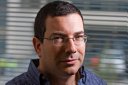
 Eyal Ofek
· 7 previous affiliations
- University of BirminghamSince 2024
- Full Professor · Since 2024
- Current
- Data Blanket2023–2024
- Computer Vision specialist · 2023–2024
- Microsoft Research Asia (China)2004–2023
- Principal Researcher · 2014–2023
- Research Manager · 2006–2011
- Researcher · 2004–2006
- Microsoft (United States)2006–2023
- Principal Researcher · 2014–2023
- Sr. Researcher - head of a research team · 2011–2014
- Head of Bing mobile mapping applied researh group · 2006–2011
- Management Excelance, Management · 2009
- Frontiers Media SA2019–2022
- Specialty Chief Editor · 2020–2022
- Associated Editor · 2019–2022
- IEEE Computer Society2019–2022
- Member of the Editorial Board · 2019–2022
- Hebrew University of Jerusalem1991–1996
- Ph.D., Computer Science · 1991–1996
Research Overview
Eyal Ofek focuses on virtual and augmented reality, haptic interfaces, and human-computer interaction. His trajectory spans early work in computer graphics and vision to pioneering techniques in spatial computing, including passive haptics and avatar embodiment. Recently, his research investigates the integration of virtual reality with robotics and the 3D reconstruction of articulated objects.
Research Trajectory
The earliest work in the evidence establishes a foundation in rendering and computer vision. This includes the introduction of Interactive Reflections on Curved Objects in 1998, followed later by contributions to robust text detection in natural images. He collaborated on Detecting text in natural scenes with stroke width transform, which presented a local, data-dependent image operator that eliminated the need for multi-scale computation while supporting multiple fonts and languages.
Moving into spatial computing and augmented reality, he participated in the development of IllumiRoom: immersive experiences beyond the TV screen. This proof-of-concept system utilized 3D scanning and projected light to extend video game and film experiences out of the television and into the physical room. Around the same time, he oversaw research in social computing, helping to design systems that support interactions between unfamiliar individuals in The Known Stranger: Supporting Conversations between Strangers with Personalized Topic Suggestions.
A major theme in his subsequent trajectory is the enhancement of immersion in virtual reality through novel haptic and locomotion techniques. He directed the development of handheld VR controllers capable of high-fidelity 3D shape rendering in NormalTouch and TextureTouch: High-fidelity 3D Haptic Shape Rendering on Handheld Virtual Reality Controllers. He also contributed to perceptual manipulation techniques that repurpose passive physical props for multiple virtual objects, as detailed in Haptic Retargeting: Dynamic Repurposing of Passive Haptics for Enhanced Virtual Reality Experiences. This interest in perceptual hacking extended to locomotion with DreamWalker: Substituting Real-World Walking Experiences with a Virtual Reality, which explored substituting real-world walking paths with virtual environments. Furthering the understanding of haptic perception, he led a study on the Asymmetry of Grasp in Haptic Perception, demonstrating that human perception of grasp realism relies more heavily on the inward latch than the release.
Parallel to haptics, Ofek has investigated avatar embodiment and motion capture. He guided research on the enfacement illusion in Using Facial Animation to Increase the Enfacement Illusion and Avatar Self-Identification, showing how speech-driven facial animation impacts self-identification in VR when full face tracking is impractical. He also led the creation of MoveBox: Democratizing MoCap for the Microsoft Rocketbox Avatar Library, an open-source toolbox for real-time motion capture animation using single depth sensors or offline RGB video extraction.
As virtual reality technologies matured, his focus expanded to practical applications and methodological challenges in spatial computing. He proposed design considerations for mobile knowledge workers in Towards a Practical Virtual Office for Mobile Knowledge Workers. This foundational work led to rigorous longitudinal evaluations, such as Quantifying the Effects of Working in VR for One Week. This study highlighted significant usability and task load challenges, contributing to the broader research area of Ergonomic and Physical Constraints of Head-Mounted Displays and efforts toward Designing Against Fatigue in Mid-Air Interaction. Methodologically, this work utilized approaches in the area of Within-Subjects Crossover Designs for Precision Research. To address the logistical challenges of conducting such studies during periods of social distancing, he oversaw the development of RemoteLab: A VR Remote Study Toolkit, enabling unsupervised remote VR research outside traditional laboratory settings.
Current Directions
The most recent papers in the evidence indicate a shift toward integrating spatial computing with robotics, autonomous systems, and advanced 3D reconstruction. Recent work investigates how virtual reality can aid human-robot collaboration; for instance, ReachVox: Clutter-Free Reachability Visualization for Robot Motion Planning in Virtual Reality explores minimalistic visualizations for remote operators planning robotic arm movements in dynamic environments.
In the domain of autonomous systems, he has guided research on Handling Uncertainty in UAV Sensor Information using Bayesian Belief Network and Large Language Model, combining LLMs and BBNs to interpret heterogeneous sensor data for tasks like forest fire detection. Additionally, his recent work addresses the unsupervised part discovery of articulated objects. He directed the development of Articulation in Motion: Prior-free Part Mobility Analysis for Articulated Objects By Dynamic-Static Disentanglement, a framework that reconstructs interactive 3D digital replicas from single scans and video by automatically disentangling static and dynamic components without relying on prior knowledge of joint types or part counts.
Profile updated
| Title | Venue | Year |
|---|---|---|
| Tuning Immersion and Performance with Adaptive Generative Music in VR | IEEE TVCG | 2026 |
| Augmented Body Parts: Bridging VR Embodiment and Wearable Robotics | CHI Extended Abstracts | 2026 |
| Articulation in Motion: Prior-free Part Mobility Analysis for Articulated Objects By Dynamic-Static Disentanglement | ICLR | 2026 |
| Belt and whistles - adding lower body collision awareness for MR experiences | CHI | 2026 |
| ReachVox: Clutter-Free Reachability Visualization for Robot Motion Planning in Virtual Reality | Ismar | 2025 |
| ReachVox | IEEE International Symposium on Mixed and Augmented Reality (ismar) | 2025 |
| Handling Uncertainty in UAV Sensor Information using Bayesian Belief Network and Large Language Model | Drones and Unmanned Systems | 2025 |
| Enhanced efficiency in visually guided online motor control for actions redirected towards the body midline | Philosophical Transactions of the Royal Society B | 2024 |
| AdHocProx | Chi '23 | 2024 |
| AvatarPilot : Decoupling one-to-one motions from their semantics with weighted interpolations | Ismar-adjunct | 2024 |
Loading new papers…
Other researchers whose papers cluster into the same research directions — a proxy for overlapping technical interests and shared intellectual neighborhoods.
See something wrong? Report a mistake