

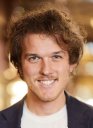
 Edward De Brouwer
· 6 previous affiliations
- GenentechCurrent
- Current
- Researcher · 2024
- Yale University2023–2024
- Postdoctoral Associate · 2023–2024
- Visiting Researcher · 2022–2023
- KU Leuven2017–2023
- PhD student · 2017–2023
- Visiting Researcher · 2022
- UCLouvain2017
- Master's degree, Actuarial Science · 2017
Research Overview
Edward De Brouwer focuses on continuous-time latent dynamics, causal discovery, and learning from irregularly sampled time series. His trajectory spans the development of neural ordinary differential equations for chaotic dynamical systems and the enhancement of graph neural network expressivity. Recently, his work investigates generative artificial intelligence and flow matching techniques for modeling complex biological systems and single-cell genomics.
Research Trajectory
De Brouwer's early research addressed the challenges of modeling clinical data, particularly in the area of Learning from Irregularly Sampled Time Series. He introduced Deep Ensemble Tensor Factorization for Longitudinal Patient Trajectories Classification (2018), a generative deep learning framework that treats sparse health records as a three-dimensional tensor. By combining a Gated Recurrent Unit (GRU) architecture with a Bayesian-style ensemble, this approach improved mortality predictions on intensive care data. He continued to explore clinical applications with Longitudinal machine learning modeling of MS patient trajectories improves predictions of disability progression (2021), demonstrating the utility of these temporal models in tracking multiple sclerosis.
A major theme in his work is the research direction of Continuous Time Latent Dynamics with Neural ODEs. He developed GRU-ODE-Bayes: Continuous modeling of sporadically-observed time series (2021), a framework that merges continuous-time GRUs with a Bayesian update mechanism to handle missing data in healthcare and climate forecasting. This continuous-time modeling naturally extended into the broader area of Causal Discovery via State-Space Reconstruction. In Inferring Causal Dependencies between Chaotic Dynamical Systems from Sporadic Time Series (2020), he combined Convergent Cross Mapping (CCM) with the GRU-ODE-Bayes technique to uncover causal directions from sparse observations. He further expanded on this in Latent Convergent Cross Mapping (2021), proposing a method to infer causal structures in chaotic dynamical systems when observational data is short, noisy, and incomplete.
Concurrently, De Brouwer investigated graph neural networks (GNNs), specifically addressing the theoretical area known as The Weisfeiler Lehman Expressivity Bottleneck. He guided the development of Expressive Graph Informer Networks (2021), an architecture that captures longer-range dependencies and non-local topology by considering routes between nodes, improving molecular property predictions. He also contributed to Topological Graph Neural Networks (2022), which introduced a novel layer incorporating global topological information via persistent homology to create strictly more expressive models than standard message-passing GNNs. Returning to causal inference, he authored Deep Counterfactual Estimation with Categorical Background Variables (2022), demonstrating that counterfactual queries can be estimated from observational data alone under the assumption that the main latent contributors to treatment responses are categorical.
In 2023, his focus on dynamical systems yielded Anamnesic Neural Differential Equations with Orthogonal Polynomial Projections, which addressed the memory loss inherent in piece-wise integration of latent processes by using orthogonal polynomials to retain global time series information. He also participated in geometric and spectral research, contributing to A Heat Diffusion Perspective on Geodesic Preserving Dimensionality Reduction (2023). This work provided a geometric foundation for diffusion-based dimensionality reduction, touching upon the area of Polynomial Filter Approximation for Spectral Graph Neural Networks and the broader direction of Geometric Convergence of Graph Operators to Continuous Manifolds. Additionally, he oversaw Weakly Supervised Knowledge Transfer with Probabilistic Logical Reasoning for Object Detection (2023), proposing a framework to train object detection models using arbitrary types of weak supervision via probabilistic logic.
The most recent phase of De Brouwer's trajectory applies generative modeling to complex biological systems. He collaborated on Modeling Complex System Dynamics with Flow Matching Across Time and Conditions (2025), which tackles the challenge of inferring continuous trajectories from static, destructive population snapshots, such as those found in single-cell genomics. This was followed by Generative Artificial Intelligence for Biology: Toward Unifying Models, Algorithms, and Modalities (2026), a comprehensive perspective organizing recent advances in generative modeling across biological modalities. He also contributed to scCBGM: Single-Cell Editing via Concept Bottlenecks (2026), a generative framework combining concept bottlenecks with flow matching to predict zero-shot cellular responses to unseen treatments.
Current Directions
The most recent papers in the evidence point to a strong focus on generative artificial intelligence applied to computational biology and single-cell genomics. De Brouwer is actively investigating how flow matching and concept bottleneck architectures can be used to model complex system dynamics, particularly when observational data consists of fragmented, static population snapshots rather than continuous individual trajectories. A central theme of this current work is the push toward unifying machine learning models across different biological modalities, enabling researchers to simulate and "edit" cellular responses to novel treatments or conditions in a zero-shot capacity.
Profile updated
Loading new papers…
Other researchers whose papers cluster into the same research directions — a proxy for overlapping technical interests and shared intellectual neighborhoods.
See something wrong? Report a mistake