

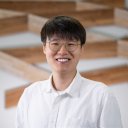
 Dongkwan Kim
· 2 previous affiliations
- Texas A&M UniversitySince 2025
- Postdoctoral Researcher · Since 2025
- Doctor of Philosophy - PhD, Computer Science · 2019–2025
- Master of Science - MS · 2018–2019
Research Overview
Dongkwan Kim focuses on graph representation learning, large language model evaluation, and the integration of multiple data modalities for scientific discovery. His early work developed efficient methods for subgraph representation and dynamic graph attention. Currently, he investigates foundational models for biology and chemistry, building systems that reason over complex relational structures to predict perturbation effects and accelerate biomedical research.
Research Trajectory
His early research addressed vulnerabilities in mobile and cyber-physical systems. This included identifying hidden data channels and mis-implementations in telecommunications networks in Breaking and Fixing VoLTE: Exploiting Hidden Data Channels and Mis-implementations and demonstrating how intentional acoustic noise could disrupt gyroscopic sensors in Rocking Drones with Intentional Sound Noise on Gyroscopic Sensors.
Transitioning to machine learning, his focus shifted to graph representation learning, particularly the challenge of modeling complex relational structures. He contributed to the area of Graph Attention Mechanisms for Adaptive Feature Aggregation by developing self-supervised methods to better understand and optimize how graph neural networks assign weights to neighboring nodes, detailed in How to Find Your Friendly Neighborhood: Graph Attention Design with Self-Supervision.
A major theme of his subsequent work has been improving the efficiency and expressivity of subgraph representation. He introduced the Subgraph-To-Node (S2N) translation framework, which transforms subgraphs into individual nodes within a coarsened graph to reduce computational costs. This approach was initially formulated in Efficient Representation Learning of Subgraphs by Subgraph-To-Node Translation and later refined in Translating Subgraphs to Nodes Makes Simple GNNs Strong and Efficient for Subgraph Representation Learning. Alongside this, he addressed scenarios where graph data is incomplete, proposing the Partial Subgraph InfoMax framework in Models and Benchmarks for Representation Learning of Partially Observed Subgraphs to maximize mutual information between partial subgraph summaries and broader network substructures. He further advanced subgraph representation learning by generalizing the classic Weisfeiler-Lehman algorithm to k-hop neighborhoods in Generalizing Weisfeiler-Lehman Kernels to Subgraphs, capturing complex structural information without relying on expensive neighborhood sampling.
Expanding into natural language processing, he began investigating the capabilities and limitations of large language models (LLMs). In Salad-Bowl-LLM: Multi-Culture LLMs by In-Context Demonstrations from Diverse Cultures, he explored how in-context learning with cross-cultural examples can enhance a model's cultural awareness. He also examined social reasoning in LLMs, developing a framework to improve Theory of Mind performance by explicitly separating a character's limited perspective from the model's broader context in Perceptions to Beliefs: Exploring Precursory Inferences for Theory of Mind in Large Language Models.
His expertise in both graphs and language models converged in applied domains, such as computational political science. In Measuring Interest Group Positions on Legislation: An AI-Driven Analysis of Lobbying Reports, he combined LLMs with graph neural networks to decode the stances of special interest groups on U.S. legislation, analyzing over a decade of lobbying data to map political strategies.
More recently, his work has addressed the robust evaluation of generative models. He contributed to the research direction of Shifting from Static Benchmarks to Dynamic Evaluation by participating in the development of a multi-turn evaluation paradigm in LLM-as-an-Interviewer: Beyond Static Testing Through Dynamic LLM Evaluation, which uses an LLM interviewer to dynamically modify questions, probe true understanding, and mitigate artifacts in the area of Verbosity Bias in Automated Language Model Evaluation. He also collaborated on MUG-Eval, a language-agnostic framework that assesses multilingual generation capabilities through information-gap games, detailed in MUG-Eval: A Proxy Evaluation Framework for Multilingual Generation Capabilities in Any Language. Returning to security applications, he participated in the broader area of Automating the Security Lifecycle with Large Language Models as part of the team that developed ATLANTIS: AI-driven Threat Localization, Analysis, and Triage Intelligence System, an autonomous cybersecurity system designed to secure real-world open-source software at scale.
Building on his foundation in structured data and reasoning, his latest research applies these techniques to the biomedical domain. In PertReasonQA: A Knowledge-Grounded Benchmark and Framework for Cell-State–Conditioned Mechanistic Reasoning of Perturbation Effects, he introduced a benchmark and reasoning-aligned model to evaluate why specific cellular changes occur after drug or genetic interventions, demonstrating that grounding AI in biological pathways improves generalization to new cell types.
Current Directions
The most recent papers in the evidence indicate a strong focus on building foundational models for biology and chemistry by integrating graph-structured data with large language models. Recent work investigates mechanistic reasoning in biomedical contexts, moving beyond predictive modeling to evaluate the underlying biological pathways of cellular perturbations. Additionally, ongoing research addresses the dynamic evaluation of language models, developing interactive and procedural frameworks to rigorously test reasoning capabilities and mitigate the limitations of static benchmarks.
Profile updated
Loading new papers…
Other researchers whose papers cluster into the same research directions — a proxy for overlapping technical interests and shared intellectual neighborhoods.
See something wrong? Report a mistake