

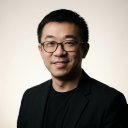
 Dong Gong
· 3 previous affiliations
- UNSW SydneySince 2022
- Assistant Professor · Since 2022
- Current
- Adelaide University2015–2021
- Postdoc · 2018–2021
- PhD student · 2015–2016
- PhD student · 2012–2018
1 other author named Dong Gong: Dong Gong (9 papers)
Research Overview
Dong Gong focuses on continual learning, causal representation learning, and computer vision. His research trajectory spans early work in inverse image restoration and anomaly detection to the development of parameter-efficient adaptation methods for large-scale models. Currently, his work addresses the theoretical foundations of latent causal models and the mitigation of catastrophic forgetting in multimodal and language models.
Research Trajectory
Gong’s early research addressed foundational problems in computer vision and image restoration. His collaborative work included Blind Image Deconvolution by Automatic Gradient Activation, which advanced the area of Mitigating Kernel Mismatch Artifacts in Image Deconvolution by introducing a gradient activation strategy to robustly estimate blur kernels from a high-quality subset of image gradients. Expanding on image reconstruction, he developed Attention-Guided Network for Ghost-Free High Dynamic Range Imaging, utilizing attention mechanisms to filter misaligned pixels and reconstruct missing details in dynamic scenes. Concurrently, he explored unsupervised anomaly detection in Memorizing Normality to Detect Anomaly: Memory-Augmented Deep Autoencoder for Unsupervised Anomaly Detection, proposing a memory-augmented autoencoder to prevent models from generalizing so broadly that they inadvertently reconstruct abnormal inputs.
Around 2022, Gong’s focus expanded into causal inference and the challenge of catastrophic forgetting in neural networks. In the research direction of Mitigating Combinatorial Explosion in Causal Discovery, he contributed to Truncated Matrix Power Iteration for Differentiable DAG Learning, which demonstrated that applying larger coefficients to higher-order polynomial terms can stabilize the continuous optimization of directed acyclic graphs. This interest in causality also informed his work on domain adaptation; in Identifying Latent Causal Content for Multi-Source Domain Adaptation, he helped introduce a latent covariate shift assumption to handle inconsistent label distributions across multiple source domains. Simultaneously, he began addressing the area of Mitigating Catastrophic Forgetting in Continual Learning. He introduced Learning Bayesian Sparse Networks with Full Experience Replay for Continual Learning, combining principled Bayesian sparsity with experience replay to preserve internal feature representations across sequential tasks.
In 2024, his research broadened to include efficiency in reinforcement learning and vision-language models. He contributed to the broader area of Beyond the Deterministic Transition Assumption in Reinforcement Learning with Highway Graph to Accelerate Reinforcement Learning, proposing a state-transition compression structure that merges non-branching paths to significantly speed up value propagation during training. Returning to continual learning, his group developed Adaptive Rank, Reduced Forgetting: Knowledge Retention in Continual Learning Vision-Language Models with Dynamic Rank-Selective LoRA, a method that dynamically adjusts the rank of low-rank adapters to balance plasticity and stability without adding inference costs.
By 2025, Gong oversaw the development of a suite of techniques for scaling continual learning in pre-trained and generative models. This included Continual Learning on CLIP via Incremental Prompt Tuning with Intrinsic Textual Anchors, which leveraged the multi-modal representations of CLIP for incremental adaptation. To optimize memory retention, he guided the development of Coreset Selection via Reducible Loss in Continual Learning, filtering noisy data to retain only the most informative samples for rehearsal. He also explored architectural growth in Self-Expansion of Pre-trained Models with Mixture of Adapters for Continual Learning, allowing models to expand sub-linearly when encountering significant distribution shifts. For scenarios where storing past data is impossible, his team proposed Model Inversion with Layer-Specific Modeling and Alignment for Data-Free Continual Learning, synthesizing training samples directly from model weights via layer-by-layer optimization. Alongside continual learning, he also directed Training-Free Motion Customization for Distilled Video Generators with Adaptive Test-Time Distillation, introducing a framework for high-fidelity motion control in fast video generation.
Most recently, in 2026, Gong’s work has bridged continual learning with the theoretical foundations of large language models and causal representation. He directed research on Little By Little: Continual Learning via Incremental Mixture of Rank-1 Associative Memory Experts, shifting the paradigm toward accumulating fine-grained memory atoms to reduce interference in LLMs. In the area of Non-linear Causal Discovery via Functional Constraints, he collaborated on Beyond DAGs: A Latent Partial Causal Model for Multimodal Learning, proving that contrastive learning can recover underlying causal variables to disentangle multimodal embeddings. Furthermore, he contributed to the research direction of Provable Causal Representation Learning with I Predict Therefore I Am: Is Next Token Prediction Enough to Learn Human-Interpretable Concepts from Data?, providing a mathematical proof that LLM representations act as linear transformations of latent concept probabilities.
Current Directions
The most recent papers in the evidence indicate a strong focus on the intersection of continual learning, large pre-trained models, and the theoretical grounding of causal representations. Current work investigates how to incrementally update large language and vision-language models without catastrophic forgetting, utilizing techniques like rank-1 associative memory experts and dynamic architectural expansion. Simultaneously, Gong is exploring the mathematical foundations of representation learning, specifically investigating how next-token prediction and contrastive learning can identifiably recover latent causal factors and human-interpretable concepts from complex, multimodal data.
Profile updated
Loading new papers…
Other researchers whose papers cluster into the same research directions — a proxy for overlapping technical interests and shared intellectual neighborhoods.
See something wrong? Report a mistake