

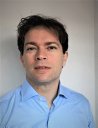
 Joost van de Weijer
· 2 previous affiliations
- Universitat Autònoma de BarcelonaSince 2008
- Researcher · Since 2008
- University of Amsterdam1999–2005
- PhD student · 1999–2005
Research Overview
Joost van de Weijer focuses on computer vision, continual learning, and domain adaptation. His early research established foundational methods for color representation and photometric invariance in image processing. More recently, his work addresses the stability-plasticity dilemma in deep neural networks, developing efficient architectures and regularization strategies for learning from non-stationary data streams.
Research Trajectory
His early research investigated color representation and photometric invariance in computer vision. He developed methods for robust feature extraction, introducing photometric quasi-invariants in Edge and Corner Detection by Photometric Quasi-Invariants to improve edge and corner detection under varying illumination. He subsequently extended these principles to color constancy in Edge-Based Color Constancy. Recognizing the limitations of laboratory-based color naming, he proposed learning color names directly from real-world images in Learning Color Names for Real-World Applications, utilizing web-scraped datasets to bridge the gap between experimental setups and practical applications. He later integrated sophisticated color features into tracking-by-detection frameworks, demonstrating their computational efficiency and discriminative power in Adaptive Color Attributes for Real-Time Visual Tracking.
During the late 2010s, his research encompassed the area of Visual Grounding for Semantic Disambiguation. By 2020, his focus shifted significantly toward continual learning, addressing the challenge of catastrophic forgetting in deep neural networks. He investigated class-incremental learning scenarios, proposing embedding networks to naturally incorporate new classes without augmenting the classification layer in Semantic Drift Compensation for Class-Incremental Learning. He also led a comprehensive evaluation of the field in Class-incremental learning: survey and performance evaluation, which highlighted the importance of addressing task-recency bias and exemplar-based strategies, contributing to the broader area of Knowledge Retention in Continual Deep Learning. Expanding continual learning beyond feed-forward classification, he developed an attention-based approach for LSTM models in RATT: Recurrent Attention to Transient Tasks for Continual Image Captioning. This work explicitly accommodated the transient nature of vocabularies in image captioning, advancing the research direction of Subspace Saturation in Continual Learning. To support the growing community, he participated in the development of Avalanche: An End-to-End Library for Continual Learning, an open-source PyTorch codebase designed to standardize evaluation and facilitate fast prototyping.
In parallel with his continual learning research, he explored unsupervised clustering and domain adaptation. In Attracting and Dispersing: A Simple Approach for Source-free Domain Adaptation, he introduced a prediction consistency objective that encourages local neighborhood features to have similar predictions. This work advanced the areas of Source Free Domain Adaptation and Domain Adaptation with Category Shift, while also intersecting with research on Scaling Memory Banks for High Dimensional Features. He also investigated the impact of data augmentation on self-supervised learning representations. In Planckian Jitter: countering the color-crippling effects of color jitter on self-supervised training, he demonstrated how traditional color jitter degrades learned color features and proposed a physics-based alternative to create realistic variations in chromaticity.
His recent work extends into generative models and uncertainty quantification. In Dynamic Prompt Learning: Addressing Cross-Attention Leakage for Text-Based Image Editing, he addressed cross-attention leakage in diffusion models, optimizing noun embeddings to ensure that text-based edits affect only the intended target without warping background elements. Returning to continual learning, he integrated evidential deep learning to simultaneously perform incremental object classification and out-of-distribution detection in Continual Evidential Deep Learning for Out-of-Distribution Detection.
His most recent research continues to refine the efficiency and multimodal capabilities of continual learning systems. In No Images, No Problem: Retaining Knowledge in Continual VQA with Questions-Only Memory, he introduced a question-only replay method with attention distillation for visual question answering, eliminating the need to store images while balancing stability across visual and textual domains. He further explored computational efficiency in Improving Continual Learning Performance and Efficiency with Auxiliary Classifiers. Finally, he collaborated on Revisiting Weight Regularization for Low-Rank Continual Learning, which applied classical weight regularization to low-rank adapters (LoRA) in a shared parameter space, achieving a superior stability-plasticity trade-off with a constant memory footprint.
Current Directions
Recent work investigates the intersection of continual learning with parameter-efficient fine-tuning and multimodal reasoning. The most recent papers in the evidence address the stability-plasticity dilemma in complex architectures, such as visual question answering systems and low-rank adapters (LoRA). This includes developing memory-efficient replay mechanisms—such as question-only memory for multimodal tasks—and applying weight regularization to shared parameter spaces to maintain a constant memory footprint as new tasks are added. Additionally, there is an ongoing focus on amortizing computational costs and improving inference efficiency through auxiliary training components in non-stationary data streams.
Profile updated
Loading new papers…
Other researchers whose papers cluster into the same research directions — a proxy for overlapping technical interests and shared intellectual neighborhoods.
See something wrong? Report a mistake