

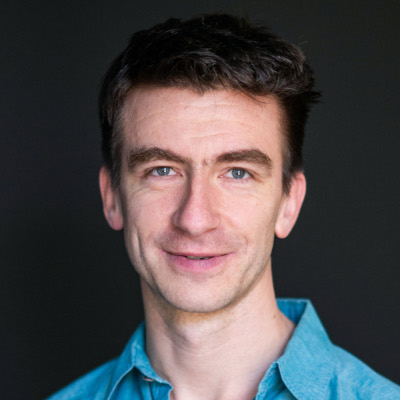
 Dmitry Kobak
· 5 previous affiliations
- Ghent UniversitySince 2026
- Full Professor · Since 2026
- University of Tübingen2017–2025
- Researcher · 2021–2025
- Postdoc · 2017–2020
- Champalimaud Foundation2013–2016
- Postdoc · 2013–2016
- Imperial College London2011–2012
- PhD student · 2011–2012
- University of Freiburg2007–2010
- PhD student · 2007–2010
Research Overview
Dmitry Kobak focuses on unsupervised machine learning, dimensionality reduction, and data visualization for biological and scientific datasets. His trajectory spans the theoretical foundations of neighbor embedding algorithms to the development of contrastive learning techniques for high-dimensional data. Most recently, his work addresses the preservation of global topology in low-dimensional spaces and the application of self-supervised methods to text and image representations.
Research Trajectory
His early work investigated the underlying mechanics and optimization of popular dimensionality reduction techniques. In Heavy-tailed kernels reveal a finer cluster structure in t-SNE visualisations, he demonstrated that modifying the degrees of freedom in the algorithm's $t$-distribution kernel can alleviate the crowding problem and expose finer cluster structures that remain hidden in standard implementations. This research aligns with the broader area of Heavy-Tailed Similarity Kernels for Low-Dimensional Embeddings. Around the same time, he explored regularization behaviors in highly underdetermined systems. The Optimal Ridge Penalty for Real-world High-dimensional Data Can Be Zero or Negative due to the Implicit Ridge Regularization challenged conventional assumptions about positive regularization, showing that minimum-norm least squares estimators can outperform standard ridge regression when high-variance predictors are informative. This finding contributed to the research direction of Learning from High Dimensional Low Sample Size Biomedical Data.
Moving into 2022, the focus shifted toward unifying and extending neighbor embedding algorithms. He introduced a comprehensive framework to understand algorithms like t-SNE, UMAP, and ForceAtlas2 along a continuum in Attraction-Repulsion Spectrum in Neighbor Embeddings. This work formalized how different methods balance attractive and repulsive forces, advancing the area of Balancing Local and Global Structure in Dimensionality Reduction. He also expanded t-SNE to accommodate hierarchical datasets. With collaborators, he developed Wasserstein t-SNE, an approach that uses the Wasserstein distance metric to embed higher-level units based on the internal shapes of their sample distributions. Applying these visualization techniques at scale, his group benchmarked approaches for embedding millions of scientific abstracts in Two-dimensional visualization of large document libraries using t-SNE. By optimizing a pipeline with log-scaled TF-IDF representations and early exaggeration annealing, they demonstrated that 2D embeddings can reveal rich, meaningful organization across narrow academic fields despite local distortions.
In 2023, he established a formal theoretical link between data visualization and self-supervised learning. From $t$-SNE to UMAP with contrastive learning revealed that the loss functions of t-SNE and UMAP can be understood through the lens of noise-contrastive estimation and negative sampling, respectively. This conceptual bridge informed the research direction of The Attraction Repulsion Spectrum of Neighbor Embeddings. Building on this connection, he addressed the challenge of visualizing raw pixel data in Unsupervised visualization of image datasets using contrastive learning. By leveraging data augmentation to generate implicit neighbors—similar to approaches like SimCLR—this method bypassed the limitations of pixel-space distances to produce semantically meaningful two-dimensional embeddings suitable for visualization.
In 2024, his work addressed the reliability and interpretation of embeddings, particularly in computational biology. The art of seeing the elephant in the room: 2D embeddings of single-cell data do make sense defended the utility of t-SNE and UMAP for single-cell exploration, demonstrating that they effectively preserve crucial biological neighborhoods and cell types despite inherent distance distortions. This contributed to discussions surrounding the research direction of Geometric Artifacts in Low Dimensional Projections. He also tackled topological data analysis in noisy environments. Persistent Homology for High-dimensional Data Based on Spectral Methods showed that using spectral distances—specifically effective resistance and diffusion distance—on a $k$-nearest-neighbor graph enables robust topology detection even in extremely noisy, high-dimensional settings like single-cell genomics, advancing the area of Robust Geodesic Estimation on Noisy Manifolds.
Alongside core machine learning methods, he applied statistical analysis to scientific literature itself. Delving into ChatGPT usage in academic writing through excess vocabulary quantified the unprecedented linguistic shift caused by large language models, estimating that a significant portion of biomedical abstracts in 2024 were written or edited with AI assistance. Similarly, Learning representations of learning representations analyzed a massive dataset of machine learning submissions, finding that traditional term-frequency methods remain highly competitive with state-of-the-art deep learning models for representing scientific text.
In 2026, Kobak co-authored Stochastic non-metric MDS for noisy high-dimensional data, which demonstrates that non-metric multidimensional scaling is more robust than metric MDS to high-dimensional noise and introduces a fast PyTorch implementation using stochastic gradient descent that strongly outperforms alternative methods in global structure preservation. Additionally, Kobak collaborated on Optimal Transport Meets t-SNE: Integrated Visualization without Batch Effects in OT-tSNE, which replaces cross-batch nearest-neighbor matching with entropic optimal-transport affinities to reliably integrate datasets and correct technical batch effects across single-cell biological studies.
Current Directions
The most recent papers in the evidence address the refinement of node embeddings, data augmentation for text, and the persistent challenge of balancing local and global structures in dimensionality reduction. In Node Embeddings via Neighbor Embeddings, he introduced a framework that directly aligns the embedding vectors of adjacent nodes without relying on random walks, improving local structure preservation over traditional methods like DeepWalk and node2vec.
Recent work also investigates self-supervised training efficiency for natural language. Cropping outperforms dropout as an augmentation strategy for self-supervised training of text embeddings demonstrates that a simple cropping strategy yields high-quality text representations with minimal training data, challenging the standard reliance on dropout augmentations. Finally, he continues to advance visualization techniques. DREAMS: Preserving both Local and Global Structure in Dimensionality Reduction proposes a method that integrates the local clustering strengths of t-SNE with the global structural fidelity of PCA, allowing users to generate a spectrum of embeddings tailored to their specific analytical needs.
Profile updated
Loading new papers…
Other researchers whose papers cluster into the same research directions — a proxy for overlapping technical interests and shared intellectual neighborhoods.
See something wrong? Report a mistake