

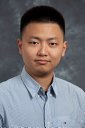
 Haiyang Huang
· 3 previous affiliations
- Google (United States)Since 2025
- Machine Learning Engineer · Since 2025
- Intern · 2023
- Duke UniversityCurrent
- Current
- PhD student · 2019–2025
- Intern · 2022
Research Overview
Haiyang Huang focuses on the transparency and efficiency of machine learning models, with a particular emphasis on dimensionality reduction, interpretable computer vision, and the optimization of large-scale architectures. Currently affiliated with the Tianjin University of Traditional Chinese Medicine and completing doctoral studies at Duke University under the supervision of Cynthia Rudin and Benjamin C. Lee, Huang’s work addresses the tension between model complexity and human interpretability. This research trajectory spans the development of foundational principles for interpretable AI, the creation of novel visualization techniques for high-dimensional data, and the engineering of system-level optimizations for Mixture-of-Experts (MoE) models.
Research Trajectory
Huang’s early contributions centered on the empirical and theoretical foundations of dimensionality reduction (DR), a critical area for making high-dimensional data accessible to human intuition. This work began with a rigorous evaluation of existing tools to identify why certain algorithms succeeded or failed in preserving data structure. In Understanding How Dimension Reduction Tools Work: An Empirical Approach to Deciphering t-SNE, UMAP, TriMAP, and PaCMAP for Data Visualization, Huang and colleagues investigated the persistent trade-off between the preservation of local and global structures. By deconstructing the algorithmic choices in popular methods like t-SNE and UMAP, the research provided a framework for understanding how specific loss functions and neighborhood definitions influence the resulting low-dimensional embeddings.
As this line of inquiry matured, Huang moved toward developing new methodologies to overcome the limitations of standard DR tools. A significant challenge in the field is the discrepancy between non-parametric methods, which often produce high-quality visualizations, and parametric methods, which are more scalable but frequently lose fine-grained local detail. In Navigating the Effect of Parametrization for Dimensionality Reduction, Huang introduced ParamRepulsor, a method utilizing hard negative mining to restore local structural clarity in neural-network-based DR. This work demonstrated that it is possible to maintain the benefits of parametrization—such as the ability to process new data points—without sacrificing the crisp cluster separation typically associated with non-parametric approaches.
The evolution of this work has recently extended into the conceptual framework of the "Rashomon effect" in data visualization. In The Rashomon Effect for Visualizing High-Dimensional Data, Huang explored the multiplicity of "good" embeddings, arguing that because many different low-dimensional representations can describe high-dimensional data equally well, researchers should embrace this variety rather than seeking a single "correct" view. This research introduced PCA-informed alignment and concept-alignment regularization, allowing users to steer embeddings toward interpretable axes or external knowledge without distorting the underlying data relationships.
Interpretable Machine Learning and Visual Discovery
Parallel to the work in dimensionality reduction, Huang has contributed to the broader discourse on interpretable machine learning. This involvement includes participation in defining the field's future direction, as seen in Interpretable Machine Learning: Fundamental Principles and 10 Grand Challenges. This work serves as a technical roadmap, identifying critical areas such as the optimization of sparse logical models and the placement of constraints in generalized additive models to ensure human-understandable outputs.
Huang applied these principles of interpretability to computer vision, specifically addressing the "black box" nature of self-supervised neural networks. Traditional methods for visual concept discovery often rely on human-labeled datasets, which can introduce significant bias. To counter this, Huang developed SegDiscover: Visual Concept Discovery via Unsupervised Semantic Segmentation. By reframing concept discovery as an unsupervised segmentation task, the SegDiscover framework allows for the identification of semantically meaningful visual elements within complex images without human intervention. This approach provides a mechanism to visualize and audit what a network "sees" in its latent space, bridging the gap between high-level model performance and low-level feature transparency.
Efficiency and Mixture-of-Experts
In recent years, Huang’s research has expanded to address the computational inefficiencies inherent in large-scale machine learning models, particularly Mixture-of-Experts (MoE) architectures. While MoE models allow for massive parameter counts with relatively low training costs, they are often difficult to deploy due to high inference latency and significant memory requirements.
Huang’s work in this domain focuses on mitigating these deployment bottlenecks through system-level innovations. In Towards MoE Deployment: Mitigating Inefficiencies in Mixture-of-Expert (MoE) Inference, Huang introduced three primary optimizations: Dynamic Gating, Expert Buffering, and Load Balancing. These techniques collectively improve throughput and reduce the memory footprint of MoE models, facilitating their use in production environments where resource constraints are a primary concern. This research aligns with a broader interest in Intelligent Data Filtering at the Network Edge, where the goal is to manage the increasing volume of data by optimizing how information is processed and transported within distributed systems.
Current Directions and Reliability
Huang’s current research continues to integrate transparency with performance, particularly in the context of Large Language Models (LLMs) and reasoning agents. As these models become more central to digital infrastructure, ensuring their reliability and safety has become a priority. This is reflected in work on the LIT (LLMs with Inspectable Tools) framework, which steers models toward using reliable, traceable tools—such as SQL queries or simple calculators—rather than opaque neural processes. This approach enhances the debuggability of AI reasoning by assigning "reliability costs" to different computational paths.
This focus on reliability also encompasses the study of emerging vulnerabilities in advanced AI systems. Huang’s recent interests include the phenomenon of Adversarial Overthinking and Computational Denial of Service, where models may be manipulated into excessive computation, leading to a "Model Denial of Service" (MDoS). Additionally, Huang is engaged with the challenges of Mitigating False Refusals in Safety-Aligned Language Models, seeking to balance the need for model safety with the requirement for helpfulness and instruction-following.
Through these diverse but interconnected lines of research, Huang’s work consistently seeks to ensure that as machine learning models grow in scale and capability, they remain both computationally efficient and fundamentally interpretable to the humans who deploy and rely upon them.
Profile updated
Loading new papers…
Other researchers whose papers cluster into the same research directions — a proxy for overlapping technical interests and shared intellectual neighborhoods.
See something wrong? Report a mistake