

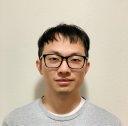
 Dilin Wang
· 3 previous affiliations
- Meta (United States)Since 2020
- Research Scientist · Since 2020
- The University of Texas at Austin2015–2020
- PhD student · 2015–2020
- Dartmouth College2015–2017
- PhD student · 2015–2017
Research Overview
Dilin Wang focuses on probabilistic inference, neural architecture search, and 3D scene reconstruction. His early work developed particle-based variational inference methods using Stein's identity to improve sampling and optimization in complex probabilistic models. More recently, he has investigated efficient training strategies for vision transformers and variance reduction techniques for generative 3D modeling.
Research Trajectory
Dilin Wang's early research concentrated on probabilistic graphical models and Bayesian inference. He initially explored efficient observation selection using Bayesian lower bounds in Efficient Observation Selection in Probabilistic Graphical Models Using Bayesian Lower Bounds. Shortly thereafter, he co-developed a general-purpose particle-based variational inference algorithm in Stein Variational Gradient Descent: A General Purpose Bayesian Inference Algorithm. This work iteratively transports a set of particles to match a target distribution by applying a form of functional gradient descent that minimizes the Kullback-Leibler (KL) divergence, contributing significantly to the research direction of Beyond Gaussian Approximations in Variational Inference. He expanded on this framework with Learning to Draw Samples with Amortized Stein Variational Gradient Descent, which amortized the inference cost using neural networks.
Continuing to build on Stein's identity, Wang introduced distributed inference techniques for continuous graphical models in Stein Variational Message Passing for Continuous Graphical Models, extending Stein variational gradient descent to leverage the Markov dependency structure of the distribution. He also addressed the heavy-tail variance issues inherent in importance sampling by proposing tail-adaptive f-divergences in Variational Inference with Tail-adaptive f-Divergence. This approach adaptively changes the convex function with the tail of the importance weights to guarantee finite moments while maintaining mass-covering properties. To enforce diversity in non-convex settings, he applied these principles to mixture models in Nonlinear Stein Variational Gradient Descent for Learning Diversified Mixture Models, advancing the broader area of Inter Particle Repulsion for Diversity Preserving Optimization.
Parallel to his work in probabilistic inference, Wang investigated the structural optimization of neural networks. He formulated the dynamic routing procedure in capsule networks as an optimization problem with KL regularization in An Optimization View on Dynamic Routing Between Capsules. He also explored progressive network growth by adaptively splitting existing neurons into multiple offspring in Splitting Steepest Descent for Growing Neural Architectures, framing the strategy as a second-order functional steepest descent for escaping saddle points in a Wasserstein metric space. In the natural language domain, he investigated regularization techniques to prevent overfitting in large-scale models, detailing these findings in Improving Neural Language Modeling via Adversarial Training.
By 2021, Wang's focus shifted toward automated machine learning, specifically the area of Accelerating Neural Architecture Search Without Full Model Training. He introduced AlphaNet: Improved Training of Supernets with Alpha-Divergence, which replaced standard KL divergence with an adaptive alpha-divergence to better calibrate student models against teacher uncertainty. This work contributed to the research direction of One Shot Neural Architecture Search with Weight Sharing. To further optimize the search process, he developed AttentiveNAS: Improving Neural Architecture Search via Attentive Sampling, which improved two-stage neural architecture search by sampling directly from the model performance Pareto front, rather than relying on uniform sampling. During this period, he also collaborated on data augmentation fidelity, using saliency maps to preserve informative image regions in KeepAugment: A Simple Information-Preserving Data Augmentation Approach.
Wang subsequently applied architecture search techniques to Vision Transformers (ViTs). He participated in the design of multi-scale representations for dense prediction tasks in Multi-Scale High-Resolution Vision Transformer for Semantic Segmentation. He also addressed the area of Gradient Interference in Weight-Sharing Supernets by identifying and mitigating gradient conflicts—where the gradients of different sub-networks conflict with that of the supernet—that cause early saturation when training supernets for ViTs, detailing this approach in NASViT: Neural Architecture Search for Efficient Vision Transformers with Gradient Conflict aware Supernet Training.
Most recently, Wang's research has expanded into 3D scene reconstruction and generative modeling. He returned to his foundational work on Stein's identity to reduce variance in text-to-3D score distillation in SteinDreamer: Variance Reduction for Text-to-3D Score Distillation via Stein Identity. He also collaborated on structuring discrete, permutation-invariant 3D Gaussian Splatting into 2D representations using spherical mapping in UVGS: Reimagining Unstructured 3D Gaussian Splatting using UV Mapping, compressing heterogeneous attributes into a shared feature space. Finally, he contributed to monocular video 3D reconstruction techniques that eliminate the need for pre-computed camera poses in VideoLifter: Lifting Videos to 3D with Fast Hierarchical Stereo Alignment.
Current Directions
Recent work investigates the generation and reconstruction of 3D scenes from text and monocular video. The most recent papers in the evidence address the challenges of unstructured 3D representations and the high variance inherent in generative score distillation. This includes developing variance reduction techniques based on Stein's identity for text-to-3D asset synthesis, as well as structuring 3D Gaussian Splatting into 2D representations via spherical mapping to improve modeling quality. Additionally, current research explores hierarchical stereo alignment methods to lift monocular videos into 3D without relying on pre-computed camera poses, significantly accelerating the reconstruction process.
Profile updated
Loading new papers…
Other researchers whose papers cluster into the same research directions — a proxy for overlapping technical interests and shared intellectual neighborhoods.
See something wrong? Report a mistake