

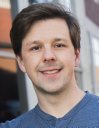
 David F. Gleich
· 1 previous affiliation
- Purdue University West LafayetteSince 2011
- Full Professor · Since 2022
- Associate Professor · 2017–2022
- Assistant Professor · 2011–2017
Research Overview
David F. Gleich focuses on large-scale matrix computations, spectral graph theory, and network diffusions to analyze massive datasets. His trajectory spans foundational work in local graph clustering and PageRank extensions to recent advancements in higher-order network analysis and scalable semidefinite programming. Currently, he investigates matrix-aware optimization techniques for foundation models and hypergraph learning.
Research Trajectory
In the early 2010s, Gleich’s research explored the intersection of matrix computations and data analysis, initially focusing on ranking systems. He introduced Rank aggregation via nuclear norm minimization (2011), which applied advances in matrix completion to skew-symmetric matrices, creating a robust method for extracting item ranks from noisy or incomplete pairwise comparison data.
Shortly thereafter, his focus shifted toward the structural properties of massive social and information networks, particularly the identification of communities. In Vertex neighborhoods, low conductance cuts, and good seeds for local community methods (2012), he demonstrated theoretically and empirically that egonets—the immediate neighborhoods of vertices—often form high-quality communities in networks with heavy-tailed degree distributions. This insight contributed to the domain of Seed Sensitivity in Local Graph Expansion and Bootstrapping and laid the groundwork for his extensive subsequent work in local graph algorithms.
Building on these network analysis foundations, Gleich developed new diffusion-based techniques for community detection. He presented Heat kernel based community detection (2014) as a powerful alternative to Personalized PageRank, advancing the broader area of Strongly Local Graph Clustering. His work on network diffusions continued to expand with Multilinear PageRank (2015), which extended classical random walk models, and the comprehensive review PageRank Beyond the Web (2015), which synthesized the algorithm's applications across diverse scientific disciplines. Together, these contributions pushed forward the research direction of Scaling Graph Algorithms for Billion Scale Networks.
As his research progressed, Gleich sought to refine the precision and efficiency of local clustering methods. Collaborating with colleagues, he developed A Simple and Strongly-Local Flow-Based Method for Cut Improvement (2016). This flow-based approach improved the identification of target clusters around seed sets, directly contributing to the area of L1-Regularized Local Graph Clustering.
By the late 2010s, Gleich recognized that traditional graph representations, which model strictly pairwise relationships, were insufficient for capturing the complex, multi-way interactions present in many real-world systems. He began incorporating higher-order structures, such as network motifs and hypergraphs, into his algorithms. In Local Higher-Order Graph Clustering (2017), his group designed methods that utilize small subgraphs to guide the clustering process. Concurrently, he formalized The Spacey Random Walk: A Stochastic Process for Higher-Order Data (2017), generalizing random walk dynamics for tensor-based representations.
This shift toward higher-order dependencies culminated in a series of works addressing hypergraph learning. He led the development of Strongly Local Hypergraph Diffusions for Clustering and Semi-supervised Learning (2020), which introduced specialized gadgets to reduce hypergraphs to directed graphs, enabling high-quality community detection in massive datasets in seconds. This advanced the field of The Information Loss of Hypergraph Clique Expansion. He later synthesized the rapid evolution of this subfield in the survey Higher-order Network Analysis Takes Off, Fueled by Classical Ideas and New Data (2021).
In recent years, Gleich has increasingly utilized rigorous optimization frameworks, particularly semidefinite programming (SDP), to establish theoretical bounds for network structures. In Theoretical Bounds on the Network Community Profile from Low-rank Semi-definite Programming (2023), his team connected Markov chain theory to low-rank SDPs to prove that the upward-sloping community structure observed in massive networks is a fundamental property rather than a heuristic artifact. He further solidified the theoretical foundations of graph partitioning with A Cheeger Inequality for Size-Specific Conductance (2023), which provided a two-sided Cheeger inequality for size-constrained cuts by relaxing the NP-hard problem into a spectral program.
To make these complex optimization problems tractable at scale, Gleich introduced Suboptimality bounds for trace-bounded SDPs enable a faster and scalable low-rank SDP solver SDPLR+ (2024). By leveraging new suboptimality bounds, this solver dynamically adjusts its rank, allowing it to handle problems with over a million variables on a single machine. Alongside these optimization advances, he continued to push the boundaries of hypergraph analysis with Densest Subhypergraph: Negative Supermodular Functions and Strongly Localized Methods (2024), contributing to ongoing work in Managing the Computational Complexity of Hypergraph Learning. Most recently, his expertise in matrix computations has been applied to the training of large language models. In Decoupling Variance and Scale-Invariant Updates in Adaptive Gradient Descent for Unified Vector and Matrix Optimization (2026), his group introduced DeVA, a framework that bridges coordinate-wise adaptive methods and matrix-aware spectral optimizers to significantly improve token efficiency in LLM pretraining.
Current Directions
The most recent papers in the evidence indicate a dual focus on scaling complex optimization problems and applying matrix-aware techniques to modern machine learning architectures. One major direction involves the development of highly scalable solvers for Semidefinite Programs (SDPs). By establishing new suboptimality bounds for trace-bounded problems, Gleich is enabling the exact and approximate solution of massive-scale combinatorial and network problems that were previously computationally prohibitive.
Simultaneously, his recent work investigates advanced optimization strategies for foundation models. By decoupling variance adaptation from scale-invariant updates, he is exploring how spectral and matrix-aware optimizers can be unified with traditional adaptive gradient methods to improve the training efficiency of large language models. Finally, he continues to advance the theoretical and algorithmic foundations of higher-order network analysis, focusing on strongly localized methods for identifying dense structures within massive hypergraphs.
Profile updated
Loading new papers…
Other researchers whose papers cluster into the same research directions — a proxy for overlapping technical interests and shared intellectual neighborhoods.
See something wrong? Report a mistake