

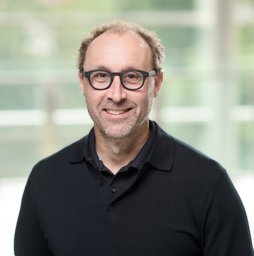
 Daniele Faccio
· 4 previous affiliations
- University of GlasgowSince 2010
- Full Professor · 2010–2040
- Professor in Quantum Technologies, Royal Academy of Engineering Chair in Emerging Technologies · Since 2018
- Heriot-Watt UniversitySince 2010
- Professor in Physics · Since 2015
- Reader in Physics · Since 2010
- University of Insubria1993–2010
- Assistant Professor · 2004–2010
- 1993–1998
- University of Southampton1999–2000
- MPhil, Physics · 1999–2000
Research Overview
Daniele Faccio focuses on quantum optics, computational imaging, and the physics of light propagation. His trajectory spans from early work on nonlinear optical materials to the development of advanced imaging technologies capable of seeing through scattering media and around corners. Currently, he investigates laser speckle-based imaging and efficient neural network architectures for medical image analysis.
Research Trajectory
Faccio’s early research explored the foundational physics and engineering required to manipulate light in novel ways. In 2001, he investigated the potential of thermally-poled silica waveguides to function as nonlinear optical materials, aiming to enable all-fiber devices for frequency conversion and switching in optical communication networks in A study on the possibility of using thermally-poled silica waveguides for optical communication devices. This foundational work touched upon areas such as engineering beyond the optical damage threshold and strategies for imaging beyond the optical diffraction limit.
Over the following years, his focus expanded into fundamental light physics and quantum optics. In 2015, he participated in a study demonstrating that spatially structuring a light beam—such as shaping it into a Bessel beam—reduces its group velocity in free space. This finding, detailed in Spatially structured photons that travel in free space slower than the speed of light, contributed significantly to the research direction of Temporal Precision and Synchronization in Quantum Interference. Building on quantum interference phenomena, his laboratory later achieved the first experimental coherent absorption of quantum "N00N" states using a multilayer graphene film. By precisely tuning the phase of a two-photon superposition, they demonstrated deterministic control over photon absorption, effectively mimicking nonlinear optical effects using a linear material in Coherent Absorption of N00N States. During this period, he also explored novel imaging paradigms, such as Temporal ghost imaging.
A major theme in Faccio's subsequent work is computational imaging, particularly the challenge of imaging in extreme or highly indirect conditions. His group developed a method to locate and identify specific people hidden around a corner using a single-pixel, single-photon detector combined with an artificial neural network. By analyzing the one-dimensional temporal histogram of scattered laser echoes, the system bypassed complex three-dimensional scanning, as presented in Neural network identification of people hidden from view with a single-pixel, single-photon detector. This work advanced areas like sparse and multiplexed acquisition for high-speed imaging and exploiting temporal dynamics in raw sensor waveforms. He further synthesized these emerging paradigms in Quantum-inspired computational imaging, providing an overview of how quantum-inspired sensors and robust algorithms address low-illumination and ultrafast imaging challenges.
Faccio has also made substantial contributions to the area of Imaging through Scattering Media and Multimode Fibers. Collaborative work explored the use of deep learning to reconstruct images sent through long, distorted multimode optical fibers. By enforcing unitary regularization derived from the physics of light, researchers successfully inverted scrambled speckle patterns into clear images without phase-measuring equipment in Deep, complex, invertible networks for inversion of transmission effects in multimode optical fibres. This physics-informed machine learning approach was further refined in Bessel Equivariant Networks for Inversion of Transmission Effects in Multi-Mode Optical Fibres, where baking physical symmetries into the neural network architecture drastically reduced computational complexity and improved generalization. Alongside these fiber imaging techniques, he collaborated on frameworks for training Bayesian machine learning models to solve broader computational imaging inverse problems with limited experimental data, as detailed in Variational Inference for Computational Imaging Inverse Problems.
Returning to fundamental quantum mechanics, his group probed how non-inertial motion influences quantum entanglement. By spinning a modified Hong-Ou-Mandel interferometer, they observed bosonic photons altering their behavior to act like fermions, providing a laboratory-scale investigation into the intersection of mechanical rotation and quantum symmetry in Controlling Photon Entanglement with Mechanical Rotation.
Most recently, his research has expanded into specialized medical domains. His laboratory developed highly efficient transformer-style architectures for medical image segmentation, processing features in the frequency domain via Fast Fourier Transforms to reduce computational complexity while maintaining high accuracy in Glfnet: Global-Local (Frequency) Filter Networks for Efficient Medical Image Segmentation. Concurrently, he has explored laser speckle-based approaches for wide-field imaging, specifically measuring local tissue stiffness anomalies and tumor proxies in brain samples that are invisible to standard intensity imaging, as demonstrated in Wide-Field Imaging of Brain Tissue Stiffness and Tumour Proxies with Scattered Light.
Current Directions
The most recent work in the evidence addresses the application of advanced optical and computational techniques to medical imaging and tissue analysis. A primary focus is the development of highly efficient, physics-informed neural network architectures—such as global-local frequency filter networks—that can process complex medical image data with significantly reduced computational overhead. Alongside algorithmic improvements for image segmentation, current research investigates novel physical measurement techniques, utilizing scattered light and laser speckle to detect mechanical anomalies like tissue stiffness and tumor proxies that remain hidden from conventional intensity-based imaging systems.
Profile updated
Loading new papers…
Other researchers whose papers cluster into the same research directions — a proxy for overlapping technical interests and shared intellectual neighborhoods.
See something wrong? Report a mistake