

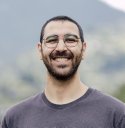
 Marco Aversa
· 4 previous affiliations
- SynthesiaSince 2025
- Researcher · Since 2025
- Dotphoton2020–2025
- Senior Research Scientist (ML/AI) · 2024–2025
- Researcher · 2020–2023
- University of Glasgow2020–2024
- PhD student · 2020–2024
- Research Assistant · 2023
- Teaching Assistant · 2021–2023
- Sapienza University of Rome2014–2019
- Postgraduate Research in the Photonics Group · 2019
- Master's degree, Physics · 2017–2019
- Postgraduate Research in the Active Matter Group · 2018
- Undergrad student · 2014–2017
Research Overview
Marco Aversa focuses on generative modeling, representation learning, and the integration of physical priors into computer vision workflows. His trajectory spans from differentiable imaging pipelines and equivariant networks to high-resolution diffusion models and unsupervised segmentation. His most recent work investigates efficient training strategies for generative architectures and robust damage detection in analogue media.
Research Trajectory
During his doctoral studies at the University of Glasgow, Aversa's early work concentrated on embedding physical knowledge into machine learning systems. He participated in the development of Bessel Equivariant Networks for Inversion of Transmission Effects in Multi-Mode Optical Fibres, which utilized $\mathrm{SO}^{+}(2,1)$-equivariant neural networks to invert transmission effects by exploiting azimuthal correlations in fibre speckle patterns. Building on the intersection of physical optics and machine learning, he contributed to Data Models for Dataset Drift Controls in Machine Learning With Optical Images. This work created explicit, differentiable data models to analyze and synthesize dataset drift, advancing the area of Task Specific Differentiable Imaging Pipelines.
In 2023, Aversa's focus expanded significantly into the design and scaling of generative diffusion models. He introduced DiffInfinite: Large Mask-Image Synthesis via Parallel Random Patch Diffusion in Histopathology, a hierarchical diffusion model capable of generating arbitrarily large histological images while preserving long-range structural correlations. By utilizing parallel random patch diffusion, this approach avoided tiling artifacts and contributed to the research direction Stochastic Grid Shifting for Seamless Reconstruction. Concurrently, he developed Generative Fractional Diffusion Models, proposing the first continuous-time score-based models to replace standard Brownian motion with fractional Brownian motion (fBM). By leveraging a Markovian approximation of fBM, this framework allowed for control over the memory and roughness of the diffusion process, improving sample diversity and image quality. This foundational concept was subsequently formalized and presented to the broader community in Generative Fractional Diffusion Models at ICML 2024, aligning with the broader area of Markovian Embedding for Non-Markovian Dynamics.
Continuing his research into the scalability and internal mechanics of foundation models, Aversa collaborated on Is One GPU Enough? Pushing Image Generation at Higher-Resolutions with Foundation Models.. This zero-shot framework, Pixelsmith, enabled the generation of gigapixel-resolution images from text prompts on a single consumer GPU by combining memory-efficient patch denoising with a mechanism to balance global structure and fine detail. This methodology provided practical solutions for the research direction Scaling High Resolution Video Generation Beyond Memory Bottlenecks. He also explored the latent capabilities of these architectures in Unsupervised Segmentation by Diffusing, Walking and Cutting, introducing a zero-shot, unsupervised image segmentation method. By repurposing the internal self-attention mechanisms of Stable Diffusion as transition probabilities in a random walk, the approach achieved strong benchmark performance without task-specific training.
Parallel to his core generative research, Aversa has led a sustained effort to evaluate and benchmark computer vision models on complex, real-world degradation. He introduced the DamBench dataset in State-of-the-Art Fails in the Art of Damage Detection, demonstrating that state-of-the-art segmentation models frequently mistake artistic style for physical decay. This initiative culminated in ARTeFACT: Benchmarking Segmentation Models on Diverse Analogue Media Damage, which presented a first-of-its-kind dataset for detecting physical damage across media ranging from ancient frescoes to modern photographs. The study revealed significant generalization gaps in foundation models like SAM and DINOv2 when applied to material-dependent art degradation.
Most recently, while affiliated as a researcher at Dotphoton, Aversa has investigated the computational economics of training large-scale models. He oversaw the development of AJEST in Autoguided Online Data Curation for Diffusion Model Training, a method combining online data selection with autoguidance. The study provided a rigorous cost-benefit analysis of dynamic data curation, ultimately finding that the computational overhead often makes simpler approaches more practical. This work directly informs areas such as Efficient Training Strategies for Generative Diffusion Models and the research direction The Surprising Effectiveness of Random Data Selection.
Current Directions
The most recent papers in the evidence indicate a dual focus on the practical deployment of generative models and the robust evaluation of foundation models in specialized domains. Aversa is actively investigating data curation and sample efficiency in diffusion model training, seeking to balance the computational overhead of online data selection against the benefits of autoguidance. Simultaneously, his work addresses the limitations of general-purpose vision models when applied to highly specific, material-dependent tasks, such as physical damage detection in analogue media. By constructing rigorous benchmarks and exploring zero-shot adaptations of self-attention mechanisms, his current research aims to make large-scale generative and representation learning models more efficient, interpretable, and reliable for complex real-world applications.
Profile updated
| Paper | Venue | Year |
|---|---|---|
| Generative Fractional Diffusion ModelsGitHubGabrielNobis/ | NeurIPS | 2024 |
| Data Models for Dataset Drift Controls in Machine Learning With Optical ImagesGitHubaiaudit-org/ | Differentiable Almost Everything | 2023 |
Loading new papers…
Other researchers whose papers cluster into the same research directions — a proxy for overlapping technical interests and shared intellectual neighborhoods.
See something wrong? Report a mistake