

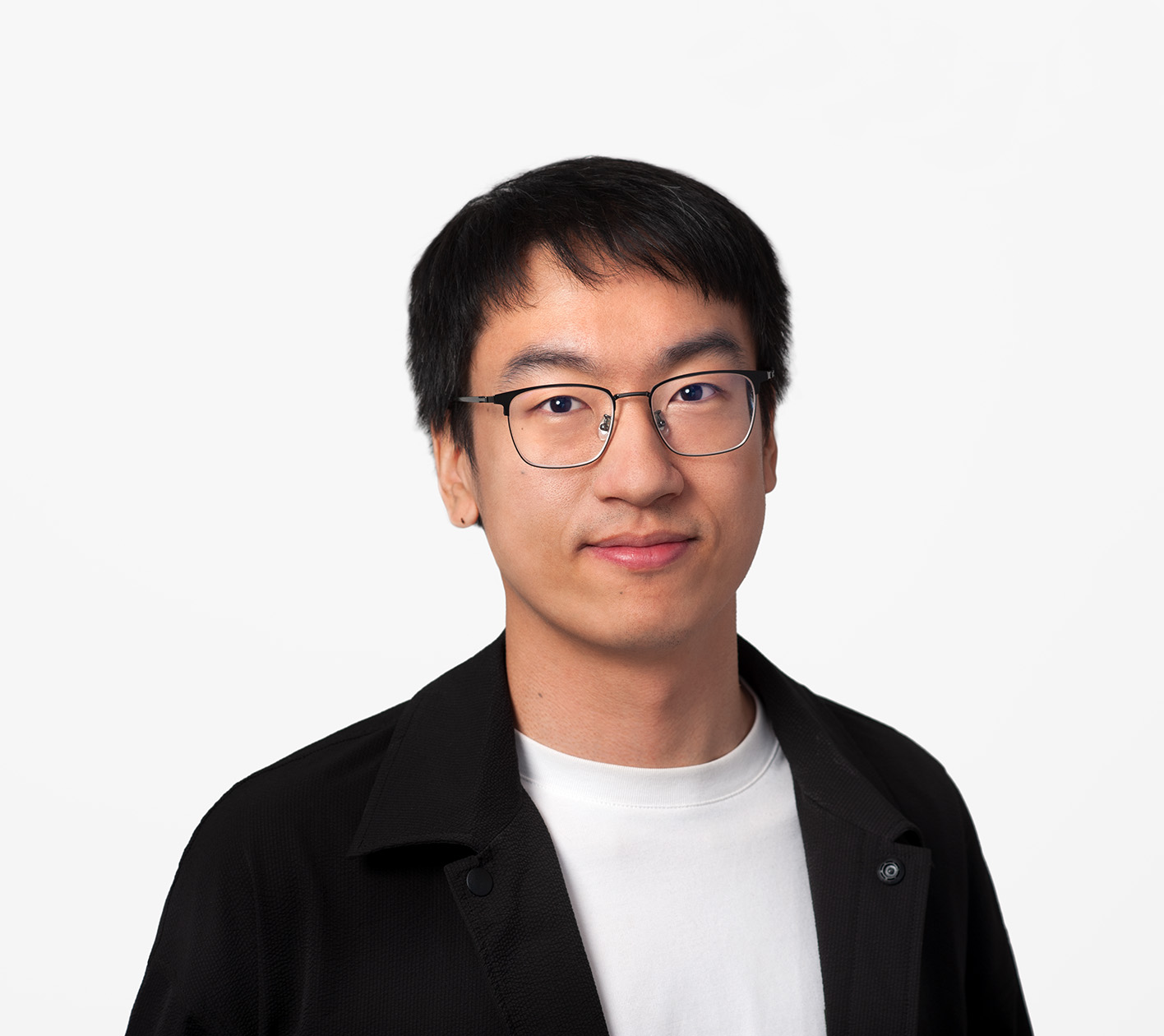
 Da Yu
· 4 previous affiliations
- Google (United States)Since 2024
- Senior Researcher Scientist · Since 2024
- Current
- Sun Yat-sen University2019–2024
- PhD student · 2019–2024
- Microsoft (United States)2019–2023
- Research intern · 2019–2023
Research Overview
Da Yu focuses on privacy-preserving machine learning and the optimization of large language models. His early work addressed the fundamental privacy-utility trade-offs in deep learning by developing memory-efficient differential privacy techniques for large-scale networks. More recently, his research investigates scalable embedding architectures and the application of reinforcement learning to enhance the reasoning and agentic capabilities of foundation models.
Research Trajectory
Yu's early research examined the architectural properties of neural networks, beginning with an analysis of forward and backward stability in On the Stability of Multi-branch Network. This 2020 work demonstrated that scaling down initialization is insufficient for successfully training multi-branch networks without addressing the backward process, highlighting a novel role for normalization layers in network stability.
He subsequently turned his focus to the intersection of machine learning and data privacy. In How Does Data Augmentation Affect Privacy in Machine Learning?, he challenged prevailing assumptions by formulating membership inference attacks as a set classification problem, revealing how augmented data can be exploited to extract sensitive information. To address the computational and utility bottlenecks of training large models privately, he contributed to the research direction of Subspace Methods for High-Dimensional Differentially Private Optimization. This included introducing Reparametrized Gradient Perturbation in Large Scale Private Learning via Low-rank Reparametrization, which uses low-rank gradient carriers to reduce memory overhead and mitigate the curse of dimensionality. Concurrently, he developed Gradient Embedding Perturbation in Do not Let Privacy Overbill Utility: Gradient Embedding Perturbation for Private Learning, projecting private gradients into non-sensitive anchor subspaces to maintain utility. This work also advanced the broader area of Scaling Data Attribution with Compressed Gradient Sketches.
Expanding into adversarial robustness in 2022, he investigated data poisoning in Indiscriminate Poisoning Attacks Are Shortcuts, demonstrating that the perturbations used in advanced attacks are linearly separable when assigned target labels. Returning to privacy, he addressed the area of The Privacy-Utility Trade-off in Differentially Private Learning by proposing a meta-framework for Differentially Private Fine-tuning of Language Models. This approach achieved state-of-the-art privacy-utility trade-offs by adapting parameter-efficient fine-tuning methods, contributing to the research directions of Weight Proximity Regularization for Stable Model Adaptation and Privacy Aware Scaling in Foundation Models.
His work on differential privacy (DP) optimization continued with Exploring the Limits of Differentially Private Deep Learning with Group-wise Clipping, which introduced per-layer clipping to make private learning nearly as fast and memory-efficient as non-private baselines. He also refined privacy guarantees by proposing output-specific metrics in Individual Privacy Accounting for Differentially Private Stochastic Gradient Descent, showing that most examples enjoy stronger protections than worst-case bounds suggest. To further improve the efficiency of private models, he explored the use of synthetic data generated by privately fine-tuned large language models in Training Private and Efficient Language Models with Synthetic Data from LLMs.
Building on the synthetic data paradigm in 2024, he contributed to the area of Private Selection for Differentially Private Synthetic Data through participation in Differentially Private Synthetic Data via Foundation Model APIs 2: Text, which generated high-quality private datasets using only API access to proprietary models. He also applied DP to model alignment in Privacy-Preserving Instructions for Aligning Large Language Models, developing a two-stage framework to protect sensitive user data during the data-labeling process. To optimize the training of small, domain-specific private models, he introduced a framework in Selective Pre-training for Private Fine-tuning that guides public pre-training using the private dataset.
Most recently, his research has focused on the scaling behaviors and architectural efficiency of foundation models. He collaborated on establishing comprehensive scaling laws for DP training in Scaling Laws for Differentially Private Language Models, demonstrating the failure of traditional scaling laws under privacy constraints. Addressing architectural bottlenecks, he introduced the SCONE architecture in Scaling Embedding Layers in Language Models, which learns contextualized embeddings for frequent n-grams and offloads them to memory, significantly reducing inference-time FLOPS. Finally, in ACTG-ARL: Differentially Private Conditional Text Generation with RL-Boosted Control, he helped develop a hierarchical framework that uses reinforcement learning to restore the instruction-following capabilities typically degraded by DP noise.
Current Directions
The most recent papers in the evidence indicate a dual focus on the architectural scaling of language models and the integration of reinforcement learning with differential privacy. Recent work investigates how to optimize the trade-offs between compute, privacy budgets, and model utility, establishing new scaling laws specific to private training environments. Additionally, this research addresses inference efficiency by decoupling and offloading embedding layers to scale model capacity without increasing accelerator memory taxes. Finally, current directions explore hierarchical frameworks that leverage reinforcement learning to maintain high-fidelity instruction following and attribute matching in text generation, mitigating the degradation typically caused by differential privacy noise.
Profile updated
Loading new papers…
Other researchers whose papers cluster into the same research directions — a proxy for overlapping technical interests and shared intellectual neighborhoods.
See something wrong? Report a mistake