

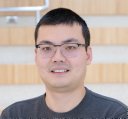
 Da Yan
· 2 previous affiliations
- Indiana UniversitySince 2024
- Associate Professor · Since 2024
- University of Alabama at Birmingham2016–2023
- Associate Professor · 2023
- Assistant Professor · 2016–2023
2 other authors named Da Yan: Da Yan (2 papers), Da Yan (2 papers)
Research Overview
Da Yan focuses on distributed graph processing, scalable network analytics, and the robustness of machine learning models. His early work established foundational frameworks for large-scale graph mining and connectivity problems in distributed environments. More recently, his research has expanded into spatial reasoning, efficient model fine-tuning, and the security of large language models.
Research Trajectory
Da Yan's early research addressed the algorithmic challenges of querying and processing large-scale networks. He initially explored spatial queries, developing Efficient Algorithms for Finding Optimal Meeting Point on Road Networks. Recognizing the need to scale graph computations, he subsequently focused on distributed environments. He introduced "Practical Pregel Algorithms" (PPAs) in Pregel Algorithms for Graph Connectivity Problems with Performance Guarantees, establishing linear space and communication bounds for computing connected components on massive graphs. He further advanced distributed graph processing by proposing Blogel: A Block-Centric Framework for Distributed Computation on Real-World Graphs, which optimized computation by operating on graph blocks rather than individual vertices.
Moving beyond vertex-centric computations, his work transitioned toward the complex demands of distributed graph mining, where the generation of numerous subgraphs creates severe computational bottlenecks. He participated in the design of G-Miner: an efficient task-oriented graph mining system to address these space and complexity issues. Building on this, he led the development of G-thinker: A Distributed Framework for Mining Subgraphs in a Big Graph. This framework proved instrumental in advancing the research direction of Overcoming the Combinatorial Explosion in Subgraph Enumeration. For example, G-thinker was redesigned to handle unpredictable task runtimes in Scalable Mining of Maximal Quasi-Cliques: An Algorithm-System Codesign Approach, significantly accelerating the extraction of dense subgraphs. This line of inquiry also intersects with the broader area of Relaxed Cohesive Subgraph Discovery in Noisy Networks. He continued to refine cohesive subgraph mining techniques with Efficient Algorithms for Maximal k-Biplex Enumeration, adopting a reverse search framework to eliminate exponential delays when processing bipartite graphs.
As graph neural networks (GNNs) became central to network analysis, his research expanded to address their vulnerabilities, contributing to the area of Structural Robustness in Graph Neural Networks. In Expressive 1-Lipschitz Neural Networks for Robust Multiple Graph Learning against Adversarial Attacks, his team introduced ERNN, an architecture utilizing a Weibull-based activation function and adaptive Lipschitz constraints to defend against adversarial perturbations without sacrificing learning capacity. He also synthesized broader trends in the field, co-authoring an overview on Effective Network Analytics: Network Visualization and Graph Data Management. Returning to fundamental graph comparison problems, he developed GEDHOT, detailed in Computing Approximate Graph Edit Distance via Optimal Transport. This ensemble method shifted from local node comparisons to a global optimization framework using Gromov-Wasserstein discrepancy, drastically reducing prediction errors for graph edit distance.
In recent years, his trajectory has broadened to encompass model compression, spatial machine learning, and the security of foundation models. Investigating structural sparsity, his lab published Successfully Applying Lottery Ticket Hypothesis to Diffusion Model, demonstrating that highly sparse subnetworks can maintain the generative quality of dense diffusion models while significantly cutting computational costs. He also contributed to federated learning efficiency through Noise-Free Dynamic Rank-Adaptation via Riemannian Methods in Federated Fine-Tuning, which proposed a Riemannian parameter matching method to resolve aggregation noise and rank drift in low-rank adaptation (LoRA).
His focus on spatial and geospatial data has yielded novel applications and benchmarks. He introduced ALFA in Faster Annotation for Elevation-Guided Flood Extent Mapping by Consistency-Enhanced Active Learning, combining a physics-aware neural network with active learning to rapidly generate high-quality flood maps. He also addressed spatial deception in LENS: label sparsity-tolerant adversarial learning on spatial deceptive reviews, a semi-supervised framework for detecting fake reviews by mining spatial knowledge. To evaluate foundational models in this domain, he collaborated on EarthSpatialBench: Benchmarking Spatial Reasoning Capabilities of Multimodal LLMs on Earth Imagery. Alongside these domain-specific advances, he has continued to formalize the intersection of graph systems and machine learning, as seen in Systems for Scalable Graph Analytics and Machine Learning: Trends and Methods. Concurrently, he has explored proactive security for large language models, participating in the design of Automatic Dialectic Jailbreak: A Framework for Generating Effective Jailbreak Strategies, which simulates a Hegelian debate between models to automatically evolve robust adversarial prompts.
Current Directions
The most recent papers in the evidence indicate a dual focus on the spatial reasoning capabilities of multimodal models and the efficient, secure deployment of foundation models. Recent work investigates how to benchmark and improve the physical and geospatial grounding of multimodal large language models, particularly for Earth imagery and disaster response applications. Simultaneously, ongoing research addresses the security and computational overhead of large models, exploring automated adversarial jailbreak generation and Riemannian methods for noise-free federated fine-tuning.
Profile updated
Loading new papers…
Other researchers whose papers cluster into the same research directions — a proxy for overlapping technical interests and shared intellectual neighborhoods.
See something wrong? Report a mistake