

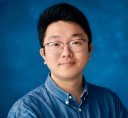
 Cunxiang Wang
· 2 previous affiliations
- Tsinghua UniversityCurrent
- Current
- Postdoc · 2024–2026
- Mayun University2019–2024
- PhD student · 2019–2024
Research Overview
Cunxiang Wang focuses on the evaluation and reasoning capabilities of large language models, with specific emphasis on open-domain question answering, retrieval-augmented generation, and automated model assessment. His trajectory spans from early work in knowledge graph reasoning to developing robust frameworks for evaluating long-context comprehension and chain-of-thought faithfulness. Currently, he investigates scalable methods for aligning and debiasing language model evaluators.
Research Trajectory
Wang's early research examined how models process structured and unstructured knowledge. With collaborators, he investigated inductive relation reasoning in knowledge graphs, exploring whether models should select or generate missing entities in Commonsense Knowledge Graph Reasoning by Selection or Generation? Why?. This work demonstrated that selection-based approaches enhanced with neural text encoders outperform generation models for novel concepts. Building on this theme of knowledge acquisition, he later analyzed how pre-trained language models internalize information from unstructured text in On Effectively Learning of Knowledge in Continual Pre-training, identifying disparities in how models attend to knowledge-bearing versus knowledge-free tokens.
In 2023, his focus expanded to open-domain question answering (ODQA) and the structural challenges of retrieving and generating accurate responses. To help models capture complex semantic correlations, he introduced Exploiting Abstract Meaning Representation for Open-Domain Question Answering, which integrated AMR graphs into pre-trained models. Addressing the tendency of reader models to rely on spurious features rather than genuine causal relationships, he developed RFiD: Towards Rational Fusion-in-Decoder for Open-Domain Question Answering. Concurrently, he began addressing the limitations of automated metrics in assessing model factuality. This led to Evaluating Open-QA Evaluation, a study that introduced the EVOUNA dataset to measure the reliability of AI-generated answers, contributing to the research direction of Scaling Human Judgment with LLM Evaluators.
The following year, his work increasingly addressed the integration of external knowledge and the evaluation of instruction-tuned models. He participated in a comprehensive analysis of how models handle contradictory information in Knowledge Conflicts for LLMs: A Survey, which explored the broader area of Aligning Internal Model Knowledge with External Token Generation. To evaluate retrieval-augmented generation systems, he contributed to RAGChecker: A Fine-grained Framework for Diagnosing Retrieval-Augmented Generation, providing diagnostic metrics that address challenges in the area of The Retrieval Noise Paradox in Augmented Generation. In parallel, he collaborated on PandaLM: An Automatic Evaluation Benchmark for LLM Instruction Tuning Optimization, an open-source judge model designed to automate the evaluation of instruction tuning.
A significant portion of his recent trajectory examines the mechanics and faithfulness of Chain-of-Thought (CoT) reasoning. He proposed Nash CoT: Multi-Path Inference with Preference Equilibrium, a framework utilizing game theory to balance specialized reasoning roles with default model states, reducing inference costs while maintaining accuracy. Further investigating the underlying mechanisms of these processes, he contributed to LLMs with Chain-of-Thought Are Non-Causal Reasoners and How Likely Do LLMs with CoT Mimic Human Reasoning?. These studies utilized causal analysis to reveal how models often deviate from ideal logical chains, advancing research in Faithfulness and Post-Hoc Rationalization in Chain-of-Thought Reasoning and Causal Intervention for Chain of Thought Faithfulness.
Most recently, his research has targeted the limits of context windows, evaluator bias, and preference optimization. He led the development of NovelQA: Benchmarking Question Answering on Documents Exceeding 200K Tokens, demonstrating that even frontier models struggle with multi-hop reasoning at extreme lengths. To address systematic biases in automated evaluation, he introduced UDA: Unsupervised Debiasing Alignment for Pair-wise LLM-as-a-Judge, a framework that dynamically adjusts ratings to improve consensus, contributing to the area of Why Language Models Prefer Their Own Writing. Finally, he collaborated on Temporal Self-Rewarding Language Models: Decoupling Chosen-Rejected via Past-Future, which mitigates representational collapse during iterative model alignment.
Current Directions
Recent work investigates the limits of language model reasoning and the reliability of automated evaluation systems. A primary focus is assessing how models handle extreme context lengths, particularly their capacity for multi-hop reasoning and detail retrieval across hundreds of thousands of tokens. Concurrently, research addresses the systematic biases inherent in using language models as judges, developing unsupervised alignment techniques to improve consensus and correlation with human preferences without relying on manual labels. Finally, recent efforts explore iterative preference optimization, specifically designing self-rewarding frameworks that prevent representational collapse by decoupling chosen and rejected responses across model generations.
Profile updated
Loading new papers…
Other researchers whose papers cluster into the same research directions — a proxy for overlapping technical interests and shared intellectual neighborhoods.
See something wrong? Report a mistake