

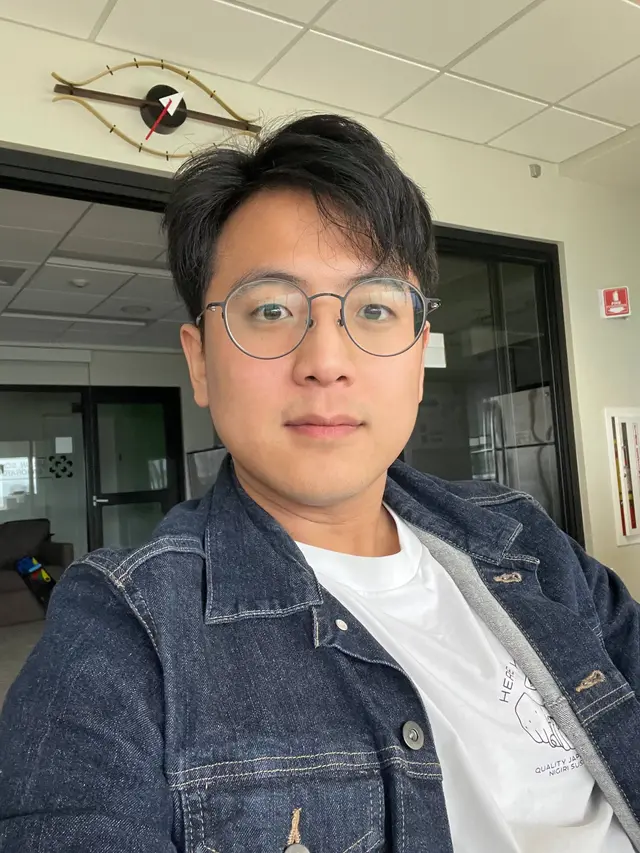
 Core Francisco Park
· 3 previous affiliations
- Harvard UniversitySince 2019
- Researcher · Since 2026
- Postdoctoral Fellow · Since 2025
- Current
- Postdoc · 2025–2026
- 2019–2026
- Doctor of Philosophy - PhD, Physics · 2019–2025
- Prior Computers IncSince 2026
- Principal Researcher · Since 2026
- Undergrad student · 2015–2019
Research Overview
Core Francisco Park focuses on the fundamental capabilities of artificial intelligence systems and the application of machine learning to complex scientific domains, including cosmology and connectomics. His trajectory bridges theoretical investigations of in-context learning and representational geometry with practical tools for physical data analysis. Currently, his work investigates how neural networks integrate novel knowledge and develop universal representations across diverse tasks.
Research Trajectory
Park’s early research established a foundation in applying computational and machine learning techniques to complex biological and physical systems. In 2021, he contributed to biological imaging research with Natural sensory context drives diverse brain-wide activity during C. elegans mating, analyzing neural dynamics in freely moving organisms. This interest in large-scale biological imaging later extended into the research direction of Overcoming the Manual Proofreading Bottleneck in Connectomics, as reflected in his participation in developing SmartEM: machine learning-guided electron microscopy in 2025.
Parallel to his biological work, Park addressed significant data analysis challenges in astrophysics. In 2023, he developed ultra-strict filtering techniques to remove extragalactic objects from stellar catalogs in Stellar-reddening-based Extinction Maps for Cosmological Applications. This work reduced systematic biases in cosmological measurements, advancing the broader area of The Trade-off Between Data Purity and Sample Completeness. He also investigated statistical methodologies for predicting cosmological parameters in Quantification of High-dimensional Non-Gaussianities and Its Implication to Fisher Analysis in Cosmology. By demonstrating that standard Fisher matrix analyses often rely on flawed multivariate Gaussian assumptions, he provided a more robust framework for the research direction of Beyond Two-Point Statistics in Cosmological Inference. Additionally, he collaborated on generative models to reconstruct invisible structures from visible galaxies in Probabilistic reconstruction of Dark Matter fields from biased tracers using diffusion models, contributing to the area of Mapping Dark Matter through Biased Galaxy Tracers. His work on physical data representations continued with Hyperspectral Variational Autoencoders for Joint Data Compression and Component Extraction, which demonstrated how latent spaces can naturally encode complex atmospheric components while achieving massive data compression.
By 2025, Park’s focus expanded significantly into the theoretical foundations of artificial intelligence, particularly the internal mechanisms of large language models. He investigated how models dynamically reorganize their internal concepts in ICLR: In-Context Learning of Representations, showing that as context length increases, a model's internal geometry undergoes a phase transition to match novel task structures. He further explored these dynamics in Competition Dynamics Shape Algorithmic Phases of In-Context Learning, revealing that in-context learning emerges from a competition between distinct internal algorithms. This study provided key insights into the research directions of Task Diversity Thresholds for Algorithmic In-Context Learning and Transient Generalization and the Competition Between Internal Circuits. In the domain of mathematical reasoning, he analyzed the impact of reinforcement learning on language models in Decomposing Elements of Problem Solving: What "Math" Does RL Teach?. This research demonstrated that reinforcement learning primarily improves execution robustness on familiar problems rather than teaching fundamentally new problem-solving capabilities.
In 2026, Park’s research deepened its focus on representational geometry and cross-task generalization. He explored whether neural networks learn universal maps of the world in Convergent World Representations and Divergent Tasks. This inquiry was expanded in Multi-Task Pretraining Drives Representational Convergence, where he demonstrated that while single-task training produces diverse, task-specific geometries, multi-task training drives rapid representational convergence across different objectives. He also examined the challenges of integrating new knowledge into pretrained models in Divergent Tasks Harm Integration Of New Entities Via Fine-Tuning, identifying how certain divergent tasks can actively degrade performance during multi-task fine-tuning. Finally, he investigated the perceptual boundaries of multimodal models in Vision Language Models Inherit Human Color Perception, using psychophysics-inspired experiments to show that vision language models align closely with human color discrimination metrics rather than raw input-space distances.
Current Directions
Recent work investigates the fundamental principles governing how neural networks form internal representations and integrate new knowledge. The most recent papers in the evidence address the geometry of neural representations, exploring how multi-task pretraining drives models toward convergent, universal representations of the world. Additionally, this research examines the limitations of fine-tuning, specifically how divergent tasks can interfere with a model's ability to robustly integrate out-of-distribution entities. Another active area involves characterizing the perceptual alignment between vision language models and human psychophysics, probing the extent to which artificial systems inherit human-like sensory thresholds.
Profile updated
Loading new papers…
Other researchers whose papers cluster into the same research directions — a proxy for overlapping technical interests and shared intellectual neighborhoods.
See something wrong? Report a mistake