

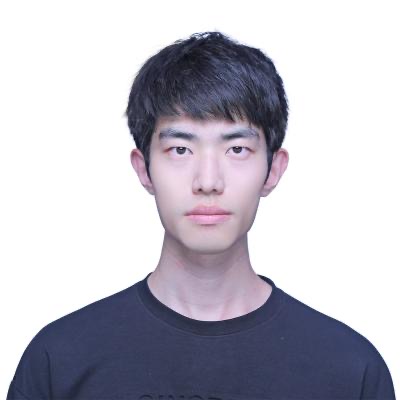
 Cong Wang
· 3 previous affiliations
- Nanjing UniversitySince 2019
- Postdoc · Since 2026
- PhD student · 2021–2025
- MS student · 2019–2021
- Singapore Management University2024–2025
- Visiting PhD student · 2024–2025
- Tencent (China)2023–2024
- Intern · 2023–2024
14 other authors named Cong Wang: Cong Wang (City University of Hong Kong · 404 papers), Cong Wang (University of Pennsylvania · 135 papers), Cong Wang (Zhejiang University · 70 papers), Cong Wang (Massachusetts General Hospital · 5 papers), Cong Wang (Ant Group (China) · 4 papers), and 9 more
Research Overview
Cong Wang focuses on controllable visual generation, deep learning, and trustworthy artificial intelligence. His research trajectory spans from early work in specialized computer vision and ordinal classification to advanced multi-conditional video synthesis and diffusion models. Recently, his work emphasizes inference-time safety mechanisms and robust alignment for large autoregressive and foundation models.
Research Trajectory
Early in his career, his research focused on specialized computer vision tasks and structural feature space learning. He developed SiamFuseNet: A pseudo-siamese network for detritus detection from polarized microscopic images of river sands, which fused multiple inputs to achieve multi-scale detection for geological analysis. He subsequently investigated deep ordinal classification with Controlling Class Layout for Deep Ordinal Classification via Constrained Proxies Learning, proposing a method to learn proxies that adjust the global layout of classes to capture ordinal relationships. Applying structural learning to natural language processing, he also introduced Aggregating Multiple Heuristic Signals as Supervision for Unsupervised Automated Essay Scoring, which constructed robust training objectives from multiple heuristic quality signals.
In 2024, his focus shifted toward the complexities of artificial intelligence generated content (AIGC) and diffusion models. He contributed to the broader area of Resolving Spatial Misalignment in Conditional Image Synthesis and the research direction of Coarse to Fine Generative Refinement through collaborative work on Advancing Pose-Guided Image Synthesis with Progressive Conditional Diffusion Models. Building on these generative techniques, he introduced V-Express: Conditional Dropout for Progressive Training of Portrait Video Generation. This method addresses the challenge of balancing multimodal control signals—such as audio and facial pose keypoints—by employing conditional dropout to synchronize lip movements while maintaining identity. During this period, he also participated in research on mitigating semantic drift in automated prompt engineering, co-authoring AP-Adapter: Improving Generalization of Automatic Prompts on Unseen Text-to-Image Diffusion Models.
His research in 2025 expanded into complex video generation frameworks and model ensembling. He developed Ensembling Diffusion Models via Adaptive Feature Aggregation, a framework that dynamically combines multiple expert diffusion models at the feature level rather than merging their weights, improving both aesthetic quality and prompt alignment. Addressing the specific challenges of sign language synthesis, he proposed Advanced Sign Language Video Generation with Compressed and Quantized Multi-Condition Tokenization. This work utilizes a discrete tokenization paradigm to translate spoken text into fine-grained conditions, producing highly realistic and expressive videos. He further advanced the area of Mitigating Temporal Drift in Autoregressive Video Generation through his contributions to Long-Term TalkingFace Generation via Motion-Prior Conditional Diffusion Model, which tackles identity drift and temporal instability in long-form synthesis. Additionally, he explored the research direction of Adaptive Scaling for Inference Time Activation Steering by collaborating on Steering When Necessary: Flexible Steering Large Language Models with Backtracking, a framework allowing models to self-correct during generation by monitoring internal truthfulness states.
Moving into 2026, his work increasingly addresses the safety, alignment, and adaptability of large foundation models. He introduced ScaleErasure: Inference-Time Minimal Intervention for Precise Concept Erasure in Next-Scale Autoregressive Image Generation, a precision safety mechanism designed to remove unsafe concepts with minimal collateral damage to image quality. Continuing this focus on robust safety, he collaborated on TraceRouter: Robust Safety for Large Foundation Models via Path-Level Intervention, which identifies and severs harmful semantic pathways to protect against adversarial attacks. Finally, he contributed to the broader area of Modeling Label Dependencies in Multi-Label Learning with Multi-Label Test-Time Adaptation with Bayesian Conditional Priors, a lightweight approach to improve how vision-language models handle multi-label recognition during inference.
Current Directions
The most recent papers in the evidence address the safety, alignment, and adaptability of large foundation models. Recent work investigates inference-time interventions to enforce safety guardrails without requiring extensive fine-tuning. This includes developing minimal intervention techniques for precise concept erasure in autoregressive image generation, as well as path-level interventions to disconnect harmful semantic circuits in large language models. Additionally, current research explores test-time adaptation strategies for vision-language models, utilizing Bayesian conditional priors to improve multi-label recognition and manage complex label distributions dynamically.
Profile updated
Loading new papers…
Other researchers whose papers cluster into the same research directions — a proxy for overlapping technical interests and shared intellectual neighborhoods.
See something wrong? Report a mistake