

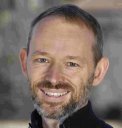
 Clark Barrett
· 5 previous affiliations
- Stanford UniversitySince 2016
- Corbel Professor (Research) · Since 2026
- Professor (Research) · 2021–2026
- Associate Professor (Research) · 2016–2021
- M.S., Ph.D., Computer Science · 1995–2002
- Amazon (United States)2023–2026
- Amazon Scholar · 2023–2026
- Google (United States)2015–2017
- Visiting Scientist · 2015–2017
- New York University2002–2016
- Associate Professor · 2002–2016
- Associate Professor · 2008–2016
- Assistant Professor · 2002–2008
- Brigham Young University1989–1995
- B.S., Electrical Engineering, Mathematics, Computer Science · 1989–1995
Research Overview
Clark Barrett focuses on automated reasoning, satisfiability modulo theories (SMT), and formal verification for both traditional software and artificial intelligence systems. His trajectory spans foundational algorithms for decision procedures to the development of widely used SMT solvers like CVC4 and cvc5. Recently, his work addresses AI safety, exploring formal guarantees for neural networks and the faithful reasoning of large language models.
Research Trajectory
The early arc of Barrett's research established core algorithms and infrastructure for automated reasoning. In 1996, he introduced algorithms for the Stanford Validity Checker in Validity Checking for Combinations of Theories with Equality, detailing techniques like expression sharing and congruence closure to validate logical expressions in hardware verification. He subsequently expanded these capabilities to include bit-vector theories with arithmetic in A Decision Procedure for Bit-Vector Arithmetic (1998). Recognizing the need for standardized evaluation in the growing field, he helped establish the community's benchmarking infrastructure, detailed in Design and Results of the First Satisfiability Modulo Theories Competition (SMT-COMP 2005). He later co-authored a comprehensive overview of the field's foundations and applications in the handbook chapter Satisfiability Modulo Theories (2009).
A major focus of his subsequent work has been the engineering and theoretical advancement of the CVC family of SMT solvers. He presented a complete architectural rewrite of the system in CVC4 (2011), optimizing decision procedures to take advantage of algorithmic advances. This system eventually evolved into cvc5: A Versatile and Industrial-Strength SMT Solver (2022), which introduced a new proof production system and state-of-the-art procedures for non-linear arithmetic. Alongside solver development, his broader contributions to automated reasoning encompass the research direction of Floating Point Soundness in Formal Verification and the area of Completeness Thresholds for Bounded Model Checking.
To improve the practical deployment of these tools, he has investigated methods to manage solver performance and stability. This includes exploring portfolio strategies in SMT-D: New Strategies for Portfolio-Based SMT Solving (2024) and addressing performance variance across similar tasks in Using Normalization to Improve SMT Solver Stability (2024). On the theoretical side, he advanced the understanding of theory combination in The Nonexistence of Unicorns and Many-Sorted Löwenheim-Skolem Theorems (2024). This work proved that stably infinite and strongly finitely witnessable theories are smooth, contributing directly to the research direction of Combining Non-Stably Infinite Theories in SMT Solvers and the broader area of Many-Sorted Logic for Efficient and Structured Reasoning.
As artificial intelligence systems became increasingly prominent, Barrett expanded his verification research to provide formal guarantees for deep learning models. He participated in the development of Reluplex: An Efficient SMT Solver for Verifying Deep Neural Networks (2017), which extended the simplex method to handle non-convex ReLU activation functions. This line of research matured into a comprehensive framework, detailed in Marabou 2.0: A Versatile Formal Analyzer of Neural Networks (2024), advancing the area of Machine Verifiable Proofs for Automated Reasoning. Extending these techniques to control-theoretic domains, his group developed forward reachability algorithms for dynamical systems in Verifying Nonlinear Neural Feedback Systems using Polyhedral Enclosures (2025).
Most recently, his research has addressed the efficiency, reasoning capabilities, and formal evaluation of large language models (LLMs). On the systems side, he explored high-throughput generative inference in FlexGen: High-Throughput Generative Inference of Large Language Models with a Single GPU (2023), which aligns with the research direction of Prefix Aware KV Cache Sharing for Efficient LLM Inference. To ensure that LLMs genuinely rely on their generated reasoning steps, he contributed to Markovian Agents for Truthful Language Modeling (2024) and subsequently developed Markovian Transformers for Informative Language Modeling (2026), a framework that structurally forces models to pass information through a natural-language bottleneck. Bridging his expertise in formal methods and LLMs, he developed systems for translating natural language into logic without human-annotated ground truth in Faithful Autoformalization via Roundtrip Verification and Repair (2026). Advocating for more rigorous evaluation paradigms in AI, he also collaborated on AI Coding Benchmarks Need Proofs, Not Just Tests (2026), arguing that frontier models should be required to provide machine-checkable formal proofs rather than merely passing test suites.
Current Directions
The most recent papers in the evidence point to a dual focus on AI safety and the integration of formal methods with large language models. One major direction involves scaling formal verification techniques to handle complex, nonlinear neural networks and neural feedback systems, ensuring that AI controllers operate safely within strict polyhedral enclosures.
A second, rapidly expanding direction addresses the faithfulness and rigor of LLM reasoning. Recent work investigates structural modifications to transformer architectures—such as Markovian bottlenecks—that force models to generate causally essential chain-of-thought reasoning. Alongside this, there is a strong emphasis on using SMT solvers and formal proof languages (like Lean) to automatically verify, repair, and evaluate code and logic generated by LLMs, moving the field of AI evaluation from heuristic testing toward mathematically guaranteed correctness.
Profile updated
Loading new papers…
Other researchers whose papers cluster into the same research directions — a proxy for overlapping technical interests and shared intellectual neighborhoods.
See something wrong? Report a mistake