

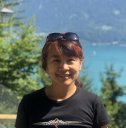
 Claire Cui
· 3 previous affiliations
- Google (United States)Since 2001
- VP & Engineering Fellow · Since 2001
- Researcher · Current
- Stanford University1995–2001
- PhD student · 1995–2001
- Tsinghua University1990–1995
- Undergrad student · 1990–1995
Research Overview
Claire Cui focuses on the development of large-scale generalist learning systems, with a particular emphasis on efficient model scaling, multimodal representation learning, and the application of machine intelligence to clinical healthcare. Her work explores the intersection of sparse architectural designs, such as Mixture-of-Experts (MoE), and the practical requirements of deploying high-capacity models in domains ranging from natural language processing to medical diagnostics. As a Google Fellow, she has transitioned from early contributions in large-scale information retrieval and advertising systems to leading research initiatives in deep generalist learning and medical AI.
Research Trajectory
The trajectory of Cui’s research reflects a shift from specialized, product-oriented machine learning to the pursuit of universal, large-scale foundation models. Her early career was marked by the application of machine learning to large-scale web systems, notably as a founding engineer for Google’s AdSense for Content. This foundational work in data mining and information retrieval established a career-long focus on the challenges of scale and the necessity of efficient computation in high-impact environments.
Beginning around 2018, Cui’s focus shifted toward the healthcare sector through the co-founding of Google Health Research and the Medical Brain team. During this period, her work addressed the limitations of traditional statistical modeling in medicine. Rather than relying on labor-intensive, manually curated variables, she participated in research that utilized raw Electronic Health Record (EHR) data. This approach leveraged the Fast Healthcare Interoperability Resources (FHIR) format to create a standardized representation of patient history, enabling deep learning models to predict clinical outcomes—such as mortality and hospital readmission—directly from unharmonized data across multiple medical centers. This phase of her work also explored architectural constraints to improve model reliability, including the development of specialized recurrent neural networks designed to prevent overfitting by restricting feature interactions in clinical time-series data.
By 2021, Cui’s research moved toward the frontier of Large Language Models (LLMs) and the problem of efficient scaling. As the field moved toward trillion-parameter models, she contributed to the development of sparsely activated architectures. This work sought to decouple a model's total capacity from its per-token computational cost. The primary vehicle for this research was the Mixture-of-Experts (MoE) framework, which allows for massive increases in parameter count while maintaining manageable energy consumption and inference latency. This period also saw an expansion into multimodal learning, exploring how vision and language tasks could be unified within single, decoder-only architectures.
In her most recent work (2023–2024), Cui has taken a senior leadership role in addressing the sustainability and adaptability of large-scale models. Her current research focuses on "lifelong learning"—enabling models to acquire new knowledge from continuous data streams without forgetting previous information—and dynamic computation, where models adjust their depth or complexity based on the difficulty of the input token. She continues to apply these advancements to the medical domain, contributing to the development of multimodal foundation models capable of complex clinical reasoning and long-context information retrieval.
Current Directions
Cui’s current research is centered on three primary pillars: deep generalist learning, efficient inference, and grounded reasoning. In the realm of generalist learning, she is investigating frameworks that allow models to specialize dynamically. This includes the development of "lifelong" architectures where new experts are added to an MoE system to handle shifting data distributions, effectively freezing older parameters to preserve historical knowledge.
A second major focus is the optimization of the "compute-to-performance" ratio. Recognizing that not all inputs require the full depth of a massive transformer, her recent work explores mechanisms for skipping layers during inference. This line of inquiry aims to make large-scale models more viable for real-time applications by reserving maximum computational power for "hard" tokens while accelerating the processing of simpler ones.
Finally, Cui is pursuing the grounding of language models in physical and domain-specific realities. This involves two distinct but related paths: integrating computational physics engines into the reasoning loops of LLMs to simulate physical outcomes, and fine-tuning multimodal models for the high-stakes environment of clinical medicine. These efforts seek to move beyond surface-level pattern matching—addressing the tendency of models to take "reasoning shortcuts"—by forcing them to relate linguistic tokens to external simulations or verified medical knowledge bases.
Representative Work
Cui’s contributions are evidenced by her participation in foundational healthcare AI research and her senior leadership in the evolution of sparse, efficient language models.
In the domain of clinical informatics, Cui participated in the development of a standardized pipeline for processing raw medical data in Scalable and accurate deep learning for electronic health records. This work demonstrated that deep learning models could outperform traditional clinical scores by training on the entirety of a patient’s EHR rather than a subset of hand-picked features. The research emphasized the use of the FHIR format to achieve scalability across diverse hospital systems without requiring site-specific data harmonization.
As the focus of the Google Brain team shifted toward massive-scale modeling, Cui contributed to the development of GLaM: Efficient Scaling of Language Models with Mixture-of-Experts. GLaM represented a significant advancement in the use of MoE architectures, scaling to 1.2 trillion parameters while using only a fraction of the energy required by dense models of similar capacity. This work proved that sparse activation could achieve state-of-the-art performance across a wide array of natural language tasks while significantly reducing the computational footprint of both training and inference.
In a senior/PI capacity, Cui led the research on Lifelong Language Pretraining with Distribution-Specialized Experts. This paper introduced the Lifelong-MoE framework, which addresses the problem of catastrophic forgetting in LLMs. By dynamically adding and freezing experts as the model encounters new data distributions, the framework allows for continuous learning. This approach ensures that the model can adapt to new information—such as updated news or specialized technical domains—without degrading its performance on previously learned tasks.
Cui also served as the senior author for Learning to Skip for Language Modeling, which introduced the SkipLayer framework. This research addresses the inefficiency of uniform computation in transformers. By allowing the model to dynamically bypass layers for predictable tokens, the framework achieves up to a 3x speedup in training and inference. This work is central to her current focus on making large-scale generalist models more computationally sustainable.
Beyond architectural efficiency, Cui has explored the grounding of AI reasoning. She participated in the development of Mind's Eye: Grounded Language Model Reasoning through Simulation, which proposed a paradigm for grounding LLMs in the physical world. By using a physics engine to simulate the outcomes of physical reasoning questions and feeding those results back into the model, the research aimed to mitigate the "hallucinations" and reasoning errors that occur when models rely solely on text-based correlations. This direction is particularly relevant to Entity Masking for Robust Contextual Learning, as it seeks to move models away from surface-level shortcuts toward deeper functional understanding.
Finally, Cui’s ongoing commitment to healthcare is reflected in her participation in the development of Capabilities of Gemini Models in Medicine. This work introduced Med-Gemini, a family of multimodal models fine-tuned for the medical domain. The research demonstrates how large-scale foundation models can be adapted for clinical use through uncertainty-guided web search and long-context reasoning, achieving state-of-the-art performance on complex medical benchmarks. This work represents the culmination of her interests in Multi-modal Representations for Visual Relationship Detection and the practical application of generalist learning to high-stakes human problems.
Profile updated
Loading new papers…
Other researchers whose papers cluster into the same research directions — a proxy for overlapping technical interests and shared intellectual neighborhoods.
See something wrong? Report a mistake