

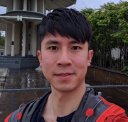
 Andrew M. Dai
· 6 previous affiliations
- Elorian AISince 2026
- Co-founder & CEO · Since 2026
- Google DeepMind (United Kingdom)2012–2026
- Research Scientist (Director) · 2012–2026
- Google (United States)2008–2026
- Software Engineer · 2012–2026
- Software Engineer Intern · 2008
- University of Edinburgh2007–2012
- Ph.D., Machine Learning · 2007–2012
- Autonomy2006–2007
- Software Developer · 2006–2007
- University of Cambridge2003–2006
- BA, Computer Science · 2003–2006
Research Overview
Andrew M. Dai focuses on machine learning architectures, multimodal representation learning for healthcare, and the physical grounding of large language models. His early work addressed unsupervised entity resolution and natural language processing before expanding into robust predictive modeling for electronic health records. Most recently, he investigates synthetic data generation and simulation-based reasoning to improve the reliability of foundation models.
Research Trajectory
Dai’s early research addressed foundational challenges in natural language processing and unsupervised learning. In 2011, he participated in developing methods for Language-independent compound splitting with morphological operations, utilizing bilingual corpora to learn compound parts and morphological operations for machine translation systems. Concurrently, he introduced The Grouped Author-Topic Model for Unsupervised Entity Resolution, a generative approach designed to resolve author identities across document corpora without assuming a fixed number of true underlying identities.
Over the subsequent decade, his methodological focus expanded to encompass generative modeling, representation learning, and neural network efficiency. During this period, Dai made contributions to the research direction of Mitigating Posterior Collapse in Variational Autoencoders, as well as work in the broader area of Noise Contrastive Estimation and the Search for Optimal Noise and the related area of Dynamic Noise Contrastive Estimation. His research has also explored the area of Modeling Individual Annotator Perspectives and architectural improvements in the area of Efficient Ensembles and Specialization via Masked Subnetworks. In 2020, Dai addressed challenges in training unstable linear systems, developing a time-weighted logarithmic loss function to stabilize gradient descent in Learning Unstable Dynamical Systems with Time-Weighted Logarithmic Loss.
A major theme of his recent trajectory is the application of deep learning to electronic health records (EHR). Recognizing the complexity of combining structured clinical codes with unstructured free text, he and his collaborators developed MUFASA: Multimodal Fusion Architecture Search for Electronic Health Records. This work extended neural architecture search methods to automatically discover optimal fusion strategies for heterogeneous clinical data, addressing the sparse and irregular longitudinal features that complicate medical predictions. Alongside architectural innovations, Dai has emphasized the critical need for robust evaluation in healthcare settings. He guided the creation of BEDS-Bench: Behavior of EHR-models under Distributional Shift - A Benchmark, demonstrating that standard EHR models often suffer from poor calibration and generalization when encountering out-of-distribution data, such as shifting from adult to neonatal patient populations.
Expanding into the capabilities of large language models (LLMs), Dai has investigated methods to bridge the gap between text-based training and physical reality. In Mind's Eye: Grounded Language Model Reasoning through Simulation, he proposed a paradigm that interfaces language models with computational physics engines. By allowing models to simulate the possible outcomes of physical reasoning questions and incorporating those simulation results into the input, the work successfully decouples linguistic interpretation from symbolic reasoning, mitigating common reporting biases and logical errors.
Current Directions
Recent work investigates the optimization of clinical forecasting and the responsible scaling of language models through synthetic data. In the healthcare domain, Dai has explored self-supervised meta-learning to optimize patient trajectory representations, as detailed in Learning to Select the Best Forecasting Tasks for Clinical Outcome Prediction. This approach targets the utility of unlabeled clinical measurement forecasts for downstream supervised risk prediction, allowing limited available samples to be used more effectively for fine-tuning.
In the broader context of foundation models, the most recent papers in the evidence address the generation and application of artificial training data. He recently synthesized empirical evidence and methodologies in Best Practices and Lessons Learned on Synthetic Data for Language Models, highlighting the necessity of ensuring factuality, fidelity, and unbiasedness when mitigating data scarcity. This aligns with his ongoing interest in model scaling and efficiency, including contributions to the research area of Expert-Choice Routing for Sparse Mixture of Experts.
Profile updated
| Paper | Venue | Year |
|---|---|---|
| Capacity, Bandwidth, and Compositionality in Emergent Language LearningGitHubbackpropper/ | Unknown | 2019 |
Loading new papers…
Other researchers whose papers cluster into the same research directions — a proxy for overlapping technical interests and shared intellectual neighborhoods.
See something wrong? Report a mistake