

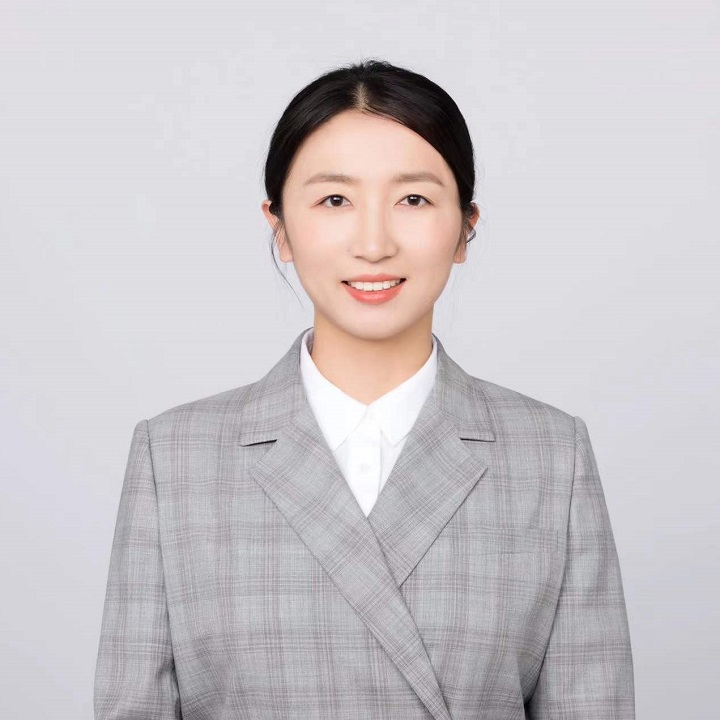
 Chuan Wang
· 2 previous affiliations
- Beijing Jiaotong UniversitySince 2024
- Associate Professor · Since 2024
- Current
- Chinese Academy of Sciences2020–2024
- Associate Professor · 2020–2024
1 other author named Chuan Wang: Chuan Wang (5 papers)
Research Overview
Chuan Wang focuses on computer vision and graph machine learning, with specific emphasis on scene understanding, scene graph generation, and the theoretical foundations of graph neural networks. His early work addressed complex visual analysis in dense and multi-view environments, which naturally evolved into modeling structural relationships. Currently, he investigates scalable graph architectures and their applications in medical imaging and natural language processing.
Research Trajectory
His early research concentrated on extracting reliable information from complex, crowded, and multi-view visual scenes. He introduced Deep People Counting in Extremely Dense Crowds using an end-to-end convolutional neural network regression model to handle severe occlusions and perspective variations where traditional hand-crafted features failed. Expanding on visual parsing, he developed frameworks for object co-segmentation, such as Multiple Semantic Matching on Augmented N-Partite Graph for Object Co-Segmentation, which leveraged semantic context and global matching cliques to discover common objects across multiple images. Continuing in crowd analysis, he collaborated on Deep Crowd Counting In Congested Scenes Through Refine Modules to better capture scale information in highly congested environments. His work on multi-view environments subsequently led to Text Co-Detection in Multi-View Scene, which addressed occlusion and perspective distortion by identifying co-occurring texts across different viewpoints.
As his focus shifted toward explicit structural modeling, he began investigating the theoretical underpinnings of message passing in graph machine learning. He explored the mechanics of graph convolutional networks by reframing them as numerical optimization algorithms in Why Do Attributes Propagate in Graph Convolutional Neural Networks?. This work mitigated over-smoothing and contributed to the broader area of Scaling Graph Neural Networks Beyond Shallow Architectures. He also participated in research addressing heterophily—where connected nodes belong to different classes—in Diverse Message Passing for Attribute with Heterophily, advancing the research direction of Overcoming the Homophily Assumption in Graph Neural Networks. Returning to visual domains with a structural lens, he collaborated on PMP-NET: Rethinking Visual Context for Scene Graph Generation, proposing a progressive message passing network to refine visual context estimation from coarse to fine levels. He later guided the development of Self-supervised Graph Neural Networks via Low-Rank Decomposition, which bypassed traditional feature propagation in favor of low-rank tensor representations for ego-networks, improving performance on heterophilic graphs without requiring labeled data.
In recent years, his work has bridged scene graph generation, scalable graph architectures, and natural language processing. He introduced the Semi-Supervised Clustering Framework for Fine-grained Scene Graph Generation, addressing the sparse annotation problem by discovering hidden relationships in unlabeled data through multi-view feature consistency. In the domain of conversational AI, he contributed to STAMPsy: Towards SpatioTemporal-Aware Mixed-Type Dialogues for Psychological Counseling. This dataset and framework align with the research direction of Explicit Strategy Selection for Goal Oriented Dialogue and the broader area of Grounding Large Language Models for Clinical Reliability. Concurrently, he participated in the design of DUALFormer: Dual Graph Transformer, addressing the quadratic scaling bottleneck of self-attention to advance the direction of Linear Complexity Graph Transformers for Large Scale Networks.
Most recently, his collaborative efforts have focused on medical imaging and graph signal processing. In the area of Graph Structure Learning for Robust Topological Denoising, he contributed to Rethinking Graph Transformers as Graph Signal Denoisers: The Role of Block-Diagonal Priors, which filters noise in local and global connections by enforcing block-diagonal structures. Applying these structural insights to neuroscience, he participated in Brain Networks Should Be Learned, Not Constructed, proposing that functional brain networks be treated as learnable, high-order representations rather than static inputs derived from fMRI data. This paradigm was further expanded in On the Spectral Unreachability of Brain Graph Learning, which introduced an architecture to overcome theoretical limitations in identifying functional brain modules, extracting more stable biomarkers for neurological disorders.
Current Directions
The most recent papers in the evidence indicate a dual focus on scalable graph architectures and their application to complex, high-stakes domains like neuroscience and clinical dialogue. A major ongoing theme is the refinement of graph transformers to achieve linear scalability and robust topological denoising, allowing these models to process large-scale networks without succumbing to computational bottlenecks or structural noise. Concurrently, this structural expertise is being applied to medical and psychological contexts. Recent work investigates the learnability of functional brain networks from fMRI data, moving away from hand-crafted statistical constructions toward dynamic, high-order representations for diagnostic prediction. Additionally, research in natural language processing explores spatiotemporal-aware, goal-oriented dialogue systems designed to improve the reliability and empathy of large language models in psychological counseling.
Profile updated
Loading new papers…
Other researchers whose papers cluster into the same research directions — a proxy for overlapping technical interests and shared intellectual neighborhoods.
See something wrong? Report a mistake