

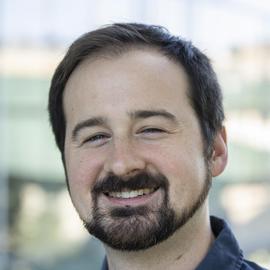
 Chris Donahue
· 5 previous affiliations
- Google (United States)Since 2022
- Researcher · Since 2022
- Intern · 2015–2018
- Carnegie Mellon UniversitySince 2023
- Assistant Professor · Since 2023
- Stanford University2019–2022
- Postdoc · 2019–2022
- University of California San Diego2014–2019
- PhD student · 2014–2019
- The University of Texas at Austin2010–2013
- Undergrad student · 2010–2013
Research Overview
Chris Donahue focuses on generative artificial intelligence for music and creativity, developing controllable models for audio and sequential data. His trajectory spans foundational methods in raw audio synthesis and symbolic music generation to the deployment of interactive systems that augment human creative workflows. Recently, his work investigates multimodal evaluation frameworks and the application of large language models to complex software engineering and game development tasks.
Research Trajectory
Early in his career, Donahue explored the intersection of music and interactive media, mapping audio to rhythm game step charts in Dance Dance Convolution (2017). He subsequently advanced unsupervised raw-waveform audio synthesis with Adversarial Audio Synthesis (2019), introducing the WaveGAN architecture. This research contributed to the research direction of Parallel Waveform Generation via Non-Autoregressive Modeling and the broader area of The Perceptual Evaluation Gap in Generative Audio, while also touching upon High Frequency Harmonic Reconstruction for Neural Audio.
In parallel, he developed interactive interfaces such as Piano Genie (2019) and explored multi-instrumental generation via cross-domain pre-training in LakhNES: Improving Multi-instrumental Music Generation with Cross-domain Pre-training (2019). The latter advanced the area of Long Form Structural Coherence in Musical Audio Generation and supported efforts toward Achieving Stylistic Parity in Generative Music Modeling. Expanding into broader sequence modeling, he addressed non-left-to-right generation tasks in Enabling Language Models to Fill in the Blanks (2020). Returning to the music domain, he framed automatic instrumentation as a part-separation problem in Towards Automatic Instrumentation by Learning to Separate Parts in Symbolic Multitrack Music (2021), which aligned with ongoing work in The Cross-Cultural Generalization Gap in Music Models.
As generative models grew more capable, his focus shifted toward precise controllability and multimodal audio generation. He adapted diffusion models for time-varying control over musical attributes in Music ControlNet: Multiple Time-varying Controls for Music Generation (2023). Collaborating on SingSong: Generating musical accompaniments from singing (2023), he helped leverage source separation to generate instrumental backing tracks synchronized with vocal inputs. The challenge of steering music generation was further addressed in Anticipatory Music Transformer (2024), which improved the ability of models to compose harmonies or infill missing sections. Shifting to analysis, his group demonstrated that vision-language models could classify audio content directly from spectrogram images in Vision Language Models Are Few-Shot Audio Spectrogram Classifiers (2024).
Most recently, Donahue has emphasized the rigorous evaluation of AI systems and the design of interactive copilots. He integrated generative AI into web-based editing environments to support non-linear creative workflows in Hookpad Aria: A Copilot for Songwriters (2025). To evaluate generative models systematically, his research team developed FoleyBench: A Benchmark For Video-to-Audio Models (2025) for synchronized sound effects, and introduced Music Arena: Live Evaluation for Text-to-Music (2025) to collect scalable human preference data. Expanding beyond audio, his recent benchmarks evaluate large language models on complex software tasks: EditBench: Evaluating LLM Abilities to Perform Real-World Instructed Code Edits (2026) uses in-the-wild developer data to test code editing, while GameDevBench: Evaluating Agentic Capabilities Through Game Development (2026) tests multimodal agents on visually demanding game engine tasks.
Current Directions
The most recent papers in the evidence address the rigorous evaluation of generative models and multimodal agents in complex, real-world environments. This includes developing comprehensive benchmarks for video-to-audio synchronization, text-to-music generation, and in-the-wild code editing. Additionally, current research explores how large language models and vision-language models can function as autonomous agents in visually demanding tasks like game development, while continuing to refine interactive AI copilots that support non-linear human creativity.
Profile updated
Loading new papers…
Other researchers whose papers cluster into the same research directions — a proxy for overlapping technical interests and shared intellectual neighborhoods.
See something wrong? Report a mistake