

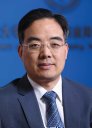
 Chongqing Kang
· 1 previous affiliation
- Tsinghua UniversitySince 1988
- Full Professor · Since 2005
- Associate Professor · 2000–2005
- Lecturer · 1997–2000
- PhD student · 1993–1997
- Undergrad student · 1988–1993
Research Overview
Chongqing Kang focuses on power system planning, the optimal operation of renewable energy grids, and low-carbon power technologies. His trajectory spans from foundational modeling of power system adequacy to the integration of distributed energy resources and virtual power plants. Recently, his work investigates data-driven optimization and market mechanisms for decentralized energy aggregation.
Research Trajectory
The evolution of Kang’s research reflects a sustained effort to address the technical and economic challenges of transitioning to a low-carbon, highly renewable power grid. Early in the provided evidence, his work examined the macro-level implications of deep decarbonization. In Cost increase in the electricity supply to achieve carbon neutrality in China (2022), he and his collaborators analyzed the "green premium" associated with reaching carbon neutrality in China's power sector by 2050. The study projected that the massive infrastructure required for energy storage and grid expansion would increase the total cost of electricity supply, contributing significantly to the research direction of Capital Barriers to Sustainable Technology Adoption and the broader area of Frequency Stabilization in Low Inertia Power Grids.
As renewable penetration increases, maintaining system reliability becomes a primary concern. Kang has extensively investigated how variable resources impact grid stability. In Power System Adequacy With Variable Resources: A Capacity Credit Perspective (2024), he formalized methodologies for evaluating the capacity credit of generators, providing a theoretical expression to better measure how added units affect generation adequacy. To actively manage this variability, his research has increasingly focused on aggregating distributed assets. He explored the operational flexibility of cellular base stations, proposing a framework to integrate them into the grid in On the Self-Scheduling of Cellular Base Station-Based Virtual Power Plants. Recognizing that coordinating these distributed resources relies heavily on modern communication infrastructure, he also modeled the whole-chain communication delays of 5G networks to understand their impact on automatic generation control in Impact of Communication Time Delay in a 5G Network on Frequency Regulation Performance of a High Renewable Energy Penetrated Power System.
Parallel to physical grid integration, Kang has advanced the computational methods required to operate complex power networks securely. He has contributed to the area of Non Convex AC Optimal Power Flow Optimization by developing techniques that handle the intricate constraints of modern power systems. In Data-driven Power Flow Linearization: Theory, he detailed methods to translate high-accuracy data-driven models into computationally efficient linear approximations, reducing energy losses and improving economic dispatch. He also addressed the vulnerabilities of these machine learning models in Transferability-Oriented Adversarial Robust Security-Constrained Optimal Power Flow, designing frameworks to ensure grid security assessments remain reliable even when communication networks face cyber attacks or adversarial perturbations.
By 2025, Kang’s focus expanded to harnessing the flexibility of large-scale industrial loads to balance renewable intermittency. Because industrial energy-consuming constraints are often proprietary and difficult to model analytically, he introduced inverse optimization approaches using smart meter data. This work includes Production Scheduling Identification: An Inverse Optimization Approach for Industrial Load Modeling Using Smart Meter Data and Data-Driven Dimension Reduction for Industrial Load Modeling Using Inverse Optimization, which allow grid operators to integrate industrial flexibility into market clearing processes without compromising user privacy. He also participated in collaborative research examining specific industrial sectors, such as Can industrial overcapacity enable seasonal flexibility in electricity use? A case study of aluminum smelting in China, which demonstrated how retaining excess smelting capacity could act as a seasonal battery for the grid.
In addition to operational flexibility, Kang has addressed grid resilience against extreme weather events. In Spatially Dependent Sampling of Component Failures for Power System Preventive Control Against Hurricane, he introduced a framework that accounts for the spatial correlation of weather intensity, improving preventive control strategies and reducing expected costs during large-scale outages. To ensure that decentralized resources participate honestly in these complex grid operations, he has also designed new market mechanisms. In Translation-Symmetric Market: Enabling Incentive Compatibility For DER Aggregation, he proposed a hierarchical market structure that prevents strategic misreporting by distributed energy resources, contributing to the research direction of Privacy Preserving Decentralized Coordination in Smart Grids.
Current Directions
Kang’s most recent work investigates the intersection of machine learning and rigorous mathematical optimization to ensure safe control in complex, non-convex environments. The most recent paper in the evidence, Scalable and Adaptive Trust-Region Learning via Projection Convex Hull (2026), addresses the challenge of learning compact, polyhedral trust regions from high-dimensional data. By transforming mixed-integer optimization problems into differentiable surrogate objectives, this approach enables the efficient learning of boundaries that tightly enclose safe operational states. This methodology supports broader efforts to integrate data-driven techniques into safety-critical infrastructure, ensuring that optimization algorithms can scale adaptively while strictly adhering to the physical and security constraints of the modern power grid.
Profile updated
Loading new papers…
Other researchers whose papers cluster into the same research directions — a proxy for overlapping technical interests and shared intellectual neighborhoods.
See something wrong? Report a mistake