

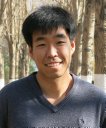
 Baosen Zhang
· 3 previous affiliations
- University of WashingtonSince 2015
- Assistant Professor · Since 2015
- Stanford University2013–2015
- Postdoc · 2013–2015
- PhD student · 2008–2013
Research Overview
Baosen Zhang focuses on the control and optimization of power systems, integrating machine learning with physical grid constraints. His early work established exact convex relaxations for optimal power flow in distribution networks. More recently, he develops safe reinforcement learning and input-convex neural networks to manage renewable energy uncertainty and optimize large-scale infrastructure.
Research Trajectory
Zhang's early research began in optical communications, where he explored Delay-tolerant control design for Semiconductor Optical Amplifiers (2008). By 2011, his focus shifted to the physical constraints of energy infrastructure, beginning with an analysis of the Geometry of feasible injection region of power networks.
In 2012, he contributed to foundational work in the area of Non Convex AC Optimal Power Flow Optimization. With collaborators, he investigated the Geometry of Power Flows in Tree Networks, providing a geometric proof for why non-convex AC Optimal Power Flow (OPF) problems can be solved exactly using convex relaxations in distribution networks. This research advanced the broader direction of Generalizing Power Grid Analysis to Meshed Topologies. Concurrently, he developed mathematical frameworks for Optimal Distributed Voltage Regulation in Power Distribution Networks, addressing the voltage stability challenges introduced by solar panels and electric vehicles, which contributed to the field of Scalable Optimization for Large Power Grids.
To manage the increasing intermittency of renewable energy, Zhang's work expanded into the research direction of Two-Stage Optimization for Proactive Planning and Reactive Operations. He introduced Network Risk Limiting Dispatch: Optimal Control and Price of Uncertainty in 2014, proposing a computationally efficient dispatch method that analytically quantifies uncertainty costs while respecting network congestion. Building on real-time operational needs, he later participated in designing An Online Optimization Algorithm for Alleviating Contingencies in Meshed Networks (2017), which utilized the physical power network itself as a natural solver to compute fast corrective steps for line overloads.
A major theme of Zhang's subsequent trajectory has been bridging the gap between the representational power of deep learning and the strict safety requirements of physical control systems. In 2019, his lab published Optimal Control Via Neural Networks: A Convex Approach, explicitly constructing networks that are convex with respect to their inputs. This foundational paper helped establish the research area of Input Convex Neural Networks for Optimization and Control. He extended these safety guarantees to reinforcement learning (RL) in 2021 with Safe Reinforcement Learning of Control-Affine Systems with Vertex Networks, addressing the challenge of finding RL policies that respect hard state and action constraints.
The year 2022 marked a period of extensive output in safe machine learning and grid optimization. Zhang directed research on A Convex Neural Network Solver for DCOPF With Generalization Guarantees, offering orders-of-magnitude computational speedups for DC optimal power flow while ensuring out-of-sample reliability. In the realm of distributed energy resources, he led the development of Decentralized Safe Reinforcement Learning for Voltage Control, proving that learned controllers could be exponentially stable. His group also addressed multi-agent systems in Interpreting Primal-Dual Algorithms for Constrained MARL, modifying Lagrangian penalties to enforce strict probabilistic safety guarantees rather than mere safety in expectation. To overcome the high sample complexity of RL in physical environments, he proposed Efficient Reinforcement Learning Through Trajectory Generation. Alongside these algorithmic advances, he investigated market dynamics through A Capacity-Price Game for Uncertain Renewables Resources and explored device-level uncertainty in Data-Driven Modeling of Aggregate Flexibility Under Uncertain and Non-Convex Device Models.
Continuing to merge classical control theory with neural architectures, Zhang collaborated on Structured Neural-PI Control with End-to-End Stability and Output Tracking Guarantees in 2023, structuring networks as gradients of strictly convex functions to outperform traditional linear methods. His lab further refined optimization solvers with An Efficient Learning-Based Solver for Two-Stage DC Optimal Power Flow with Feasibility Guarantees, tackling the computational bottleneck of scenario-based stochastic OPF. Additionally, he applied spatial decomposition techniques to accelerate time-domain simulations in Solving Differential-Algebraic Equations in Power Systems Dynamics with Neural Networks and Spatial Decomposition.
Most recently, in 2025, Zhang's work has addressed both grid reliability and the energy footprint of AI itself. He contributed to Fast and Reliable N - k Contingency Screening with Input-Convex Neural Networks, integrating differentiable convex optimization layers to ensure zero false negatives in safety classifications. Expanding into sustainable computing, he also collaborated on FREESH: Fair, Resource- and Energy-Efficient Scheduling for LLM Serving on Heterogeneous GPUs, a scheduling framework designed to reduce the carbon emissions and energy consumption of large language models.
Current Directions
The most recent papers in the evidence address the intersection of machine learning reliability and sustainable computing infrastructure. One major focus involves deploying input-convex neural networks for fast, reliable contingency screening in power grids, ensuring strict safety guarantees without sacrificing computational speed. Concurrently, recent work investigates energy-efficient scheduling for large language model (LLM) serving. By integrating geographic request routing and dynamic frequency scaling, this research aims to reduce the carbon footprint and energy consumption of heterogeneous GPU clusters while maintaining service fairness.
Profile updated
Loading new papers…
Other researchers whose papers cluster into the same research directions — a proxy for overlapping technical interests and shared intellectual neighborhoods.
See something wrong? Report a mistake