

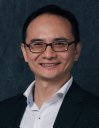
 Ching-Chun Huang
· 2 previous affiliations
- National Yang Ming Chiao Tung UniversitySince 2019
- Full Professor · Since 2023
- Associate Professor · 2021–2023
- Associate Professor · 2019–2021
- National Chung Cheng University2014–2019
- Associate Professor · 2014–2019
Research Overview
Ching-Chun Huang focuses on computer vision, image processing, and generative modeling. His early work addressed practical visual detection systems and medical image enhancement, gradually evolving toward advanced deep learning architectures for spatial resolution and temporal synthesis. His current research investigates diffusion models, neural radiance fields, and domain adaptation for complex visual tasks.
Research Trajectory
His early research centered on signal processing and applied computer vision systems. He developed methods for robust visual detection in constrained environments, beginning with Robust Parking Space Detection Considering Inter-Space Correlation. He later expanded this work into a more comprehensive multilayer inference framework in Vacant Parking Space Detection Based on a Multilayer Inference Framework, which extracted lighting-invariant features from image patches to handle severe inter-object occlusion in surveillance footage. During this period, he also addressed signal processing challenges in cognitive radio networks, introducing a dynamic sampling rate adjustment scheme for compressive spectrum sensing in Dynamic Sampling Rate Adjustment for Compressive Spectrum Sensing over Cognitive Radio Network to track time-varying sparse levels.
A significant portion of his mid-career work focused on medical image processing, specifically addressing the low contrast and dynamic range of X-ray imaging. He proposed techniques to improve the visibility of bright regions using tissue attenuation in X-ray imaeg contrast enhancement based on tissue attenuation. This research evolved into a broader enhancement framework in X-Ray Enhancement Based on Component Attenuation, Contrast Adjustment, and Image Fusion, which decomposed X-ray images into tissue components and important details to adaptively enhance visual contrast for medical diagnosis. Concurrently, he explored foundational image processing techniques, contributing to Learned Prior Information for Image Compression.
Transitioning into advanced deep learning architectures, his group began tackling complex spatial and temporal resolution problems. He led the development of invertible neural networks that leverage temporal information for video rescaling in Video Rescaling Networks With Joint Optimization Strategies for Downscaling and Upscaling. His research also expanded into zero-shot learning; with collaborators, he investigated methods for automatically annotating datasets using novel attribute detectors in Make an Omelette with Breaking Eggs: Zero-Shot Learning for Novel Attribute Synthesis, contributing to broader areas such as attribute decomposition for zero-shot generalization and bidirectional semantic alignment. Returning to resolution enhancement, his lab introduced an implicit representation network for face super-resolution in Arbitrary-Resolution and Arbitrary-Scale Face Super-Resolution with Implicit Representation Networks, enabling up-sampling at any scale by predicting RGB values using local relative coordinates. He also directed research into novel view synthesis, developing TimeNeRF: Building Generalizable Neural Radiance Fields across Time from Few-Shot Input Views to model 3D environments that naturally transition across time from sparse inputs.
Most recently, his work has heavily emphasized generative models and domain adaptation. He guided the development of Warm Diffusion: Recipe for Blur-Noise Mixture Diffusion Models, which bridges traditional noise-only and blur-only diffusion models to improve image generation quality with fewer sampling steps, advancing the research direction of controlling the fidelity-realism tradeoff in diffusion models. Building on diffusion priors, his group introduced a framework for blind super-resolution in Boosting Diffusion Guidance via Learning Degradation-Aware Models for Blind Super Resolution, replacing fixed degradation kernels with deep neural networks. In the 3D domain, he led work on parameter-efficient adaptation, proposing a scene-oriented prompt pool in SOP2: Transfer Learning with Scene-Oriented Prompt Pool on 3D Object Detection. Finally, addressing the geographic generalization gap in geospatial AI, his lab developed Stochastic and Confidence-Aware Network (SCAN)-based Semi-Supervised Domain Adaptation for Satellite Imagery Segmentation, a semi-supervised method that dynamically adjusts the confidence of AI-generated pseudolabels to drastically reduce annotation costs.
Current Directions
Recent work investigates the intersection of generative models, parameter-efficient learning, and domain adaptation. The most recent papers in the evidence address the optimization of diffusion models, specifically balancing blurring and noise to improve generation quality and utilizing diffusion priors for blind image super-resolution. Additionally, his group is exploring transfer learning techniques for 3D object detection using scene-oriented prompt pools, as well as semi-supervised domain adaptation methods designed to overcome geographic generalization gaps in satellite imagery segmentation.
Profile updated
Loading new papers…
Other researchers whose papers cluster into the same research directions — a proxy for overlapping technical interests and shared intellectual neighborhoods.
See something wrong? Report a mistake