

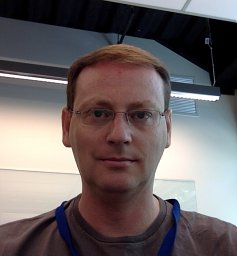
 Roman Goldenberg
· 5 previous affiliations
- Rcadia Medical SolutionsSince 2014
- Director Board Of Directors · Since 2014
- Google (United States)Since 2020
- Researcher · Since 2020
- Research Engineer (sub-contracting) · 2013–2015
- ProcessGene LtdSince 2008
- Advisory Board · Since 2008
- Amazon (United States)2015–2020
- Sr. Research Manager · 2018–2020
- Principal Research Scientist · 2015–2018
- PhD, Computer Science · 2004
- BA, Computer Science · 1992–1995
Research Overview
Roman Goldenberg focuses on computer vision, medical image analysis, and the application of machine learning to high-dimensional video and language data. His work spans from foundational geometric methods for image segmentation and object tracking to modern self-supervised learning frameworks for clinical diagnostics. His recent research investigates the intersection of generative AI and physical reality, specifically evaluating the ability of video world models to maintain physical consistency in complex environments.
Research Trajectory
The early phase of Goldenberg’s research, beginning in the late 1990s, was centered on the development of efficient numerical schemes for image segmentation and object tracking. During this period, he focused on variational methods and level set approaches, particularly the refinement of geodesic active contours. This work addressed the computational bottlenecks of non-linear models, seeking to enable real-time applications in video analysis. By 1999, he had developed unconditionally stable numerical schemes that allowed for faster object segmentation in color sequences, a precursor to modern automated tracking systems.
In the mid-2000s, Goldenberg’s interests expanded into acoustic signal processing and its relationship with automated systems. He investigated the Lombard effect—the involuntary change in speech characteristics in noisy environments—and its impact on the reliability of automatic speaker verification. This period reflected a broader interest in the robustness of automated systems when faced with environmental variability and signal degradation.
By the mid-2010s, Goldenberg’s focus shifted decisively toward medical imaging. He applied his expertise in segmentation and modeling to clinical challenges, such as the detection and scoring of coronary calcium in CT angiography. This work involved the creation of fully automatic systems that could model image intensity profiles to isolate anatomical structures from contrast media, bridging the gap between computer vision theory and clinical utility.
In the early 2020s, Goldenberg’s research transitioned into the domain of deep learning and self-supervised learning (SSL), with a particular emphasis on endoscopic video analysis. As a senior researcher, he led efforts to reduce the reliance on manual annotation in medical AI. This involved developing weak supervision techniques that leverage simple motion cues to parse complex clinical videos, such as colonoscopies, into distinct procedural phases. His work in this area has increasingly focused on model generalization—predicting how AI systems trained in one clinical environment will perform in another—using self-supervised frameworks like Masked Siamese Networks (MSNs).
Most recently, Goldenberg has contributed to the evaluation of large-scale generative models. This includes investigating the multilingual capabilities of large language models (LLMs) and developing benchmarks to assess Aligning Video Generation Models with Physical Laws. This current direction examines whether generative models act as true "world simulators" capable of adhering to physical laws or if they remain primarily sophisticated texture and motion synthesizers.
Representative Work
In Fast Geodesic Active Contours, Goldenberg and colleagues addressed the computational inefficiency of the geodesic active contour model. By utilizing an Additive Operator Splitting (AOS) scheme, the research introduced an unconditionally stable numerical method that significantly accelerated the segmentation process. The method integrated a narrow-band approach and fast marching for re-initialization, demonstrating the feasibility of tracking moving objects in color video sequences with high efficiency.
Transitioning to clinical applications, Fully automatic model-based calcium segmentation and scoring in coronary CT angiography presented a method for assessing coronary artery disease risk. Goldenberg contributed to a system that modeled image intensity profiles to detect and segment calcium deposits. A key innovation was the construction of a simulated unenhanced CT image by virtually removing contrast media, allowing for the calculation of Agatston-equivalent scores directly from angiography studies. The system demonstrated high correlation with standard clinical scores in independent trials.
In the area of medical video parsing, Motion-Based Weak Supervision for Video Parsing with Application to Colonoscopy established a framework for training deep learning models without extensive manual labeling. As the senior author, Goldenberg oversaw the development of a two-stage unsupervised method that uses motion cues to generate noisy labels for procedural phases. These labels were then used to train appearance-based models, demonstrating that high-performing clinical AI can be developed by leveraging the inherent temporal structure of video data.
The challenge of temporal consistency in medical video was further addressed in Self-Supervised Polyp Re-Identification in Colonoscopy. In this senior-author work, Goldenberg proposed a robust long-term tracking method based on visual re-identification. The solution utilized an attention-based self-supervised model designed to aggregate polyp data across multiple frames, facilitating downstream tasks like automatic reporting and quality metric calculation. This research highlighted the utility of self-supervision in domains where expert annotation is scarce.
Goldenberg also addressed the problem of distribution shift in Predicting the generalization of computer aided detection (CADe) models for colonoscopy. This study introduced a label-free method to forecast the performance degradation of AI models when deployed in new clinical settings. By employing a Masked Siamese Network to identify shifts in imaging techniques or patient demographics, the research provided a mechanism for monitoring AI reliability in real-world healthcare environments without requiring new manual annotations.
In the generative AI space, Goldenberg participated in the development of VideoPhy-2: A Challenging Action-Centric Physical Commonsense Evaluation in Video Generation. This work established a massive benchmark to test whether state-of-the-art video generation models understand physical laws, such as the conservation of mass and momentum. The findings revealed significant "hallucinations" of physics in advanced models, suggesting that while visual fidelity has improved, the underlying physical reasoning of these models remains limited.
Current Directions
Goldenberg’s current research is increasingly focused on the robustness and interpretability of large-scale AI systems. In the clinical domain, this involves the development of specialized metrics like Clinical BERTScore, which prioritizes the accuracy of clinically significant terms in automated speech recognition for healthcare. He is also exploring virtual staining techniques in digital pathology, using machine learning to generate histopathological stains from autofluorescence images, thereby conserving tissue samples and improving diagnostic workflows.
In the broader field of artificial intelligence, Goldenberg continues to investigate the limits of multilingual LLMs and the physical grounding of generative video. His work seeks to determine whether direct inference in non-English languages can outperform traditional pre-translation methods and to refine the benchmarks used to evaluate the "world-modeling" capabilities of AI. This trajectory reflects a move toward ensuring that AI systems are not only performant but also physically and contextually grounded in the environments they are designed to simulate or analyze.
Profile updated
| Paper | Venue | Year |
|---|---|---|
| Self-supervised Learning for Endoscopic Video AnalysisGitHubRoyHirsch/ | MICCAI | 2023 |
Loading new papers…
Other researchers whose papers cluster into the same research directions — a proxy for overlapping technical interests and shared intellectual neighborhoods.
See something wrong? Report a mistake