

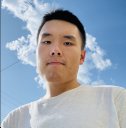
 Chi Zhang
· 3 previous affiliations
- The University of Texas at AustinSince 2024
- Graduate Research Assistant · Since 2026
- Current
- Master of Science - MS, Computer Science · 2024–2026
- Student Researcher · 2025–2026
- Nanjing University2020–2024
- Student Researcher · 2023–2024
- Undergrad student · 2020–2024
- Student Researcher · 2023
35 other authors named Chi Zhang: Chi Zhang (Mayun University · Westlake University · 69 papers), Chi Zhang (China Telecom · 61 papers), chi zhang (33 papers), Chi Zhang (Peking University · 30 papers), CHI ZHANG (National University of Singapore · 21 papers), and 30 more
Research Overview
Chi Zhang focuses on the efficient adaptation of vision-language models and the acceleration of parallel text generation. His work addresses challenges in long-tailed data distributions for pre-trained models and explores novel distillation techniques to improve non-autoregressive decoding. Currently, he investigates methods to bridge the quality gap between sequential and parallel generative models.
Research Trajectory
Zhang's research initially addressed the robust adaptation of large-scale foundation models to complex, real-world data distributions. In 2024, his work focused on the limitations of pre-trained vision-language architectures, such as CLIP, when applied to downstream tasks characterized by long-tailed data distributions or entirely new, unseen classes. In Efficient and Long-tailed Generalization for Pre-trained Language Vision Model, he introduced the Candle framework. This approach utilizes a compensating logit-adjusted loss during the training process to improve both few-shot learning and zero-shot inference capabilities under constrained data conditions.
Subsequently, Zhang's focus shifted toward the efficiency and quality of large language model inference, specifically targeting non-autoregressive and parallel decoding strategies. A major challenge in this domain is that parallel text generators often sacrifice output quality compared to sequential autoregressive models because they struggle to capture complex token dependencies. To address this limitation, he developed new distillation techniques in Gumbel Distillation for Parallel Text Generation (2026). By leveraging the Gumbel-Max trick to provide a deterministic noise blueprint to a student model, this work enables parallel decoders to maintain high inference speeds while significantly boosting generation quality.
This contribution intersects with several broader research areas, advancing the direction of Parallel Decoding via Discrete Diffusion and Block Generation and the area of The Token Independence Flaw in Parallel Generation. Furthermore, the methodological improvements in this work have implications for related fields, such as the research direction of Compressing the Embedding Layer Memory Bottleneck and the broader area of Interpretable Latent Directions for Controllable Generative Models.
Current Directions
The most recent work in the evidence indicates a strong focus on optimizing the inference phase of generative language models. Specifically, Zhang is investigating techniques to reconcile the trade-offs between generation speed and output quality in parallel decoding architectures. By exploring advanced distillation methods and noise-based blueprints, his current research aims to equip fast, non-autoregressive models with the capacity to model complex sequential dependencies as effectively as traditional autoregressive systems.
Profile updated
| Title | Venue | Year |
|---|---|---|
| Anchored Protein Engineering | NeurIPS | 2026 |
| Folding scFv--Antigen Complexes at Scale | GEM @ ICLR | 2026 |
| Gumbel Distillation for Parallel Text GenerationGitHub resource | ICLR | 2026 |
| Efficient and Long-tailed Generalization for Pre-trained Language Vision Model | KDD | 2024 |
| Paper | Venue | Year |
|---|---|---|
| Gumbel Distillation for Parallel Text GenerationGitHubhxixixh/ | ICLR | 2026 |
Loading new papers…
Other researchers whose papers cluster into the same research directions — a proxy for overlapping technical interests and shared intellectual neighborhoods.
See something wrong? Report a mistake