

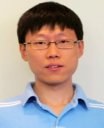
 Chi Zhang
· 5 previous affiliations
- China TelecomSince 2024
- Principal Researcher · Since 2024
- Mach2023–2024
- Principal Researcher · 2023–2024
- Megvii (China)2015–2023
- Principal Researcher · 2015–2023
- Columbia University2007–2011
- PhD student · 2007–2011
- Tsinghua University2000–2007
- MS student · 2004–2007
- Undergrad student · 2000–2004
35 other authors named Chi Zhang: Chi Zhang (Mayun University · Westlake University · 69 papers), chi zhang (33 papers), Chi Zhang (Peking University · 30 papers), CHI ZHANG (National University of Singapore · 21 papers), Chi Zhang (Xi'an Jiaotong University · 15 papers), and 30 more
Research Overview
Chi Zhang focuses on computer vision, autonomous driving perception, and multi-agent reasoning systems. His early work addressed fundamental challenges in few-shot learning and object detection before shifting toward vectorized high-definition map construction and trajectory prediction for autonomous vehicles. Most recently, his research investigates embodied artificial intelligence, exploring hierarchical multi-agent frameworks and multimodal diffusion models for video generation.
Research Trajectory
Zhang's early research addressed core challenges in model optimization and few-shot learning within computer vision. He developed novel model smoothing mechanisms, such as a spatial ensemble approach for student-teacher frameworks, which stitches historical model fragments to improve teacher reliability in Spatial Ensemble: a Novel Model Smoothing Mechanism for Student-Teacher Framework. Concurrently, he explored few-shot classification by integrating global and local class space views in Binocular Mutual Learning for Improving Few-shot Classification. This focus on data-efficient learning extended to object detection with DeFRCN: Decoupled Faster R-CNN for Few-Shot Object Detection, an architecture designed to resolve internal conflicts between detection stages and tasks. Alongside these core vision tasks, Zhang also investigated the application of immersive environments in healthcare, designing virtual reality experiences to cultivate caregiver compassion in Empathy Games for Depression Using Virtual Reality: A Literature Review and A Study Design.
Moving into autonomous driving perception, Zhang's focus shifted toward trajectory prediction and environmental modeling. He contributed to multi-modal prediction architectures with TENET: Transformer Encoding Network for Effective Temporal Flow on Motion Prediction, utilizing a temporal flow header to encode future vehicle trajectories. This naturally progressed into extensive work in the research direction of Automated Vectorized Generation of High Definition Maps. Recognizing the limitations of rasterized maps and heavy post-processing, he pioneered parameterization-based methods. In End-to-End Vectorized HD-map Construction with Piecewise Bézier Curve, he introduced a unified piecewise Bézier curve scheme to model complex map elements end-to-end, advancing the broader area of Vectorized Scene Representations for Autonomous Driving. He expanded on direct set prediction paradigms with PivotNet: Vectorized Pivot Learning for End-to-end HD Map Construction, which employed point-to-line mask modules to capture geometric priors and prevent error accumulation. Further optimizing these systems for online construction, he developed MachMap: End-to-End Vectorized Solution for Compact HD-Map Construction, an architecture that treats map elements as point detection tasks in bird's-eye-view space to significantly reduce point redundancy.
In recent years, Zhang's trajectory has expanded to encompass multi-agent reasoning and generative diffusion models. He introduced a hierarchical multi-agent framework for embodied digital theater in HAMLET: Hyperadaptive Agent-based Modeling for Live Embodied Theatrics. This system decouples offline narrative planning from online improvisational performance, allowing AI actors to interact with physical props autonomously. He further refined this architecture in HAMLET: A Hierarchical and Adaptive Multi-Agent Framework for Live Embodied Theatrics, integrating a specialized perception and decision module to drive coherent, long-form interactive dramas. Concurrently, he has participated in advancing cross-modal generation. His collaborative work includes QwenStyle: Content-Preserving Style Transfer with Qwen-Image-Edit, which tackles the decoupling of style from content in diffusion models using curriculum continual learning. He also contributed to unified architectures for video generation and understanding in OmniVDiff: Omni Controllable Video Diffusion for Generation and Understanding, a framework capable of processing multiple visual modalities simultaneously through adaptive control strategies.
Current Directions
The most recent papers in the evidence indicate a dual focus on multi-agent reasoning frameworks and advanced diffusion models for cross-modal generation. Work in the former area investigates hierarchical architectures that separate high-level narrative planning from real-time, embodied decision-making, enabling autonomous agents to interact coherently within complex environments. Simultaneously, recent collaborative efforts address unified diffusion architectures, exploring methods to preserve content integrity during image style transfer and developing adaptive control strategies for multi-modal video generation and understanding.
Profile updated
Loading new papers…
Other researchers whose papers cluster into the same research directions — a proxy for overlapping technical interests and shared intellectual neighborhoods.
See something wrong? Report a mistake