

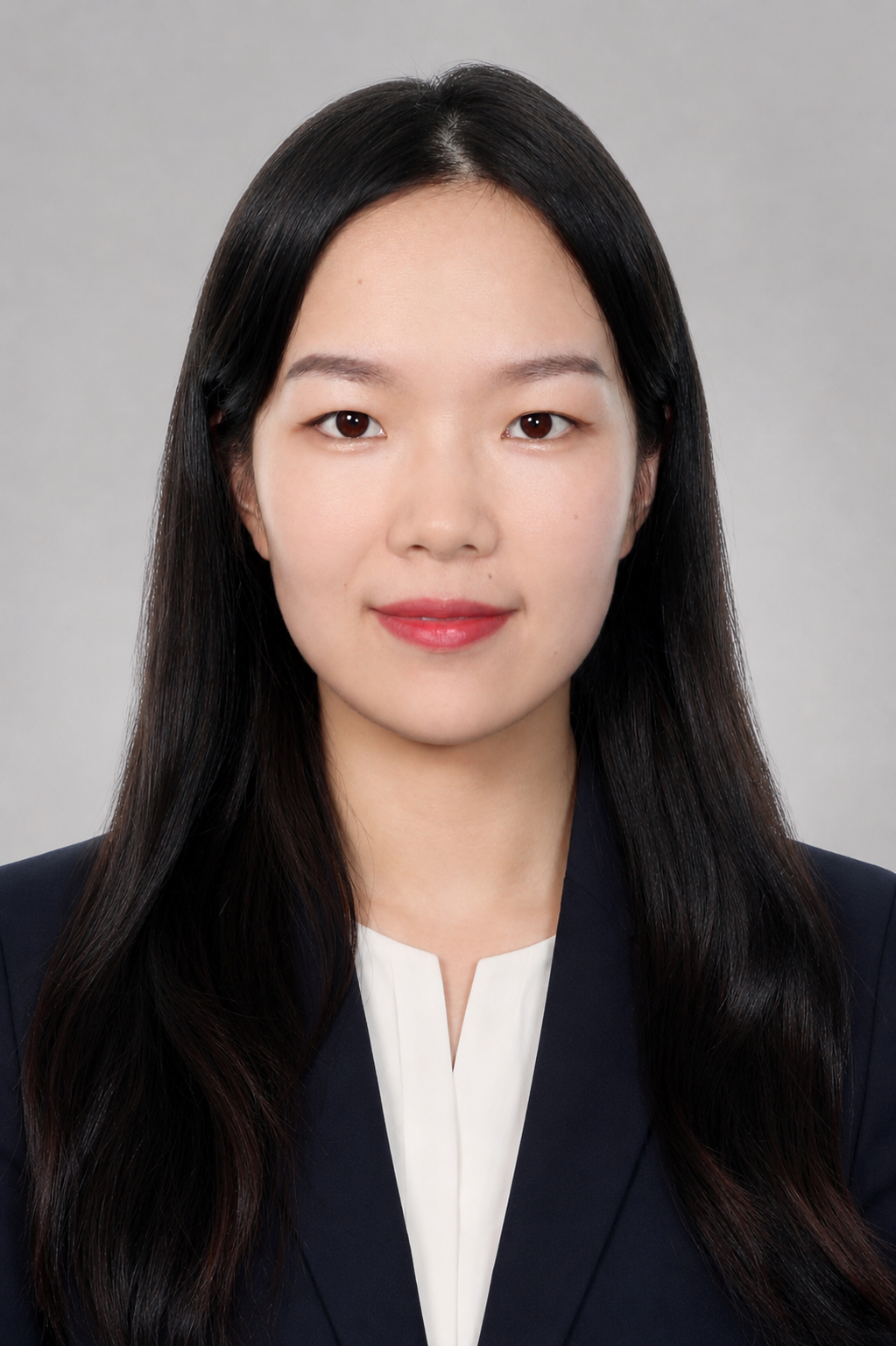
 Chenxi Liu
· 4 previous affiliations
- Assistant Professor · Since 2025
- Nanyang Technological University2023–2025
- Postdoc · 2023–2025
- Postdoc · 2025
- Hunan University2018–2023
- PhD student · 2018–2023
5 other authors named Chenxi Liu: Chenxi Liu (waymo · 30 papers), Chenxi Liu (Meta (United States) · University of Maryland, College Park · 15 papers), Chenxi Liu (Hong Kong Baptist University · 10 papers), Chenxi Liu (University of Toronto · University of Victoria · 4 papers), Chenxi Liu (3 papers)
Research Overview
Chenxi Liu focuses on spatiotemporal data analysis, multivariate time series forecasting, and urban computing. His trajectory spans from graph-based modeling of urban traffic flows to the integration of large language models for complex time series prediction. Recently, his work investigates privacy-preserving generation and source-free domain adaptation for robust forecasting in data-scarce environments.
Research Trajectory
Early work centered on urban computing and spatiotemporal modeling, specifically targeting the complex dynamics of private car movements and urban events. He introduced methods to model urban travel as spatiotemporal graphs, as detailed in Foreseeing private car transfer between urban regions with multiple graph-based generative adversarial networks, which addressed the sparsity and imbalance of transfer records while modeling stay durations. Expanding on this granular approach, he analyzed the specific arrive-stay-leave behaviors of drivers to improve urban flow forecasting in Exploiting Spatiotemporal Correlations of Arrive-Stay-Leave Behaviors for Private Car Flow Prediction. Concurrently, he contributed to broader urban spatial-temporal event prediction by developing neural network architectures designed to capture latent region-wise correlations beyond simple geographic proximity, presented in Adaptive Dual-View WaveNet for urban spatial-temporal event prediction.
By 2024, his research evolved to incorporate foundational models and decentralized learning paradigms into spatiotemporal analysis. Recognizing the limitations of purely structural neural network expansions in intelligent transportation systems, he proposed adapting large language models for traffic prediction in Spatial-Temporal Large Language Model for Traffic Prediction, leveraging their extensive pretraining for time series analysis. During this period, he also collaborated on frameworks for edge-device data collection, contributing to the research direction of Reconstructing Continuous Mobility from Sparse Spatiotemporal Data. This work, formalized in LightTR: A Lightweight Framework for Federated Trajectory Recovery, aimed to reconstruct high-resolution trajectories from low-sampled GPS data in free space without relying on road network priors. This framework intersected with broader efforts in the areas of Federated Learning Under Dynamic Client Participation and Robust Federated Learning under Statistical Heterogeneity.
In 2025 and 2026, the focus shifted heavily toward optimizing and securing LLM-driven multivariate time series forecasting. To mitigate the high inference costs typically associated with deploying LLMs for time series data management, he developed a cross-modality alignment and privileged knowledge distillation framework in TimeCMA: Towards LLM-Empowered Multivariate Time Series Forecasting via Cross-Modality Alignment. His recent collaborations have also addressed critical data privacy and domain adaptation challenges. He participated in the design of inference-time privacy mechanisms, detailed in PETS: Inference-Time Differentially Private Synthetic Time Series Generation, which uses private data only to guide the selection of synthetic outputs at inference time rather than during model training. Furthermore, he contributed to the area of Source Free Domain Adaptation through Invariant Representation Learning for Source-Free Time Series Forecasting with LLM-Centric Proxy Denoising. This research utilizes invariant feature learning and proxy denoising to correct LLM hallucinations, enabling models to adapt to new domains without accessing original training data. This advances the broader fields of Mitigating Non-Stationary Distribution Shift in Time-Series Forecasting and Draft-and-Verify Mechanisms for Accelerated Autoregressive Inference.
Current Directions
The most recent papers in the evidence indicate a strong focus on refining foundational models for complex time series tasks, particularly emphasizing efficiency, privacy, and adaptability. Recent work investigates how to distill the reasoning capabilities of large language models into more efficient frameworks for multivariate forecasting, reducing the computational overhead typically required during inference. Additionally, current research addresses the challenges of data scarcity and privacy in time series generation. This includes developing source-free domain adaptation techniques that allow models to generalize to new environments without accessing original training data, as well as designing inference-time differentially private mechanisms that ensure synthetic data fidelity while strictly adhering to privacy budgets.
Profile updated
Loading new papers…
Other researchers whose papers cluster into the same research directions — a proxy for overlapping technical interests and shared intellectual neighborhoods.
See something wrong? Report a mistake